Thank you for visiting SNEWPapers!
Sign up free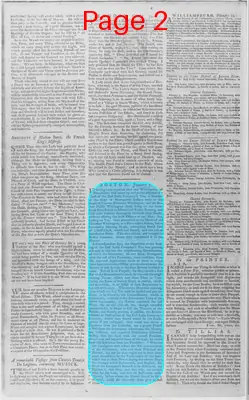
The Virginia Gazette
Richmond, Williamsburg, Richmond County, Virginia
What is this article about?
In Dorchester, disguised 'Indians' searched the Withington homes for East India Company tea, found a half-chest washed ashore, seized it, and burned it on Boston Common. A correspondent blames the governor and consignees for failing to prevent the tea's destruction amid widespread opposition.
Clipping
OCR Quality
Full Text
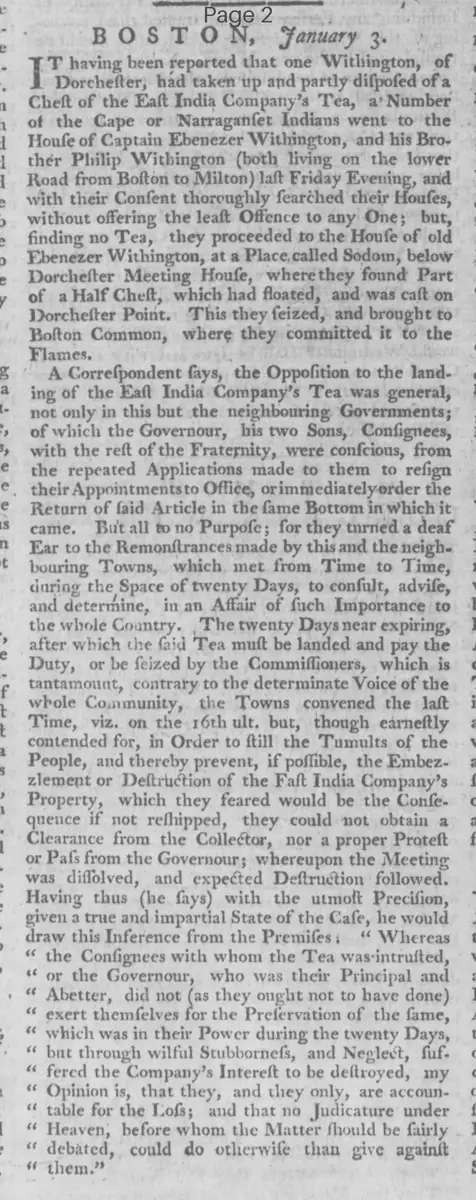
It having been reported that one Withington, of Dorchester, had taken up and partly disposed of a Chest of the East India Company's Tea, a Number of the Cape or Narraganset Indians went to the House of Captain Ebenezer Withington, and his Brother Philip Withington (both living on the lower Road from Boston to Milton) last Friday Evening, and with their Consent thoroughly searched their Houses, without offering the least Offence to any One; but, finding no Tea, they proceeded to the House of old Ebenezer Withington, at a Place, called Sodom, below Dorchester Meeting House, where they found Part of a Half Chest, which had floated, and was cast on Dorchester Point. This they seized, and brought to Boston Common, where they committed it to the Flames.
A Correspondent says, the Opposition to the landing of the East India Company's Tea was general, not only in this but the neighbouring Governments; of which the Governour, his two Sons, Consignees, with the rest of the Fraternity, were conscious, from the repeated Applications made to them to resign their Appointments to Office, or immediately order the Return of said Article in the same Bottom in which it came. But all to no Purpose; for they turned a deaf Ear to the Remonstrances made by this and the neighbouring Towns, which met from Time to Time, during the Space of twenty Days, to consult, advise, and determine, in an Affair of such Importance to the whole Country. The twenty Days near expiring, after which the said Tea must be landed and pay the Duty, or be seized by the Commissioners, which is tantamount, contrary to the determinate Voice of the whole Community, the Towns convened the last Time, viz. on the 16th ult. but, though earnestly contended for, in Order to still the Tumults of the People, and thereby prevent, if possible, the Embezzlement or Destruction of the East India Company's Property, which they feared would be the Consequence if not reshipped, they could not obtain a Clearance from the Collector, nor a proper Protest or Pass from the Governour; whereupon the Meeting was dissolved, and expected Destruction followed.
Having thus (he says) with the utmost Precision, given a true and impartial State of the Case, he would draw this Inference from the Premises: "Whereas the Consignees with whom the Tea was intrusted, or the Governour, who was their Principal and Abettor, did not (as they ought not to have done) exert themselves for the Preservation of the same, which was in their Power during the twenty Days, but through wilful Stubbornness, and Neglect, suffered the Company's Interest to be destroyed, my Opinion is, that they, and they only, are accountable for the Loss: and that no Judicature under Heaven, before whom the Matter should be fairly debated, could do otherwise than give against them."
What sub-type of article is it?
What keywords are associated?
What entities or persons were involved?
Where did it happen?
Domestic News Details
Primary Location
Dorchester
Event Date
Last Friday Evening
Key Persons
Outcome
part of a half chest of tea seized and burned on boston common; no offenses or harm to persons.
Event Details
Disguised as Cape or Narraganset Indians, a group searched the homes of the Withingtons in Dorchester with consent, found tea that had washed ashore, seized it, and burned it on Boston Common. Broader context of opposition to tea landing, with blame on governor and consignees for not preventing destruction.