Thank you for visiting SNEWPapers!
Sign up free
Literary
February 23, 1892
The Morning News
Savannah, Chatham County, Georgia
What is this article about?
George William Curtis delivers an address at the Brooklyn Institute on the 73rd anniversary of James Russell Lowell's birth, reviewing his life, literary achievements, patriotic service, and influence on American youth and conscience, likening him to Washington as a great citizen.
Clipping
OCR Quality
98%
Excellent
Full Text
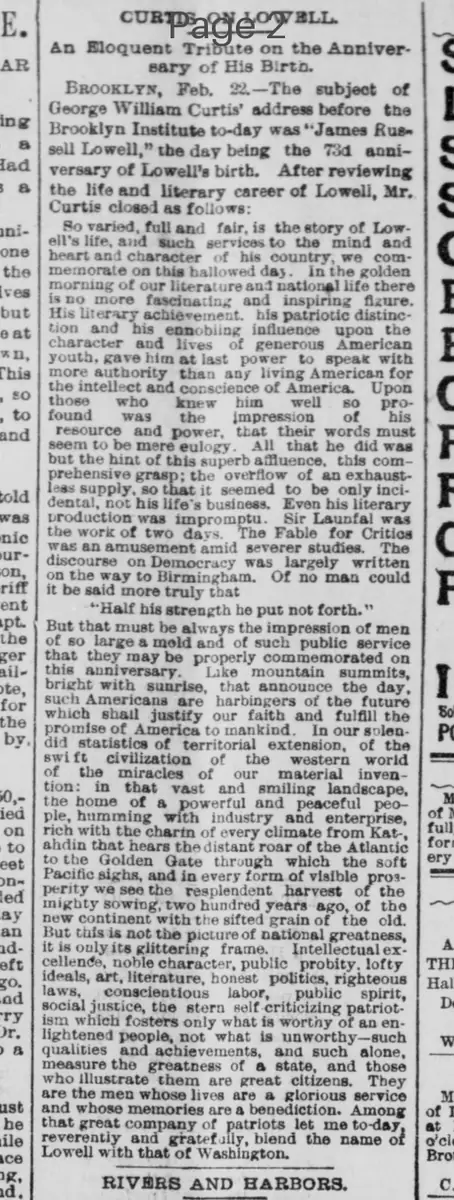
An Eloquent Tribute on the Anniversary of His Birth.
BROOKLYN, Feb. 22.—The subject of George William Curtis' address before the Brooklyn Institute to-day was "James Russell Lowell," the day being the 73d anniversary of Lowell's birth. After reviewing the life and literary career of Lowell, Mr. Curtis closed as follows:
So varied, full and fair, is the story of Lowell's life, and such services to the mind and heart and character of his country, we commemorate on this hallowed day. In the golden morning of our literature and national life there is no more fascinating and inspiring figure. His literary achievement, his patriotic distinction and his ennobling influence upon the character and lives of generous American youth, gave him at last power to speak with more authority than any living American for the intellect and conscience of America. Upon those who knew him well so profound was the impression of his resource and power, that their words must seem to be mere eulogy. All that he did was but the hint of this superb affluence, this comprehensive grasp: the overflow of an exhaustless supply, so that it seemed to be only incidental, not his life's business. Even his literary production was impromptu. Sir Launfal was the work of two days. The Fable for Critics was an amusement amid severer studies. The discourse on Democracy was largely written on the way to Birmingham.
Of no man could it be said more truly that
Half his strength he put not forth."
But that must be always the impression of men of so large a mold and of such public service that they may be properly commemorated on this anniversary. Like mountain summits, bright with sunrise, that announce the day, such Americans are harbingers of the future which shall justify our faith and fulfill the promise of America to mankind. In our solemn statistics of territorial extension, of the swift civilization of the western world, of the miracles of our material invention: in that vast and smiling landscape, the home of a powerful and peaceful people, humming with industry and enterprise, rich with the charm of every climate from Katahdin that hears the distant roar of the Atlantic to the Golden Gate through which the soft Pacific sighs, and in every form of visible prosperity we see the resplendent harvest of the mighty sowing, two hundred years ago, of the new continent with the sifted grain of the old. But this is not the picture of national greatness, it is only its glittering frame. Intellectual excellence, noble character, public probity, lofty ideals, art, literature, honest politics, righteous laws, conscientious labor, public spirit, social justice, the stern self-criticising patriotism which fosters only what is worthy of an enlightened people, not what is unworthy—such qualities and achievements, and such alone, measure the greatness of a state, and those who illustrate them are great citizens. They are the men whose lives are a glorious service and whose memories are a benediction. Among that great company of patriots let me to-day, reverently and gratefully, blend the name of Lowell with that of Washington.
BROOKLYN, Feb. 22.—The subject of George William Curtis' address before the Brooklyn Institute to-day was "James Russell Lowell," the day being the 73d anniversary of Lowell's birth. After reviewing the life and literary career of Lowell, Mr. Curtis closed as follows:
So varied, full and fair, is the story of Lowell's life, and such services to the mind and heart and character of his country, we commemorate on this hallowed day. In the golden morning of our literature and national life there is no more fascinating and inspiring figure. His literary achievement, his patriotic distinction and his ennobling influence upon the character and lives of generous American youth, gave him at last power to speak with more authority than any living American for the intellect and conscience of America. Upon those who knew him well so profound was the impression of his resource and power, that their words must seem to be mere eulogy. All that he did was but the hint of this superb affluence, this comprehensive grasp: the overflow of an exhaustless supply, so that it seemed to be only incidental, not his life's business. Even his literary production was impromptu. Sir Launfal was the work of two days. The Fable for Critics was an amusement amid severer studies. The discourse on Democracy was largely written on the way to Birmingham.
Of no man could it be said more truly that
Half his strength he put not forth."
But that must be always the impression of men of so large a mold and of such public service that they may be properly commemorated on this anniversary. Like mountain summits, bright with sunrise, that announce the day, such Americans are harbingers of the future which shall justify our faith and fulfill the promise of America to mankind. In our solemn statistics of territorial extension, of the swift civilization of the western world, of the miracles of our material invention: in that vast and smiling landscape, the home of a powerful and peaceful people, humming with industry and enterprise, rich with the charm of every climate from Katahdin that hears the distant roar of the Atlantic to the Golden Gate through which the soft Pacific sighs, and in every form of visible prosperity we see the resplendent harvest of the mighty sowing, two hundred years ago, of the new continent with the sifted grain of the old. But this is not the picture of national greatness, it is only its glittering frame. Intellectual excellence, noble character, public probity, lofty ideals, art, literature, honest politics, righteous laws, conscientious labor, public spirit, social justice, the stern self-criticising patriotism which fosters only what is worthy of an enlightened people, not what is unworthy—such qualities and achievements, and such alone, measure the greatness of a state, and those who illustrate them are great citizens. They are the men whose lives are a glorious service and whose memories are a benediction. Among that great company of patriots let me to-day, reverently and gratefully, blend the name of Lowell with that of Washington.
What sub-type of article is it?
Essay
What themes does it cover?
Patriotism
Moral Virtue
What keywords are associated?
James Russell Lowell
George William Curtis
Literary Tribute
Patriotism
American Literature
National Greatness
Brooklyn Institute
What entities or persons were involved?
George William Curtis
Literary Details
Title
James Russell Lowell
Author
George William Curtis
Subject
73d Anniversary Of Lowell's Birth
Form / Style
Eulogistic Address In Prose
Key Lines
So Varied, Full And Fair, Is The Story Of Lowell's Life, And Such Services To The Mind And Heart And Character Of His Country, We Commemorate On This Hallowed Day.
His Literary Achievement, His Patriotic Distinction And His Ennobling Influence Upon The Character And Lives Of Generous American Youth, Gave Him At Last Power To Speak With More Authority Than Any Living American For The Intellect And Conscience Of America.
Of No Man Could It Be Said More Truly That Half His Strength He Put Not Forth.
Among That Great Company Of Patriots Let Me To Day, Reverently And Gratefully, Blend The Name Of Lowell With That Of Washington.