Thank you for visiting SNEWPapers!
Sign up free
Literary
October 20, 1906
Churchill Standard
Fallon, Churchill County, Nevada
What is this article about?
Short story about Betty, a sensitive 28-year-old seamstress in rural Arcady, enduring villagers' jibes about her spinsterhood like pins in a pincushion. She symbolically buries her youth but later accepts Jack Mountby's proposal after he breaks down in tears.
Merged-components note: Merged image into the literary story as the bounding boxes overlap, indicating the image is an illustration for the narrative.
Clipping
OCR Quality
70%
Good
Full Text
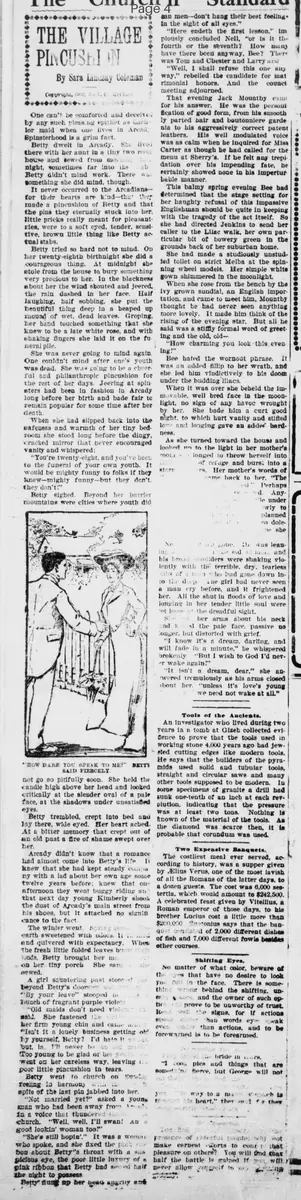
THE VILLAGE PINCUSHION
By Sara Lindsay Coleman
Copyright, 1906, by T. C. McClurg
One can't be comforted and deceived by any such pleasing epithet as bachelor or maid when one lives in Arcady. Spinsterhood is a grim fact.
Betty dwelt in Arcady. She lived there with her aunt in a tiny two-room house and sewed from morn till night, sometimes far into the night.
Betty didn't mind work. There was something she did mind, though.
It never occurred to the Arcadians—for their hearts are kind—that they made a pincushion of Betty and that the pins they eternally stuck into her little pricks really meant for pleasantries, were to a soft-eyed, tender, sensitive, brown little thing like Betty actual stabs.
Betty tried so hard not to mind. On her twenty-eighth birthnight she did a courageous thing. At midnight she stole from the house to bury something very precious to her. In the blackness about her the wind shouted and jeered, the rain dashed in her face. Half laughing, half sobbing, she put the beautiful thing deep in a heaped-up mound of wet, dead leaves. Groping, her hand touched something that she knew to be a late white rose, and with shaking fingers she laid it on the funeral pile.
She was never going to mind again. One couldn't mind after one's youth was dead. She was going to be a cheerful and philanthropic pincushion for the rest of her days. Jeering at spinsters had been in fashion in Arcady long before her birth and bade fair to remain popular for some time after her death.
When she had slipped back into the safeness and warmth of her tiny bedroom she stood long before the dingy, cracked mirror that never encouraged vanity and whispered:
"You're twenty-eight, and you've been to the funeral of your own youth. It would be mighty funny to folks if they knew—mighty funny—but they don't. They don't!"
Betty sighed. Beyond her barrier mountains were cities where youth did not go so pitifully soon. She held the candle high above her head and looked critically at the slender oval of a pale face, at the shadows under unsatisfied eyes.
Betty trembled, crept into bed and lay there wide-eyed. Her heart ached. At a bitter memory that crept out of an old past a fire of shame swept over her.
Arcady didn't know that a romance had almost come into Betty's life. It knew that she had kept steady company with a lad about her own age some twelve years before; knew that one afternoon they went buggy riding and that next day young Kimberly shook the dust of Arcady's main street from his shoes, but it attached no significance to the fact.
The winter went. Spring earth sweetened with odors and quivered with expectancy. When the fresh little folded leaves burst into buds, Betty brought her machine out on her tiny porch. She sang; sewed.
A girl sauntering past stopped beyond Betty's door.
"By your leave," she stooped to pluck a bunch of fragrant purple violets.
"Old maids don't need violets." She fastened them in her firm young chin and came up.
"Isn't it a lonely business getting old by yourself, Betty? I'd hate it, but I—I'll never be old."
Too young to be glad of her youth, she went on her careless way, leaving the poor little pincushion in tears.
Betty went to church on Sunday reeling in harmony in spite of the last pin jabbed into her.
"Not married yet?" asked a young man who had been away from it.
In a voice that thundered through the church, "Well, well, I'll swan! And a good lookin' woman too!"
"She's still hopin'." It was a woman who spoke, and she fixed the pink ribbon about Betty's throat with a suspicious eye, the poor little luxury of a pink ribbon that Betty had sewed half the night to possess.
Betty flung up her head angrily and
can men—don't hang their best feeling in the sight of all eyes.
"Here endeth the first lesson," piously concluded Nell. "Or is it the fourth or the seventh? How many have there been anyway, Bee? There was Tom and Chester and Larry and
"Well, I shall refuse this one anyway," rebelled the candidate for matrimonial honors. And the council meeting adjourned.
That evening Jack Mountby came for his answer. He was the personification of good form, from his smoothly parted hair and boutonniere gardenia to his aggressively correct patent leathers. His well modulated voice was as calm when he inquired for Miss Carter as though he had called for the menu at Sherry's. If he felt any trepidation over his impending fate, he certainly showed none in his imperturbable manner.
This balmy spring evening Bee had determined that the stage setting for her haughty refusal of this impassive Englishman should be quite in keeping with the tragedy of the act itself. So she had directed Jenkins to send her caller to the Lilac walk, her own particular bit of bowery green in the grounds back of her suburban home.
She had made a studiously unstudied toilet on strict Melba at the spinning wheel models. Her simple white gown shimmered in the moonlight.
When she rose from the bench by the ivy-grown sundial, an English importation, and came to meet him, Mountby thought he had never seen anything more lovely. It made him think of the rising of the evening star. But all he said was a stiffly formal word of greeting and the old, old,
"How charming you look this evening!"
Bee hated the worn-out phrase. It was an added fillip to her wrath, and she led him vindictively to his doom under the budding lilacs.
When it was over she beheld the immovable, well-bred face in the moonlight, no sign of any havoc wrought by her. She bade him a curt good night, to which hurt vanity and stifled love and longing gave an added hardness.
As she turned toward the house and looked up to the light in her mother's room, she longed to throw herself into that haven of refuge and burst into a storm of tears. Her mother's words came back to her. "The
Perhaps you and I—
le under
wly to
planned
dole—
'eshe
Mr. sone, it was lean—
w; ,
1od s lu. and
his broad shoulders were shaking vio-
lently with the terrible, dry, tearless
sobs of a man who had gone down in—
to the deep. The girl had never seen
a man cry before, and it frightened
her. All the shut-in floods of love and
longing in her tender little soul were
let loose at the dreadful sight.
She threw her arms about his neck
and lifted the pale face, passive no
longer, but distorted with grief.
"I know it's a dream, darling, and
will fade in a minute," he whispered
brokenly. "But I wish to God I'd nev—
er wake again!"
"It isn't a dream, dear," she an—
swered tremulously as his arms closed
about her. "Unless it's love's young
dream, we need not wake at all."
By Sara Lindsay Coleman
Copyright, 1906, by T. C. McClurg
One can't be comforted and deceived by any such pleasing epithet as bachelor or maid when one lives in Arcady. Spinsterhood is a grim fact.
Betty dwelt in Arcady. She lived there with her aunt in a tiny two-room house and sewed from morn till night, sometimes far into the night.
Betty didn't mind work. There was something she did mind, though.
It never occurred to the Arcadians—for their hearts are kind—that they made a pincushion of Betty and that the pins they eternally stuck into her little pricks really meant for pleasantries, were to a soft-eyed, tender, sensitive, brown little thing like Betty actual stabs.
Betty tried so hard not to mind. On her twenty-eighth birthnight she did a courageous thing. At midnight she stole from the house to bury something very precious to her. In the blackness about her the wind shouted and jeered, the rain dashed in her face. Half laughing, half sobbing, she put the beautiful thing deep in a heaped-up mound of wet, dead leaves. Groping, her hand touched something that she knew to be a late white rose, and with shaking fingers she laid it on the funeral pile.
She was never going to mind again. One couldn't mind after one's youth was dead. She was going to be a cheerful and philanthropic pincushion for the rest of her days. Jeering at spinsters had been in fashion in Arcady long before her birth and bade fair to remain popular for some time after her death.
When she had slipped back into the safeness and warmth of her tiny bedroom she stood long before the dingy, cracked mirror that never encouraged vanity and whispered:
"You're twenty-eight, and you've been to the funeral of your own youth. It would be mighty funny to folks if they knew—mighty funny—but they don't. They don't!"
Betty sighed. Beyond her barrier mountains were cities where youth did not go so pitifully soon. She held the candle high above her head and looked critically at the slender oval of a pale face, at the shadows under unsatisfied eyes.
Betty trembled, crept into bed and lay there wide-eyed. Her heart ached. At a bitter memory that crept out of an old past a fire of shame swept over her.
Arcady didn't know that a romance had almost come into Betty's life. It knew that she had kept steady company with a lad about her own age some twelve years before; knew that one afternoon they went buggy riding and that next day young Kimberly shook the dust of Arcady's main street from his shoes, but it attached no significance to the fact.
The winter went. Spring earth sweetened with odors and quivered with expectancy. When the fresh little folded leaves burst into buds, Betty brought her machine out on her tiny porch. She sang; sewed.
A girl sauntering past stopped beyond Betty's door.
"By your leave," she stooped to pluck a bunch of fragrant purple violets.
"Old maids don't need violets." She fastened them in her firm young chin and came up.
"Isn't it a lonely business getting old by yourself, Betty? I'd hate it, but I—I'll never be old."
Too young to be glad of her youth, she went on her careless way, leaving the poor little pincushion in tears.
Betty went to church on Sunday reeling in harmony in spite of the last pin jabbed into her.
"Not married yet?" asked a young man who had been away from it.
In a voice that thundered through the church, "Well, well, I'll swan! And a good lookin' woman too!"
"She's still hopin'." It was a woman who spoke, and she fixed the pink ribbon about Betty's throat with a suspicious eye, the poor little luxury of a pink ribbon that Betty had sewed half the night to possess.
Betty flung up her head angrily and
can men—don't hang their best feeling in the sight of all eyes.
"Here endeth the first lesson," piously concluded Nell. "Or is it the fourth or the seventh? How many have there been anyway, Bee? There was Tom and Chester and Larry and
"Well, I shall refuse this one anyway," rebelled the candidate for matrimonial honors. And the council meeting adjourned.
That evening Jack Mountby came for his answer. He was the personification of good form, from his smoothly parted hair and boutonniere gardenia to his aggressively correct patent leathers. His well modulated voice was as calm when he inquired for Miss Carter as though he had called for the menu at Sherry's. If he felt any trepidation over his impending fate, he certainly showed none in his imperturbable manner.
This balmy spring evening Bee had determined that the stage setting for her haughty refusal of this impassive Englishman should be quite in keeping with the tragedy of the act itself. So she had directed Jenkins to send her caller to the Lilac walk, her own particular bit of bowery green in the grounds back of her suburban home.
She had made a studiously unstudied toilet on strict Melba at the spinning wheel models. Her simple white gown shimmered in the moonlight.
When she rose from the bench by the ivy-grown sundial, an English importation, and came to meet him, Mountby thought he had never seen anything more lovely. It made him think of the rising of the evening star. But all he said was a stiffly formal word of greeting and the old, old,
"How charming you look this evening!"
Bee hated the worn-out phrase. It was an added fillip to her wrath, and she led him vindictively to his doom under the budding lilacs.
When it was over she beheld the immovable, well-bred face in the moonlight, no sign of any havoc wrought by her. She bade him a curt good night, to which hurt vanity and stifled love and longing gave an added hardness.
As she turned toward the house and looked up to the light in her mother's room, she longed to throw herself into that haven of refuge and burst into a storm of tears. Her mother's words came back to her. "The
Perhaps you and I—
le under
wly to
planned
dole—
'eshe
Mr. sone, it was lean—
w; ,
1od s lu. and
his broad shoulders were shaking vio-
lently with the terrible, dry, tearless
sobs of a man who had gone down in—
to the deep. The girl had never seen
a man cry before, and it frightened
her. All the shut-in floods of love and
longing in her tender little soul were
let loose at the dreadful sight.
She threw her arms about his neck
and lifted the pale face, passive no
longer, but distorted with grief.
"I know it's a dream, darling, and
will fade in a minute," he whispered
brokenly. "But I wish to God I'd nev—
er wake again!"
"It isn't a dream, dear," she an—
swered tremulously as his arms closed
about her. "Unless it's love's young
dream, we need not wake at all."
What sub-type of article is it?
Prose Fiction
What themes does it cover?
Social Manners
Love Romance
Moral Virtue
What keywords are associated?
Spinsterhood
Village Life
Pincushion Metaphor
Burial Of Youth
Romantic Proposal
What entities or persons were involved?
By Sara Lindsay Coleman
Literary Details
Title
The Village Pincushion
Author
By Sara Lindsay Coleman
Key Lines
One Can't Be Comforted And Deceived By Any Such Pleasing Epithet As Bachelor Or Maid When One Lives In Arcady. Spinsterhood Is A Grim Fact.
She Was Never Going To Mind Again. One Couldn't Mind After One's Youth Was Dead.
Unless It's Love's Young Dream, We Need Not Wake At All.