Thank you for visiting SNEWPapers!
Sign up free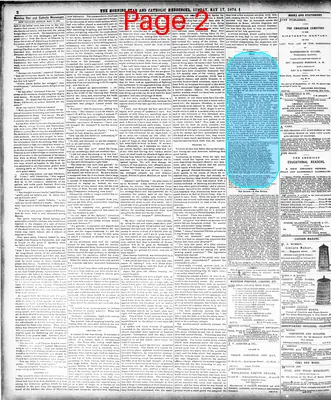
Literary
May 17, 1874
The Morning Star And Catholic Messenger
New Orleans, Orleans County, Louisiana
What is this article about?
An essay on the concept of Hope, tracing its depictions in ancient Roman art, mythology like Pandora's box, and poetry by Spenser, Cowper, and Campbell, portraying it as an eternal, comforting virtue amid suffering.
Clipping
OCR Quality
98%
Excellent
Full Text
Hope.
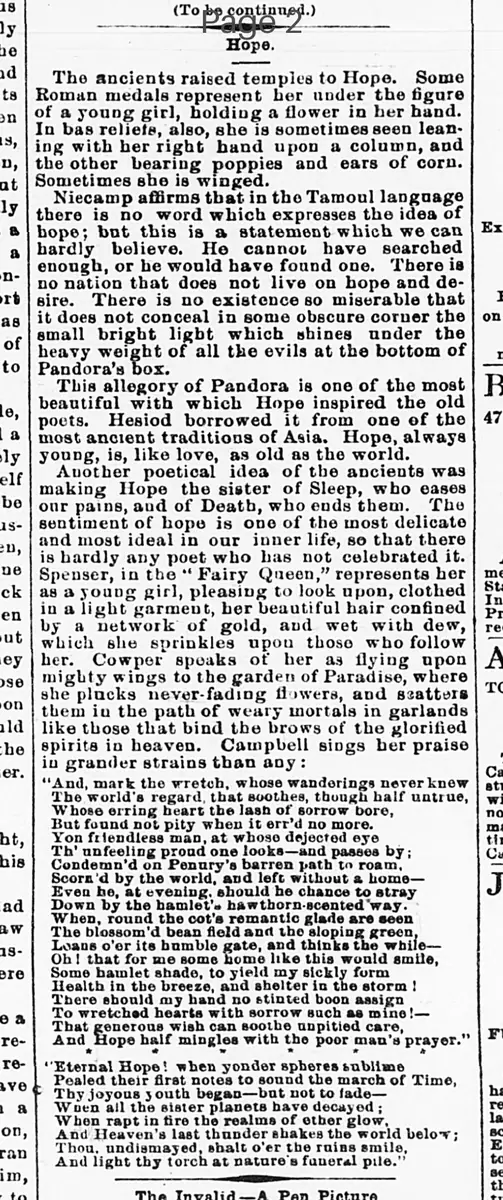
The ancients raised temples to Hope. Some Roman medals represent her under the figure of a young girl, holding a flower in her hand. In bas-reliefs, also, she is sometimes seen leaning with her right hand upon a column, and the other bearing poppies and ears of corn. Sometimes she is winged. Niecamp affirms that in the Tamoul language there is no word which expresses the idea of hope; but this is a statement which we can hardly believe. He cannot have searched enough, or he would have found one. There is no nation that does not live on hope and desire. There is no existence so miserable that it does not conceal in some obscure corner the small bright light which shines under the heavy weight of all the evils at the bottom of Pandora's box.
This allegory of Pandora is one of the most beautiful with which Hope inspired the old poets. Hesiod borrowed it from one of the most ancient traditions of Asia. Hope, always young, is, like love, as old as the world.
Another poetical idea of the ancients was making Hope the sister of Sleep, who eases our pains, and of Death, who ends them. The sentiment of hope is one of the most delicate and most ideal in our inner life, so that there is hardly any poet who has not celebrated it.
Spenser, in the "Fairy Queen," represents her as a young girl, pleasing to look upon, clothed in a light garment, her beautiful hair confined by a network of gold, and wet with dew, which she sprinkles upon those who follow her. Cowper speaks of her as flying upon mighty wings to the garden of Paradise, where she plucks never-fading flowers, and scatters them in the path of weary mortals in garlands like those that bind the brows of the glorified spirits in heaven. Campbell sings her praise in grander strains than any:
"And, mark the wretch, whose wanderings never knew The world's regard, that soothes, though half untrue, Whose erring heart the lash of sorrow bore, But found not pity when it err'd no more. Yon friendless man, at whose dejected eye Th'unfeeling proud one looks—and passes by; Condemn'd on Penury's barren path to roam, Scorn'd by the world, and left without a home— Even he, at evening, should he chance to stray Down by the hamlet's hawthorn-scented way. When, round the cot's romantic glade are seen The blossom'd bean-field and the sloping green Looms o'er its humble gate, and thinks the while— Oh! that for me some home like this would smile, Some hamlet shade, to yield my sickly form Health in the breeze, and shelter in the storm! There should my hand no stinted boon assign To wretched hearts with sorrow such as mine!— That generous wish can soothe unpitied care, And Hope half mingles with the poor man's prayer."
"Eternal Hope! when yonder spheres sublime Pealed their first notes to sound the march of Time, Thy joyous youth began—but not to fade— When all the sister planets have decayed: When rapt in fire the realms of ether glow And Heaven's last thunder shakes the world below; Thou, undismayed, shalt o'er the ruins smile, And light thy torch at Nature's funeral pile."
The ancients raised temples to Hope. Some Roman medals represent her under the figure of a young girl, holding a flower in her hand. In bas-reliefs, also, she is sometimes seen leaning with her right hand upon a column, and the other bearing poppies and ears of corn. Sometimes she is winged. Niecamp affirms that in the Tamoul language there is no word which expresses the idea of hope; but this is a statement which we can hardly believe. He cannot have searched enough, or he would have found one. There is no nation that does not live on hope and desire. There is no existence so miserable that it does not conceal in some obscure corner the small bright light which shines under the heavy weight of all the evils at the bottom of Pandora's box.
This allegory of Pandora is one of the most beautiful with which Hope inspired the old poets. Hesiod borrowed it from one of the most ancient traditions of Asia. Hope, always young, is, like love, as old as the world.
Another poetical idea of the ancients was making Hope the sister of Sleep, who eases our pains, and of Death, who ends them. The sentiment of hope is one of the most delicate and most ideal in our inner life, so that there is hardly any poet who has not celebrated it.
Spenser, in the "Fairy Queen," represents her as a young girl, pleasing to look upon, clothed in a light garment, her beautiful hair confined by a network of gold, and wet with dew, which she sprinkles upon those who follow her. Cowper speaks of her as flying upon mighty wings to the garden of Paradise, where she plucks never-fading flowers, and scatters them in the path of weary mortals in garlands like those that bind the brows of the glorified spirits in heaven. Campbell sings her praise in grander strains than any:
"And, mark the wretch, whose wanderings never knew The world's regard, that soothes, though half untrue, Whose erring heart the lash of sorrow bore, But found not pity when it err'd no more. Yon friendless man, at whose dejected eye Th'unfeeling proud one looks—and passes by; Condemn'd on Penury's barren path to roam, Scorn'd by the world, and left without a home— Even he, at evening, should he chance to stray Down by the hamlet's hawthorn-scented way. When, round the cot's romantic glade are seen The blossom'd bean-field and the sloping green Looms o'er its humble gate, and thinks the while— Oh! that for me some home like this would smile, Some hamlet shade, to yield my sickly form Health in the breeze, and shelter in the storm! There should my hand no stinted boon assign To wretched hearts with sorrow such as mine!— That generous wish can soothe unpitied care, And Hope half mingles with the poor man's prayer."
"Eternal Hope! when yonder spheres sublime Pealed their first notes to sound the march of Time, Thy joyous youth began—but not to fade— When all the sister planets have decayed: When rapt in fire the realms of ether glow And Heaven's last thunder shakes the world below; Thou, undismayed, shalt o'er the ruins smile, And light thy torch at Nature's funeral pile."
What sub-type of article is it?
Essay
What themes does it cover?
Moral Virtue
What keywords are associated?
Hope
Ancient Representations
Pandora
Spenser
Cowper
Campbell
Poetic Praise
Literary Details
Title
Hope.
Form / Style
Prose Essay With Poetic Excerpts
Key Lines
"Eternal Hope! When Yonder Spheres Sublime Pealed Their First Notes To Sound The March Of Time, Thy Joyous Youth Began—But Not To Fade— When All The Sister Planets Have Decayed: When Rapt In Fire The Realms Of Ether Glow And Heaven's Last Thunder Shakes The World Below; Thou, Undismayed, Shalt O'er The Ruins Smile, And Light Thy Torch At Nature's Funeral Pile."
"And, Mark The Wretch, Whose Wanderings Never Knew The World's Regard, That Soothes, Though Half Untrue, Whose Erring Heart The Lash Of Sorrow Bore, But Found Not Pity When It Err'd No More. Yon Friendless Man, At Whose Dejected Eye Th'unfeeling Proud One Looks—And Passes By; Condemn'd On Penury's Barren Path To Roam, Scorn'd By The World, And Left Without A Home— Even He, At Evening, Should He Chance To Stray Down By The Hamlet's Hawthorn Scented Way. When, Round The Cot's Romantic Glade Are Seen The Blossom'd Bean Field And The Sloping Green Looms O'er Its Humble Gate, And Thinks The While— Oh! That For Me Some Home Like This Would Smile, Some Hamlet Shade, To Yield My Sickly Form Health In The Breeze, And Shelter In The Storm! There Should My Hand No Stinted Boon Assign To Wretched Hearts With Sorrow Such As Mine!— That Generous Wish Can Soothe Unpitied Care, And Hope Half Mingles With The Poor Man's Prayer."