Thank you for visiting SNEWPapers!
Sign up free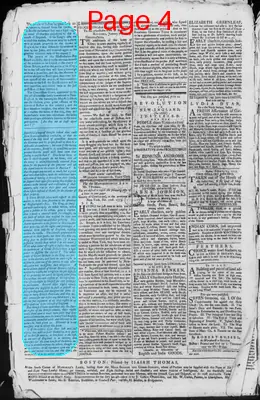
Editorial
March 4, 1773
The Massachusetts Spy, Or, Thomas's Boston Journal
Boston, Suffolk County, Massachusetts
What is this article about?
An editorial defending the charter rights of British American colonies, particularly Massachusetts-Bay, against claims that Parliament can annul them. Argues charters are binding contracts granting colonists rights as natural-born subjects, critiques British overreach including the Gaspee incident trial, and asserts colonies' place in the empire with protections.
Clipping

OCR Quality
96%
Excellent
Full Text
The people of Boston lay great stress on their charters, derived from the crown, as if a British parliament had not a legal right to annul all charters prejudicial to the interests of England. If the King's acts are to bind this nation, the pope may lay a claim with as much propriety to the crown of England, for it was solemnly surrendered to him by our John, and received again as the gracious donative only of the papacy.
The people of the Massachusetts-Bay should consider, that it is the obvious interest of the colonies to be subject to the crown of Great-Britain, and to the person of the King; for in the last case they will have a sovereign without a protector, and be, like Hanover at present obliged to stand upon their own bottom against all the attacks of their enemies: Whereas in the first, the British nation will be their guardian, and defend them in the just possession of their liberties.
The Commission Court, appointed to try the act of rebellion lately committed in New England, by the burning his Majesty's schooner the Gaspee, gives great offence to the friends of Boston in this country; and we may therefore imagine, that when the news of it reaches the saints of that city, they will immediately enter into resolutions declaring their privileges absolutely superior to the royal prerogative. [Are they not at least equal to it?]
Superficial glance of thought indeed that could form so unreasonable a conclusion, as that the want of the only band of connection between the Governor and his people should to them be a desirable circumstance; but even if this saving of the expense, should be so, would this writer pretend that the people will have even that saving to console them? Does he not know, or does he think the people do not know, that all the money is unconstitutionally extorted from them for the payment of the governor and all the dependants on the crown in America? So that the people pay not only as much, but a great deal more than before, with the additional mortification of having it forced from their hands, to support their oppressors whom they consider as enemies to the interest and constitution of their country, who riot on their spoils and return them insults instead of thanks for the plunder of their property.
Every British colony with respect to this matter, is in the same situation as the province of Massachusetts-Bay. The King, as invested with authority by the whole nation, which gave a sanction to his action, gave a charter, that is made a contract with the colonists, on the faith of which they trusted the lives and fortunes of themselves and their posterity. This charter warrants to the settlers in America, and their posterity, all the rights and privileges of natural born subjects of England, residing within the realm. The colonists performed the contract on their parts, nor have they done any thing since to forfeit their rights, (if it was possible to forfeit them which I do not admit)
With what colour of right or justice then, could the parliament of Great Britain have a legal power to dissolve the charter? The whole people of Great-Britain in the King, are parties to the charter, and have no more right to dissolve it, than one of the parties to any other obligation has to dissolve such obligation. A natural born subject of Great Britain, residing within the realm, has a right to the sole disposal of his property, nor can it be legally taken from him without his own consent or his representative (freely chosen by himself for that purpose) in parliament. Several other rights equally important are possessed by such a subject residing in England, and therefore the same belongs to every British American, and they neither contend for nor desire any thing more; nor can the full enjoyment of all those rights be at all prejudicial to the interest of England.
But though I have mentioned only the charter rights of the British colonies, their rights really stand upon a much more solid and permanent foundation, even the law of God himself, inseparably connected with, and inherent in the nature he hath given us. However it is not necessary now to discuss this point.
If the colonies enjoy their just and full rights, they will consider themselves as a part of the British empire, as beneficial to the rest, as one part of England is to another, and therefore for the joint benefit of the whole, entitled to protection from the whole, though not as an inferior, at all dependent upon any other part, and in this relation, and this alone, the colonists stand to the mother country.
The people of the Massachusetts-Bay should consider, that it is the obvious interest of the colonies to be subject to the crown of Great-Britain, and to the person of the King; for in the last case they will have a sovereign without a protector, and be, like Hanover at present obliged to stand upon their own bottom against all the attacks of their enemies: Whereas in the first, the British nation will be their guardian, and defend them in the just possession of their liberties.
The Commission Court, appointed to try the act of rebellion lately committed in New England, by the burning his Majesty's schooner the Gaspee, gives great offence to the friends of Boston in this country; and we may therefore imagine, that when the news of it reaches the saints of that city, they will immediately enter into resolutions declaring their privileges absolutely superior to the royal prerogative. [Are they not at least equal to it?]
Superficial glance of thought indeed that could form so unreasonable a conclusion, as that the want of the only band of connection between the Governor and his people should to them be a desirable circumstance; but even if this saving of the expense, should be so, would this writer pretend that the people will have even that saving to console them? Does he not know, or does he think the people do not know, that all the money is unconstitutionally extorted from them for the payment of the governor and all the dependants on the crown in America? So that the people pay not only as much, but a great deal more than before, with the additional mortification of having it forced from their hands, to support their oppressors whom they consider as enemies to the interest and constitution of their country, who riot on their spoils and return them insults instead of thanks for the plunder of their property.
Every British colony with respect to this matter, is in the same situation as the province of Massachusetts-Bay. The King, as invested with authority by the whole nation, which gave a sanction to his action, gave a charter, that is made a contract with the colonists, on the faith of which they trusted the lives and fortunes of themselves and their posterity. This charter warrants to the settlers in America, and their posterity, all the rights and privileges of natural born subjects of England, residing within the realm. The colonists performed the contract on their parts, nor have they done any thing since to forfeit their rights, (if it was possible to forfeit them which I do not admit)
With what colour of right or justice then, could the parliament of Great Britain have a legal power to dissolve the charter? The whole people of Great-Britain in the King, are parties to the charter, and have no more right to dissolve it, than one of the parties to any other obligation has to dissolve such obligation. A natural born subject of Great Britain, residing within the realm, has a right to the sole disposal of his property, nor can it be legally taken from him without his own consent or his representative (freely chosen by himself for that purpose) in parliament. Several other rights equally important are possessed by such a subject residing in England, and therefore the same belongs to every British American, and they neither contend for nor desire any thing more; nor can the full enjoyment of all those rights be at all prejudicial to the interest of England.
But though I have mentioned only the charter rights of the British colonies, their rights really stand upon a much more solid and permanent foundation, even the law of God himself, inseparably connected with, and inherent in the nature he hath given us. However it is not necessary now to discuss this point.
If the colonies enjoy their just and full rights, they will consider themselves as a part of the British empire, as beneficial to the rest, as one part of England is to another, and therefore for the joint benefit of the whole, entitled to protection from the whole, though not as an inferior, at all dependent upon any other part, and in this relation, and this alone, the colonists stand to the mother country.
What sub-type of article is it?
Constitutional
Legal Reform
Imperialism
What keywords are associated?
Colonial Charters
British Parliament
Massachusetts Bay
Gaspee Incident
Constitutional Rights
British Subjects
Royal Prerogative
Empire Protection
What entities or persons were involved?
People Of Boston
Massachusetts Bay
British Parliament
King
Colonists
Governor
Commission Court
Gaspee
Editorial Details
Primary Topic
Defense Of Colonial Charter Rights Against Parliamentary Annulment
Stance / Tone
Strongly Pro Colonial Rights And Constitutional Protections
Key Figures
People Of Boston
Massachusetts Bay
British Parliament
King
Colonists
Governor
Commission Court
Gaspee
Key Arguments
Parliament Has No Legal Right To Annul Colonial Charters Prejudicial To England
Colonial Charters Are Binding Contracts Granting Rights As Natural Born British Subjects
Colonists Have Fulfilled Their Part Of The Charter Without Forfeiture
British Subjects' Rights To Property And Representation Apply To Colonists
Colonies Benefit From Subjection To The Crown For Protection By Britain
Unconstitutional Extortion Of Money For Governors And Crown Dependants
Rights Stand On Divine Law Beyond Charters
Colonies As Equal Parts Of The British Empire Entitled To Protection