Thank you for visiting SNEWPapers!
Sign up free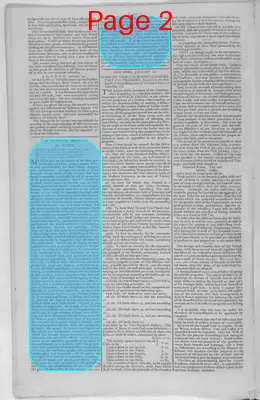
Editorial
January 20, 1790
Gazette Of The United States
New York, New York County, New York
What is this article about?
An editorial defending the U.S. federal government against fears that it diminishes state sovereignty, arguing it enhances national unity, commerce, and prosperity while critiquing opponents as self-interested. References pre-revolution ties to Britain for analogy.
Clipping
OCR Quality
98%
Excellent
Full Text
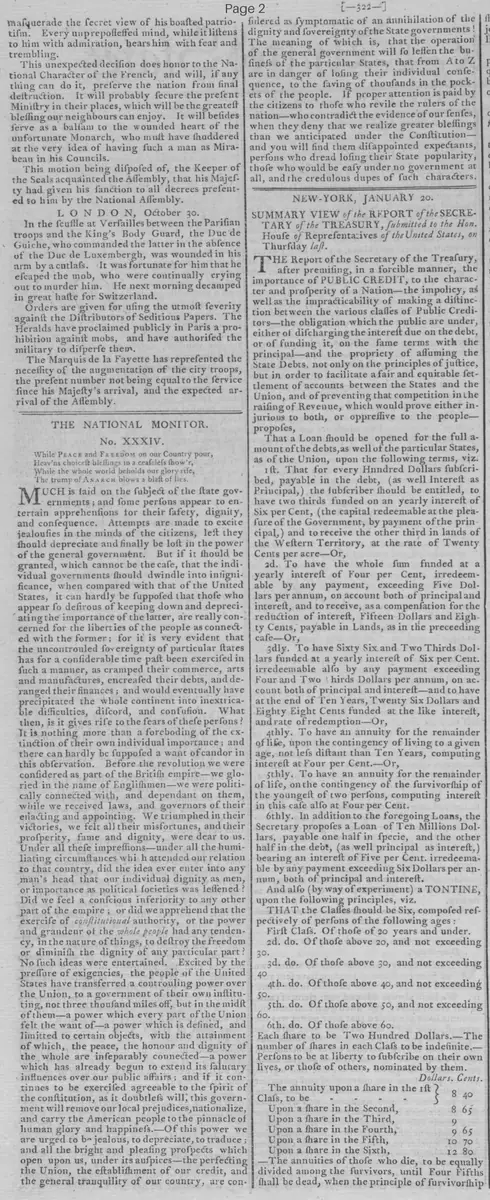
THE NATIONAL MONITOR.
No. XXXIV.
While Peace and Freedom on our Country pour,
Heav'n's choicest blessings in a ceaseless shower,
While the whole world beholds our glory rise,
The trump of Anarchy blows a blast of lies.
Much is said on the subject of state governments. Certain apprehensions for their safety, dignity, and consequence. Attempts are made to excite jealousies in the minds of the citizens, lest they should depreciate and finally be lost in the power of the general government. But if it should be granted, which cannot be the case, that the individual governments should dwindle into insignificance, when compared with that of the United States, it can hardly be supposed that those who appear so desirous of keeping down and depreciating the importance of the latter, are really concerned for the liberties of the people as connected with the former; for it is very evident that the uncontrolled sovereignty of particular states has for a considerable time past been exercised in such a manner, as cramped their commerce, arts and manufactures, increased their debts, and deranged their finances; and would eventually have precipitated the whole continent into inextricable difficulties, discord, and confusion. What then, is it gives rise to the fears of these persons? It is nothing more than a foreboding of the extinction of their own individual importance; and there can hardly be supposed a want of candor in this observation. Before the revolution we were considered as part of the British empire—we gloried in the name of Englishmen—we were politically connected with, and dependant on them, while we received laws, and governors of their enacting and appointing. We triumphed in their victories, we felt all their misfortunes, and their prosperity, fame and dignity, were dear to us. Under all these impressions—under all the humiliating circumstances which attended our relation to that country, did the idea ever enter into any man's head that our individual dignity as men, or importance as political societies was lessened? Did we feel a conscious inferiority to any other part of the empire; or did we apprehend that the exercise of constitutional authority, or the power and grandeur of the whole people had any tendency, in the nature of things, to destroy the freedom or diminish the dignity of any particular part? No such ideas were entertained. Excited by the pressure of exigencies, the people of the United States have transferred a controlling power over the Union, to a government of their own instituting, not three thousand miles off, but in the midst of them—a power which every part of the Union felt the want of—a power which is defined, and limited to certain objects, with the attainment of which, the peace, the honour and dignity of the whole are inseparably connected—a power which has already begun to extend its salutary influences over our public affairs; and if it continues to be exercised agreeable to the spirit of the constitution, as it doubtless will, this government will remove our local prejudices, nationalize, and carry the American people to the pinnacle of human glory and happiness. Of this power we are urged to be jealous, to depreciate, to traduce; and all the bright and pleasing prospects which open upon us, under its auspices—the perfecting the Union, the establishment of our credit, and the general tranquility of our country, are considered as symptomatic of an annihilation of the dignity and sovereignty of the State governments!
The meaning of which is, that the operation of the general government will so lessen the business of the particular States, that from A to Z are in danger of losing their individual consequence, to the saving of thousands in the pockets of the people. If proper attention is paid by the citizens to those who revile the rulers of the nation—who contradict the evidence of our senses, when they deny that we realize greater blessings than we anticipated under the Constitution—and you will find them disappointed expectants, persons who dread losing their State popularity, those who would be easy under no government at all, and the credulous dupes of such characters.
No. XXXIV.
While Peace and Freedom on our Country pour,
Heav'n's choicest blessings in a ceaseless shower,
While the whole world beholds our glory rise,
The trump of Anarchy blows a blast of lies.
Much is said on the subject of state governments. Certain apprehensions for their safety, dignity, and consequence. Attempts are made to excite jealousies in the minds of the citizens, lest they should depreciate and finally be lost in the power of the general government. But if it should be granted, which cannot be the case, that the individual governments should dwindle into insignificance, when compared with that of the United States, it can hardly be supposed that those who appear so desirous of keeping down and depreciating the importance of the latter, are really concerned for the liberties of the people as connected with the former; for it is very evident that the uncontrolled sovereignty of particular states has for a considerable time past been exercised in such a manner, as cramped their commerce, arts and manufactures, increased their debts, and deranged their finances; and would eventually have precipitated the whole continent into inextricable difficulties, discord, and confusion. What then, is it gives rise to the fears of these persons? It is nothing more than a foreboding of the extinction of their own individual importance; and there can hardly be supposed a want of candor in this observation. Before the revolution we were considered as part of the British empire—we gloried in the name of Englishmen—we were politically connected with, and dependant on them, while we received laws, and governors of their enacting and appointing. We triumphed in their victories, we felt all their misfortunes, and their prosperity, fame and dignity, were dear to us. Under all these impressions—under all the humiliating circumstances which attended our relation to that country, did the idea ever enter into any man's head that our individual dignity as men, or importance as political societies was lessened? Did we feel a conscious inferiority to any other part of the empire; or did we apprehend that the exercise of constitutional authority, or the power and grandeur of the whole people had any tendency, in the nature of things, to destroy the freedom or diminish the dignity of any particular part? No such ideas were entertained. Excited by the pressure of exigencies, the people of the United States have transferred a controlling power over the Union, to a government of their own instituting, not three thousand miles off, but in the midst of them—a power which every part of the Union felt the want of—a power which is defined, and limited to certain objects, with the attainment of which, the peace, the honour and dignity of the whole are inseparably connected—a power which has already begun to extend its salutary influences over our public affairs; and if it continues to be exercised agreeable to the spirit of the constitution, as it doubtless will, this government will remove our local prejudices, nationalize, and carry the American people to the pinnacle of human glory and happiness. Of this power we are urged to be jealous, to depreciate, to traduce; and all the bright and pleasing prospects which open upon us, under its auspices—the perfecting the Union, the establishment of our credit, and the general tranquility of our country, are considered as symptomatic of an annihilation of the dignity and sovereignty of the State governments!
The meaning of which is, that the operation of the general government will so lessen the business of the particular States, that from A to Z are in danger of losing their individual consequence, to the saving of thousands in the pockets of the people. If proper attention is paid by the citizens to those who revile the rulers of the nation—who contradict the evidence of our senses, when they deny that we realize greater blessings than we anticipated under the Constitution—and you will find them disappointed expectants, persons who dread losing their State popularity, those who would be easy under no government at all, and the credulous dupes of such characters.
What sub-type of article is it?
Constitutional
Partisan Politics
Economic Policy
What keywords are associated?
Federalism
State Sovereignty
Constitutional Government
National Unity
Anti Federalist Critics
Commerce And Finance
What entities or persons were involved?
General Government
State Governments
British Empire
Editorial Details
Primary Topic
Defense Of Federal Government Against State Sovereignty Fears
Stance / Tone
Supportive Of Federal Authority And Critical Of Anti Federalists
Key Figures
General Government
State Governments
British Empire
Key Arguments
State Sovereignty Previously Harmed Commerce And Finances
Federal Power Enhances National Unity And Prosperity
Opponents Fear Loss Of Personal Importance, Not True Liberty
Pre Revolution British Ties Did Not Diminish Colonial Dignity
Constitution Brings Blessings And Should Not Be Traduced