Thank you for visiting SNEWPapers!
Sign up free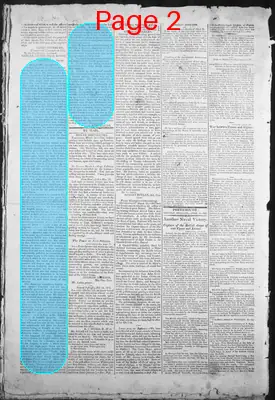
Editorial
April 18, 1815
The New Hampshire Gazette
Portsmouth, Rockingham County, New Hampshire
What is this article about?
Editorial in the Boston Patriot defends William Cobbett from Federalist criticism, recounting his shift from British agent embraced by Federalists to admirer of American republicanism, exposing British corruption and New England faction's treasonable views.
Clipping
OCR Quality
98%
Excellent
Full Text
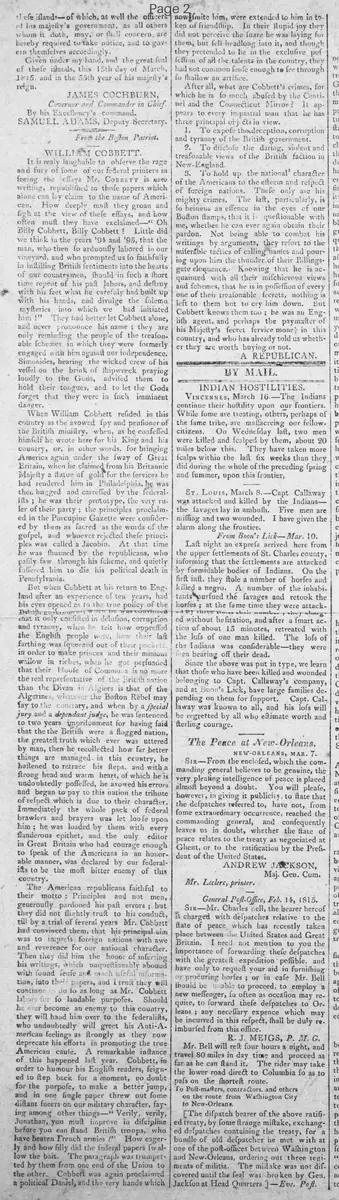
From the Boston Patriot.
WILLIAM COBBETT.
It is really laughable to observe the rage and fury of some of our federal printers in seeing the essays Mr. Cobbett is now writing, republished in those papers which alone can lay claim to the name of American. How deeply must they groan and sigh at the view of these essays, and how often must they have exclaimed—'Oh Billy Cobbett, Billy Cobbett! Little did we think in the years '94 and '95, that the man, who then so arduously labored in our vineyard, and who prompted us so faithfully in instilling British sentiments into the hearts of our countrymen, should in such a short time repent of his past labors, and destroy with his feet what he carefully had built up with his hands, and divulge the solemn mysteries into which we had initiated him!' They had better let Cobbett alone, and never pronounce his name; they are only reminding the people of the treasonable schemes in which they were formerly engaged with him against our independence.
Simonides, hearing the wicked crew of his vessel on the brink of shipwreck praying loudly to the Gods, advised them to hold their tongues, and to let the Gods forget that they were in such imminent danger.
When William Cobbett resided in this country as the avowed spy and pensioner of the British ministry, when, as he confessed himself he wrote here for his King and his country, or, in other words, for bringing America again under the sway of Great Britain, when he claimed from his Britannic Majesty a statue of gold for the services he had rendered him in Philadelphia, he was then hugged and caressed by the federalists; he was their prototype, the very ruler of their party; the principles proclaimed in the Porcupine Gazette were considered by them as sacred as the words of the gospel, and whoever rejected these principles was called a Jacobin. At that time he was shunned by the republicans, who easily saw through his scheme, and quietly suffered him to die his political death in Pennsylvania.
But when Cobbett at his return to England after an experience of ten years, had his eyes opened as to the true policy of the British government was convinced that it only consisted in delusion, corruption and tyranny, when he felt how oppressed the English people were, how their last farthing was squeezed out of their pockets in order to make princes and their minions wallow in riches, when he got persuaded that their House of Commons is no more the real representative of the British nation than the Divan in Algiers is that of the Algerines, whatever the Boston Rebel may say to the contrary, and when by a special jury and a dependant judge, he was sentenced to two years imprisonment for having said that the British were a flogged nation, the greatest truth which ever was uttered by man, then he recollected how far better things are managed, in this country, he hastened to retrace his steps, and with a strong head and warm heart, of which he is undoubtedly possessed, he avowed his errors and began to pay to this nation the tribute of respect which is due to their character.
Immediately the whole pack of federal brawlers and brayers was let loose upon him: he was loaded by them with every slanderous epithet, and the only editor in Great Britain who had courage enough to speak of the Americans in an honorable manner, was declared by our federalists to be the most bitter enemy of this country.
The American republicans faithful to their motto: Principles and not men, generously pardoned his past errors; but they did not lightly trust to his conduct, till by a trial of several years Mr. Cobbett had convinced them, that his principal aim was to impress foreign nations with awe and reverence for our national character. Then they did him the honor of inserting his writings, which unquestionably abound with sound sense and much useful information, into their papers, and I trust they will continue to do so as long as Mr. Cobbett labors for so laudable a purpose. Should he ever become an enemy to this country, they will hand him over to the federalists, who undoubtedly will greet his Anti-American feelings as strongly as they now deprecate his efforts in promoting the true American cause. A remarkable instance of this happened last year. Cobbett, in order to humour his English readers, feigned to step back for a moment, no doubt for the purpose, to make a better jump, and in one single paper threw out some distant sneers on our military character, saying among other things—'Verily, verily, Jonathan, you must improve in discipline before you can stand British troops, who have beaten French armies!' How eagerly and how silly did the federal papers swallow the bait. The paragraph was trumpeted by them from one end of the Union to the other. Cobbett was again proclaimed a political Daniel, and the very hands which now smite him, were extended to him in token of friendship. In their stupid joy they did not perceive the snare he was laying for them, but fell headlong into it, and though they pretended to be in the exclusive possession of all the talents in the country, they had not common sense enough to see through so shallow an artifice.
After all, what are Cobbett's crimes, for which he is so much abused by the Centinel and the Connecticut Mirror? It appears to every impartial man that he has three principal objects in view.
1. To expose the deception, corruption and tyranny of the British government.
2. To disclose the daring, violent and treasonable views of the British faction in New-England.
3. To hold up the national character of the Americans to the esteem and respect of foreign nations. These only are his mighty crimes. The last, particularly, is so heinous an offence in the eyes of our Boston stamps, that it is questionable with me, whether he can ever again obtain their pardon. Not being able to combat his writings by arguments, they resort to the miserable tactics of calling names and pouring upon him the thunder of their Billingsgate eloquence. Knowing that he is acquainted with all their mischievous views and schemes, that he is in possession of every one of their treasonable secrets, nothing is left to them but to cry him down. But Cobbett knows them too; he was an English agent, and perhaps the paymaster of his Majesty's secret service money in this country, and who has already told us whether they are worth buying or not.
A REPUBLICAN.
WILLIAM COBBETT.
It is really laughable to observe the rage and fury of some of our federal printers in seeing the essays Mr. Cobbett is now writing, republished in those papers which alone can lay claim to the name of American. How deeply must they groan and sigh at the view of these essays, and how often must they have exclaimed—'Oh Billy Cobbett, Billy Cobbett! Little did we think in the years '94 and '95, that the man, who then so arduously labored in our vineyard, and who prompted us so faithfully in instilling British sentiments into the hearts of our countrymen, should in such a short time repent of his past labors, and destroy with his feet what he carefully had built up with his hands, and divulge the solemn mysteries into which we had initiated him!' They had better let Cobbett alone, and never pronounce his name; they are only reminding the people of the treasonable schemes in which they were formerly engaged with him against our independence.
Simonides, hearing the wicked crew of his vessel on the brink of shipwreck praying loudly to the Gods, advised them to hold their tongues, and to let the Gods forget that they were in such imminent danger.
When William Cobbett resided in this country as the avowed spy and pensioner of the British ministry, when, as he confessed himself he wrote here for his King and his country, or, in other words, for bringing America again under the sway of Great Britain, when he claimed from his Britannic Majesty a statue of gold for the services he had rendered him in Philadelphia, he was then hugged and caressed by the federalists; he was their prototype, the very ruler of their party; the principles proclaimed in the Porcupine Gazette were considered by them as sacred as the words of the gospel, and whoever rejected these principles was called a Jacobin. At that time he was shunned by the republicans, who easily saw through his scheme, and quietly suffered him to die his political death in Pennsylvania.
But when Cobbett at his return to England after an experience of ten years, had his eyes opened as to the true policy of the British government was convinced that it only consisted in delusion, corruption and tyranny, when he felt how oppressed the English people were, how their last farthing was squeezed out of their pockets in order to make princes and their minions wallow in riches, when he got persuaded that their House of Commons is no more the real representative of the British nation than the Divan in Algiers is that of the Algerines, whatever the Boston Rebel may say to the contrary, and when by a special jury and a dependant judge, he was sentenced to two years imprisonment for having said that the British were a flogged nation, the greatest truth which ever was uttered by man, then he recollected how far better things are managed, in this country, he hastened to retrace his steps, and with a strong head and warm heart, of which he is undoubtedly possessed, he avowed his errors and began to pay to this nation the tribute of respect which is due to their character.
Immediately the whole pack of federal brawlers and brayers was let loose upon him: he was loaded by them with every slanderous epithet, and the only editor in Great Britain who had courage enough to speak of the Americans in an honorable manner, was declared by our federalists to be the most bitter enemy of this country.
The American republicans faithful to their motto: Principles and not men, generously pardoned his past errors; but they did not lightly trust to his conduct, till by a trial of several years Mr. Cobbett had convinced them, that his principal aim was to impress foreign nations with awe and reverence for our national character. Then they did him the honor of inserting his writings, which unquestionably abound with sound sense and much useful information, into their papers, and I trust they will continue to do so as long as Mr. Cobbett labors for so laudable a purpose. Should he ever become an enemy to this country, they will hand him over to the federalists, who undoubtedly will greet his Anti-American feelings as strongly as they now deprecate his efforts in promoting the true American cause. A remarkable instance of this happened last year. Cobbett, in order to humour his English readers, feigned to step back for a moment, no doubt for the purpose, to make a better jump, and in one single paper threw out some distant sneers on our military character, saying among other things—'Verily, verily, Jonathan, you must improve in discipline before you can stand British troops, who have beaten French armies!' How eagerly and how silly did the federal papers swallow the bait. The paragraph was trumpeted by them from one end of the Union to the other. Cobbett was again proclaimed a political Daniel, and the very hands which now smite him, were extended to him in token of friendship. In their stupid joy they did not perceive the snare he was laying for them, but fell headlong into it, and though they pretended to be in the exclusive possession of all the talents in the country, they had not common sense enough to see through so shallow an artifice.
After all, what are Cobbett's crimes, for which he is so much abused by the Centinel and the Connecticut Mirror? It appears to every impartial man that he has three principal objects in view.
1. To expose the deception, corruption and tyranny of the British government.
2. To disclose the daring, violent and treasonable views of the British faction in New-England.
3. To hold up the national character of the Americans to the esteem and respect of foreign nations. These only are his mighty crimes. The last, particularly, is so heinous an offence in the eyes of our Boston stamps, that it is questionable with me, whether he can ever again obtain their pardon. Not being able to combat his writings by arguments, they resort to the miserable tactics of calling names and pouring upon him the thunder of their Billingsgate eloquence. Knowing that he is acquainted with all their mischievous views and schemes, that he is in possession of every one of their treasonable secrets, nothing is left to them but to cry him down. But Cobbett knows them too; he was an English agent, and perhaps the paymaster of his Majesty's secret service money in this country, and who has already told us whether they are worth buying or not.
A REPUBLICAN.
What sub-type of article is it?
Partisan Politics
Foreign Affairs
What keywords are associated?
William Cobbett
Federalists
Republicans
British Influence
Partisan Attacks
American Independence
Political Repentance
What entities or persons were involved?
William Cobbett
Federalists
Republicans
British Ministry
Porcupine Gazette
Centinel
Connecticut Mirror
Editorial Details
Primary Topic
Defense Of William Cobbett Against Federalist Attacks
Stance / Tone
Supportive Of Cobbett And Republicans, Critical Of Federalists And British Government
Key Figures
William Cobbett
Federalists
Republicans
British Ministry
Porcupine Gazette
Centinel
Connecticut Mirror
Key Arguments
Federalists Formerly Embraced Cobbett As A British Agent Plotting Against American Independence
Cobbett Repented After Experiencing British Tyranny And Now Praises American Character
Republicans Forgave Cobbett Based On Principles, Unlike Opportunistic Federalists
Cobbett Exposes British Corruption, New England Treason, And Elevates American Esteem
Federalists Attack Cobbett Out Of Fear He Reveals Their Secrets