Thank you for visiting SNEWPapers!
Sign up free
The Chronicle
Pascagoula, Moss Point, Jackson County, Mississippi
What is this article about?
State Rep. Edgar Stephens of Union County urges welfare commissioner Fred Ross to implement approved benefit increases for the aged, blind, and disabled effective Jan. 1 instead of July 1, arguing it would better aid recipients during winter and spring hardships and attract more federal funds.
Clipping
OCR Quality
Full Text
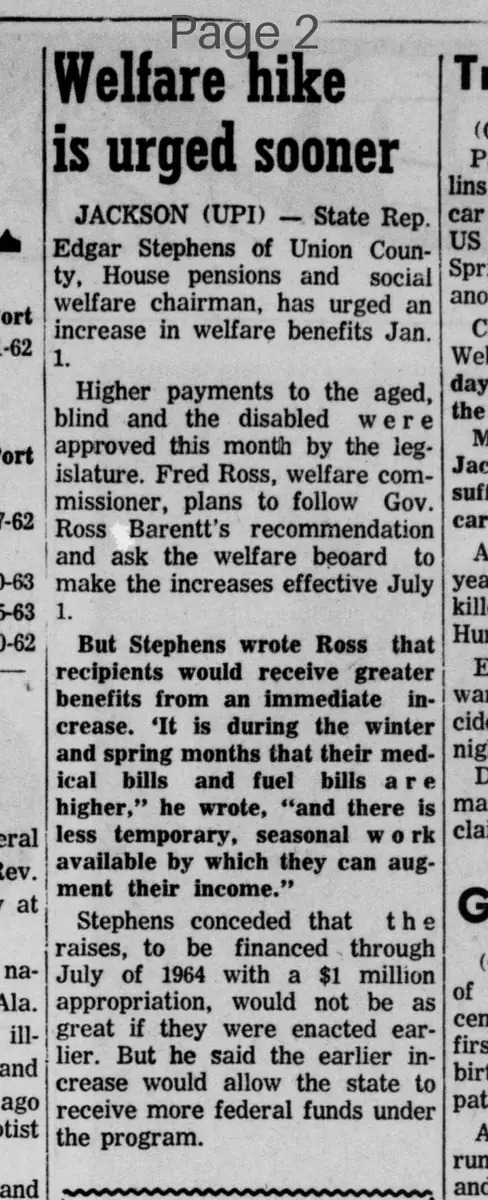
JACKSON (UPI) - State Rep. Edgar Stephens of Union County, House pensions and social welfare chairman, has urged an increase in welfare benefits Jan. 1.
Higher payments to the aged, blind and the disabled were approved this month by the legislature. Fred Ross, welfare commissioner, plans to follow Gov. Ross Barnett's recommendation and ask the welfare board to make the increases effective July 1.
But Stephens wrote Ross that recipients would receive greater benefits from an immediate increase. "It is during the winter and spring months that their medical bills and fuel bills are higher," he wrote, "and there is less temporary, seasonal work available by which they can augment their income."
Stephens conceded that the raises, to be financed through July of 1964 with a $1 million appropriation, would not be as great if they were enacted earlier. But he said the earlier increase would allow the state to receive more federal funds under the program.
What sub-type of article is it?
What keywords are associated?
What entities or persons were involved?
Where did it happen?
Domestic News Details
Primary Location
Jackson
Key Persons
Outcome
higher payments approved this month; planned effective july 1 but urged for jan. 1; raises would be smaller if earlier but allow more federal funds.
Event Details
State Rep. Edgar Stephens, House pensions and social welfare chairman, wrote to welfare commissioner Fred Ross urging an increase in welfare benefits effective Jan. 1 instead of following Gov. Ross Barnett's recommendation for July 1, citing higher winter and spring medical and fuel bills and less seasonal work for recipients.