Thank you for visiting SNEWPapers!
Sign up free
Story
October 15, 1909
Camas Prairie Chronicle
Cottonwood, Idaho County, Idaho
What is this article about?
Chicago manufacturers plan to eliminate sweatshop labor by building 80 modern facilities with amenities like clubhouses and libraries, motivated by business benefits alongside humanitarian reasons.
Clipping
OCR Quality
98%
Excellent
Full Text
Abolition of Sweatshops.
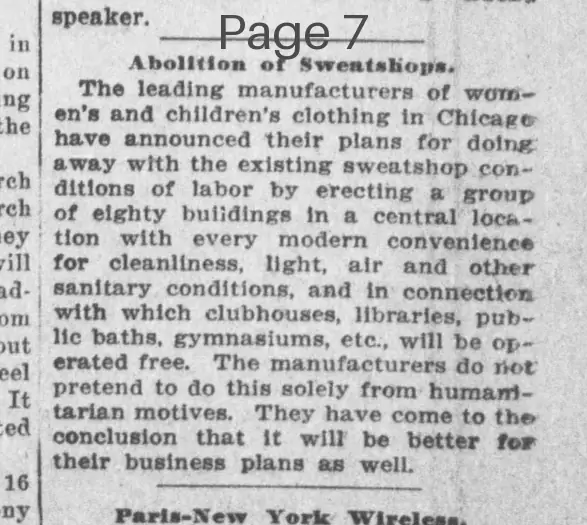
The leading manufacturers of women's and children's clothing in Chicago have announced their plans for doing away with the existing sweatshop conditions of labor by erecting a group of eighty buildings in a central location with every modern convenience for cleanliness, light, air and other sanitary conditions, and in connection with which clubhouses, libraries, public baths, gymnasiums, etc., will be operated free. The manufacturers do not pretend to do this solely from humanitarian motives. They have come to the conclusion that it will be better for their business plans as well.
The leading manufacturers of women's and children's clothing in Chicago have announced their plans for doing away with the existing sweatshop conditions of labor by erecting a group of eighty buildings in a central location with every modern convenience for cleanliness, light, air and other sanitary conditions, and in connection with which clubhouses, libraries, public baths, gymnasiums, etc., will be operated free. The manufacturers do not pretend to do this solely from humanitarian motives. They have come to the conclusion that it will be better for their business plans as well.
What sub-type of article is it?
Historical Event
What themes does it cover?
Moral Virtue
Social Manners
What keywords are associated?
Sweatshops
Abolition
Chicago
Manufacturers
Labor Conditions
Sanitary Reform
Where did it happen?
Chicago
Story Details
Location
Chicago
Story Details
Leading manufacturers in Chicago announce plans to abolish sweatshop conditions by constructing eighty modern buildings with sanitary features and free amenities like clubhouses, libraries, and gymnasiums, driven by both humanitarian and business interests.