Thank you for visiting SNEWPapers!
Sign up free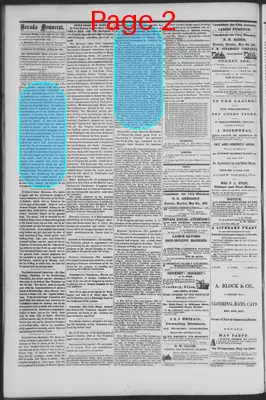
The Nevada Democrat
Nevada City, Nevada County, California
What is this article about?
The bombardment and surrender of Fort Sumter by Confederate forces on April 12-13, 1861. Major Anderson's garrison faced overwhelming fire, supply shortages, and fires, leading to evacuation after destroying munitions to prevent capture.
Clipping
OCR Quality
Full Text
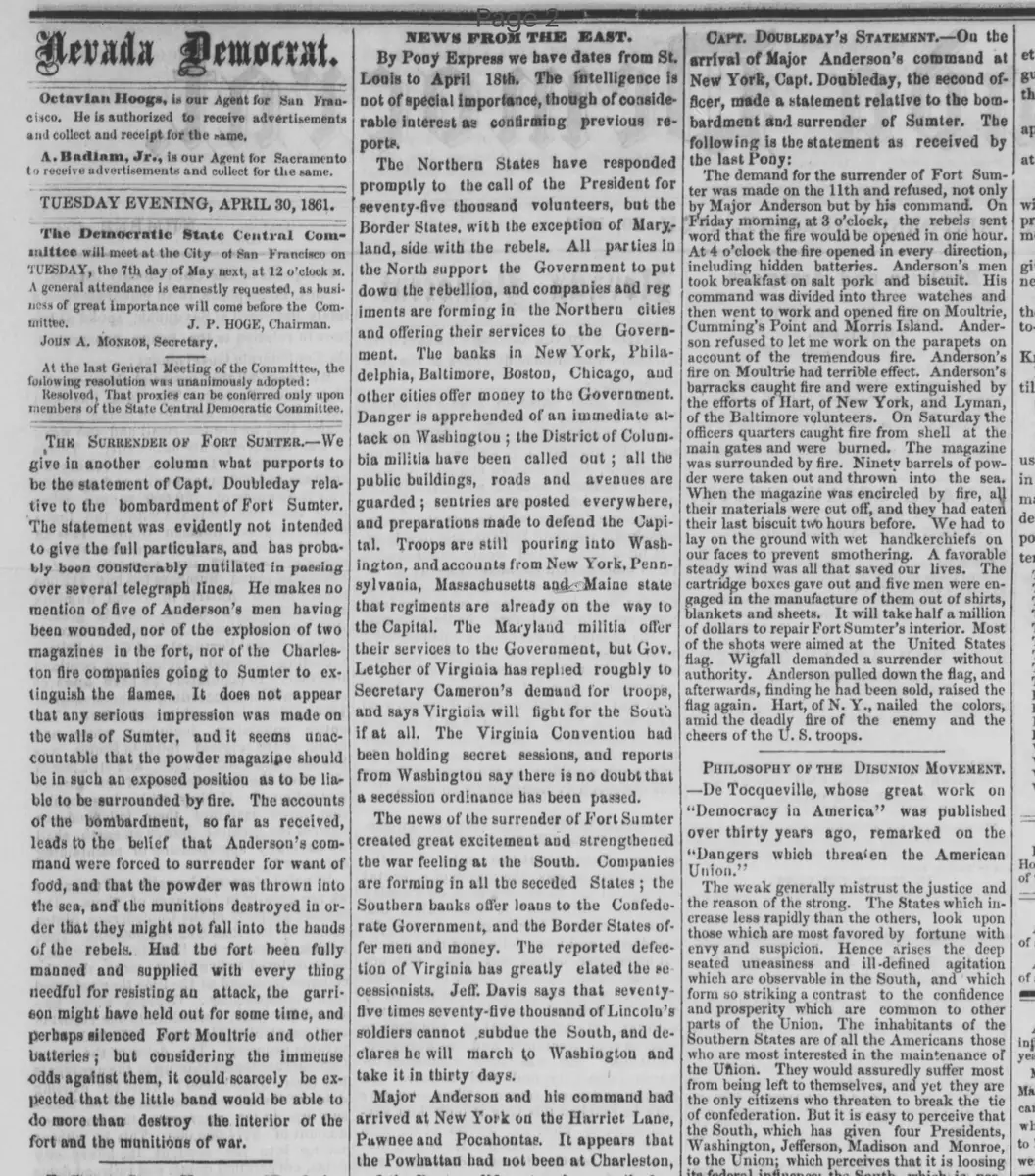
Capt. Doubleday's Statement. On the arrival of Major Anderson's command at New York, Capt. Doubleday, the second officer, made a statement relative to the bombardment and surrender of Sumter. The following is the statement as received by the last Pony:
The demand for the surrender of Fort Sumter was made on the 11th and refused, not only by Major Anderson but by his command. On Friday morning, at 3 o'clock, the rebels sent word that the fire would be opened in one hour. At 4 o'clock the fire opened in every direction, including hidden batteries. Anderson's men took breakfast on salt pork and biscuit. His command was divided into three watches and then went to work and opened fire on Moultrie, Cumming's Point and Morris Island. Anderson refused to let me work on the parapets on account of the tremendous fire. Anderson's fire on Moultrie had terrible effect. Anderson's barracks caught fire and were extinguished by the efforts of Hart, of New York, and Lyman, of the Baltimore volunteers. On Saturday the officers quarters caught fire from shell at the main gates and were burned. The magazine was surrounded by fire. Ninety barrels of powder were taken out and thrown into the sea. When the magazine was encircled by fire, all their materials were cut off, and they had eaten their last biscuit two hours before. We had to lay on the ground with wet handkerchiefs on our faces to prevent smothering. A favorable steady wind was all that saved our lives. The cartridge boxes gave out and five men were engaged in the manufacture of them out of shirts, blankets and sheets. It will take half a million of dollars to repair Fort Sumter's interior. Most of the shots were aimed at the United States flag. Wigfall demanded a surrender without authority. Anderson pulled down the flag, and afterwards, finding he had been sold, raised the flag again. Hart, of N. Y., nailed the colors, amid the deadly fire of the enemy and the cheers of the U. S. troops.
What sub-type of article is it?
What themes does it cover?
What keywords are associated?
What entities or persons were involved?
Where did it happen?
Story Details
Key Persons
Location
Fort Sumter, Fort Moultrie, Cumming's Point, Morris Island
Event Date
11th, Friday Morning
Story Details
Confederate forces demanded surrender of Fort Sumter on the 11th, refused by Major Anderson. Bombardment began Friday at 4 a.m. from multiple batteries. Garrison fired back but faced intense shelling, fires in barracks and officers' quarters, and supply shortages. Powder thrown into sea, munitions destroyed. Surrender due to lack of food and fire encirclement; flag briefly lowered then raised amid cheers.