Thank you for visiting SNEWPapers!
Sign up free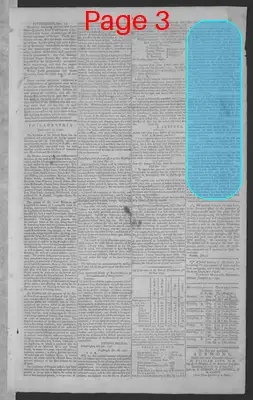
Editorial
January 9, 1792
National Gazette
Philadelphia, Philadelphia County, Pennsylvania
What is this article about?
Editorial defends U.S. government efforts for peace with northwestern Indians, citing failed treaties with Wabash tribes and necessity of military campaigns under Gen. St. Clair against their hostilities, despite some advocacy for the Indians.
Clipping
OCR Quality
95%
Excellent
Full Text
The following is copied from Centinel
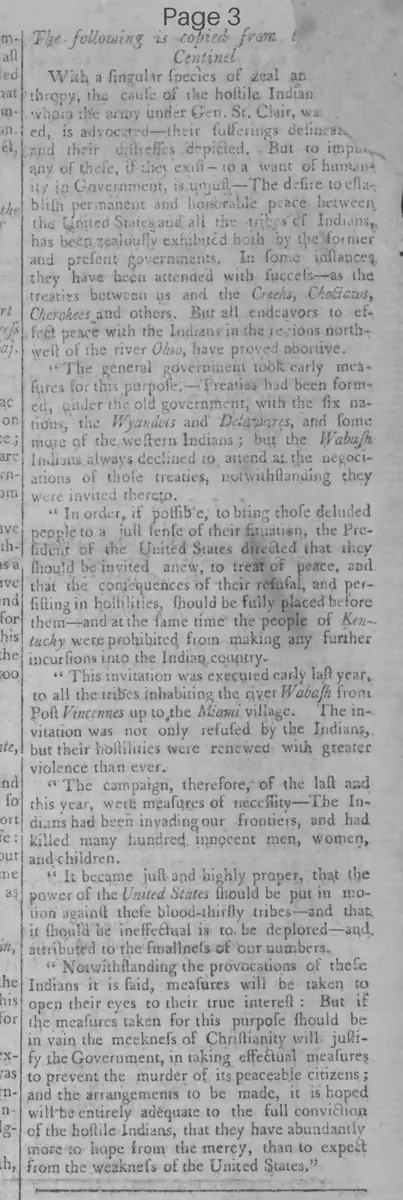
With a singular species of zeal and misanthropy, the cause of the hostile Indian whom the army under Gen. St. Clair was sent to chastise, is advocated—their sufferings delineated and their distresses depicted. But to impute any of these, if they exist, to a want of humanity in Government, is unjust—The desire to establish permanent and honorable peace between the United States and all the tribes of Indians, has been zealously exhibited both by the former and present governments. In some instances they have been attended with success—as the treaties between us and the Creeks, Choctaws, Cherokees and others. But all endeavors to effect peace with the Indians in the regions north-west of the river Ohio, have proved abortive.
"The general government took early measures on this purpose. —Treaties had been formed, under the old government, with the six nations, the Wyandots and Delawares, and some more of the western Indians; but the Wabash Indians always declined to attend at the negotiations of those treaties, notwithstanding they were invited thereto.
"In order, if possible, to bring those deluded people to a just sense of their situation, the President of the United States directed that they should be invited anew, to treat of peace, and that the consequences of their refusal, and persisting in hostilities, should be fully placed before them—and at the same time the people of Kentucky were prohibited from making any further incursions into the Indian country.
"This invitation was executed early last year, to all the tribes inhabiting the river Wabash from Post Vincennes up to the Miami village. The invitation was not only refused by the Indians, but their hostilities were renewed with greater violence than ever.
"The campaign, therefore, of the last and this year, were measures of necessity—The Indians had been invading our frontiers, and had killed many hundred innocent men, women, and children.
"It became just and highly proper, that the power of the United States should be put in motion against these blood-thirsty tribes—and that, it should be ineffectual is to be deplored—and attributed to the smallness of our numbers.
"Notwithstanding the provocations of these Indians it is said, measures will be taken to open their eyes to their true interest: But if the measures taken for this purpose should be in vain the meekness of Christianity will justify the Government, in taking effectual measures to prevent the murder of its peaceable citizens; and the arrangements to be made, it is hoped will-be entirely adequate to the full conviction of the hostile Indians, that they have abundantly more to hope from the mercy, than to expect from the weakness of the United States."
With a singular species of zeal and misanthropy, the cause of the hostile Indian whom the army under Gen. St. Clair was sent to chastise, is advocated—their sufferings delineated and their distresses depicted. But to impute any of these, if they exist, to a want of humanity in Government, is unjust—The desire to establish permanent and honorable peace between the United States and all the tribes of Indians, has been zealously exhibited both by the former and present governments. In some instances they have been attended with success—as the treaties between us and the Creeks, Choctaws, Cherokees and others. But all endeavors to effect peace with the Indians in the regions north-west of the river Ohio, have proved abortive.
"The general government took early measures on this purpose. —Treaties had been formed, under the old government, with the six nations, the Wyandots and Delawares, and some more of the western Indians; but the Wabash Indians always declined to attend at the negotiations of those treaties, notwithstanding they were invited thereto.
"In order, if possible, to bring those deluded people to a just sense of their situation, the President of the United States directed that they should be invited anew, to treat of peace, and that the consequences of their refusal, and persisting in hostilities, should be fully placed before them—and at the same time the people of Kentucky were prohibited from making any further incursions into the Indian country.
"This invitation was executed early last year, to all the tribes inhabiting the river Wabash from Post Vincennes up to the Miami village. The invitation was not only refused by the Indians, but their hostilities were renewed with greater violence than ever.
"The campaign, therefore, of the last and this year, were measures of necessity—The Indians had been invading our frontiers, and had killed many hundred innocent men, women, and children.
"It became just and highly proper, that the power of the United States should be put in motion against these blood-thirsty tribes—and that, it should be ineffectual is to be deplored—and attributed to the smallness of our numbers.
"Notwithstanding the provocations of these Indians it is said, measures will be taken to open their eyes to their true interest: But if the measures taken for this purpose should be in vain the meekness of Christianity will justify the Government, in taking effectual measures to prevent the murder of its peaceable citizens; and the arrangements to be made, it is hoped will-be entirely adequate to the full conviction of the hostile Indians, that they have abundantly more to hope from the mercy, than to expect from the weakness of the United States."
What sub-type of article is it?
Indian Affairs
Military Affairs
War Or Peace
What keywords are associated?
Indian Treaties
Wabash Indians
Northwest Hostilities
Us Peace Efforts
St Clair Campaign
Frontier Invasions
What entities or persons were involved?
Gen. St. Clair
President Of The United States
Creeks
Choctaws
Cherokees
Six Nations
Wyandots
Delawares
Wabash Indians
Miami Village
Editorial Details
Primary Topic
Defense Of Us Policy Against Hostile Northwestern Indians
Stance / Tone
Supportive Of Government Military Actions And Peace Efforts
Key Figures
Gen. St. Clair
President Of The United States
Creeks
Choctaws
Cherokees
Six Nations
Wyandots
Delawares
Wabash Indians
Miami Village
Key Arguments
Government Has Zealously Pursued Peace Treaties With Indians, Successful With Some Tribes Like Creeks And Cherokees
Efforts Failed With Northwestern Tribes Beyond Ohio River, Especially Wabash Indians Who Refused Invitations
President Invited Wabash Tribes To Negotiate Peace And Warned Of Consequences, While Prohibiting Kentucky Incursions
Indians Renewed Hostilities After Refusal, Killing Many Settlers
Military Campaigns Under St. Clair Were Necessary Responses To Indian Invasions
Failure Of Campaigns Due To Small Us Forces, Not Lack Of Humanity
Future Measures Will Aim To Convince Indians Of Us Mercy; If Failed, Justified To Protect Citizens