Thank you for visiting SNEWPapers!
Sign up free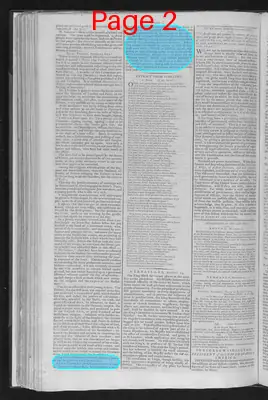
Editorial
October 24, 1789
Gazette Of The United States
New York, New York County, New York
What is this article about?
Critique of the arbitrary power exercised by the Lord Chancellor in equity courts, described as imperfect and tyrannical despite appeals to the House of Lords; advocates for jury trials in equity as in common law to reduce individual discretion.
Clipping
OCR Quality
98%
Excellent
Full Text
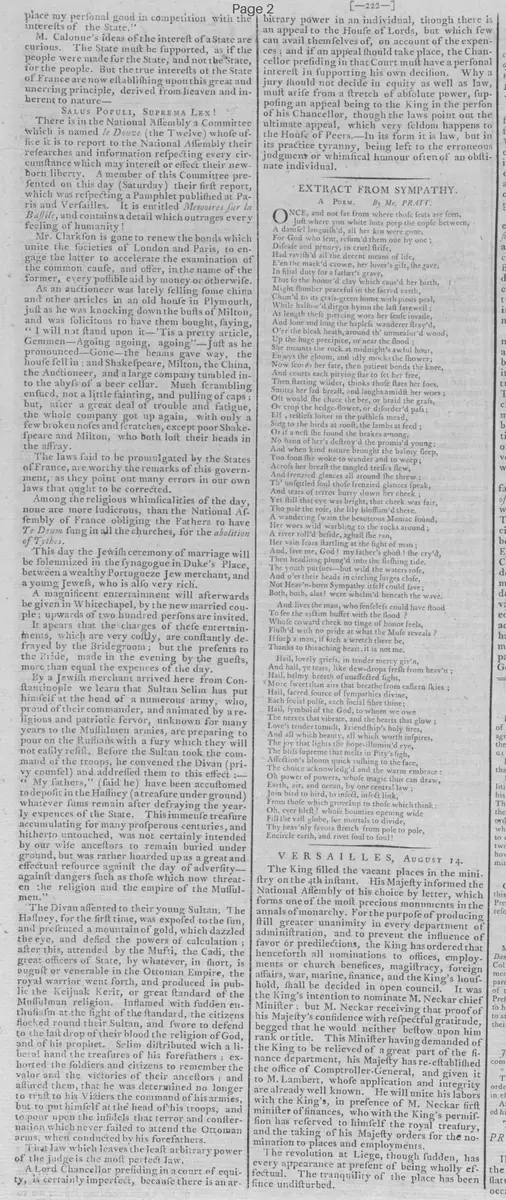
That law which leaves the least arbitrary power of the judge is the most perfect law.
A Lord Chancellor presiding in a court of equity, is certainly imperfect, because there is an arbitrary power in an individual, though there is an appeal to the House of Lords, but which few can avail themselves of, on account of the expenses; and if an appeal should take place, the Chancellor presiding in that Court must have a personal interest in supporting his own decision. Why a jury should not decide in equity as well as law, must arise from a stretch of absolute power, supposing an appeal being to the King in the person of his Chancellor, though the laws point out the ultimate appeal, which very seldom happens to the House of Peers.—In its form it is law, but in its practice tyranny, being left to the erroneous judgment or whimsical humour often of an obstinate individual.
A Lord Chancellor presiding in a court of equity, is certainly imperfect, because there is an arbitrary power in an individual, though there is an appeal to the House of Lords, but which few can avail themselves of, on account of the expenses; and if an appeal should take place, the Chancellor presiding in that Court must have a personal interest in supporting his own decision. Why a jury should not decide in equity as well as law, must arise from a stretch of absolute power, supposing an appeal being to the King in the person of his Chancellor, though the laws point out the ultimate appeal, which very seldom happens to the House of Peers.—In its form it is law, but in its practice tyranny, being left to the erroneous judgment or whimsical humour often of an obstinate individual.
What sub-type of article is it?
Legal Reform
What keywords are associated?
Equity Courts
Arbitrary Power
Judicial Reform
Jury Trials
Lord Chancellor
What entities or persons were involved?
Lord Chancellor
House Of Lords
King
Editorial Details
Primary Topic
Critique Of Arbitrary Power In Equity Courts
Stance / Tone
Critical Of Equity Courts' Arbitrary Power
Key Figures
Lord Chancellor
House Of Lords
King
Key Arguments
The Most Perfect Law Leaves The Least Arbitrary Power To The Judge.
Equity Courts Under The Lord Chancellor Grant Excessive Arbitrary Power To An Individual.
Appeals To The House Of Lords Are Impractical Due To Expenses And The Chancellor's Self Interest.
Jury Trials Should Apply In Equity As In Common Law To Prevent Absolute Power.
Equity System Is Law In Form But Tyranny In Practice, Dependent On An Individual's Judgment Or Humor.