Thank you for visiting SNEWPapers!
Sign up free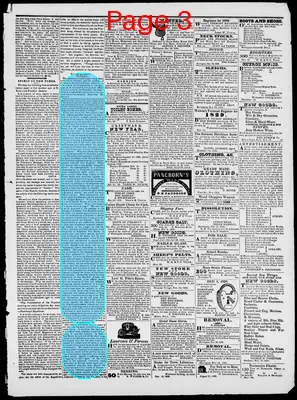
Editorial
December 21, 1838
Burlington Free Press
Burlington, Chittenden County, Vermont
What is this article about?
The Baltimore Sun editorial criticizes President Van Buren's proclamation and message for weakly addressing US citizens aiding Canadian insurrection, publicly admitting violations that could provoke England, and presumptuously opposing Canadian patriots in a manner echoing monarchist sentiments against the American Revolution.
Merged-components note: Continuation of editorial opinion piece on Canada and U.S. policy from Baltimore Sun.
Clipping

OCR Quality
98%
Excellent
Full Text
From the Baltimore Sun.
CANADA.
The Executive's homily upon the present condition of Canada, and the conduct of citizens of the United States, whether we take it from the Proclamation or the Message, is, in our opinion, a very poor affair. In either or both, the President has manifested a weakness but ill suited to the exalted station he occupies. Hear him. He asserts-
"Information has been given to me, derived from official and other sources, that many citizens of the U. States have associated together to make hostile incursions from our territory into Canada, and to aid and abet insurrection there, in violation of the obligations and laws of the United States, and in open disregard of their own duties as citizens."
Admit that this is the fact-admit that from 'official and other sources' the Executive of this Union is made sensible of a violation of the laws of the United States as outrageous as that described in the message, and that this violation has been committed by "many citizens of the United States,"-is an empty proclamation the cure for this evil? Is this the remedy which was resorted to in the case of Aaron Burr? If the evil had been merely an anticipated evil, there might have been some propriety in issuing a proclamation declaratory of the law of the land; but where the President positively admits the actual commission of violent acts, why meet those acts of violence with a noisy, threatening proclamation! Why not enforce the laws of Congress agreeably to the power vested in the Executive as Commander in Chief of the Army and Navy of the United States?
The President appears anxious to preserve peaceful relations with England. What step does he take to accomplish this great object? He acknowledges, in a solemn communication to Congress-a communication immediately made public to the whole world-"that many citizens of the United States have associated together to make hostile incursions from our territory into Canada, and to aid and abet insurrection there, in violation of the obligations and laws of the United States, and in open disregard of their own duties as citizens."
If England wanted an admission upon which to ground a quarrel, she could not have framed a better. What construction will be put upon this admission by the ministers of the English Queen? What will be said of it in the British House of Lords, or the House of Commons? What will be said of it by the world at large? We shall not be at all surprised if this passage in the message of President Van Buren should be the cause of a special appropriation on the part of the Commons of England to defray the expenses of additional troops, to be immediately poured into Canada. That the English ministry are sufficiently disposed to push their oppressive measures respecting Canada to the utmost, no one can doubt; that they will find a sanction in the admissions of President Van Buren, is equally true; and that a special minister from the Court of St. James will be despatched to the Government of the United States, with instructions to require some stronger measure than a proclamation to prevent Canada from being over run by "associated" hostile Americans, is highly probable. We insist that in the proclamation, as well as in the message, too much has been admitted-in the proclamation especially: for there the Executive has not only acknowledged a disgraceful and outrageous violation of national law by American citizens, but has undertaken to pronounce upon the character of the contest in Canada, and in a spirit of what we conceive to be presumptuous wisdom, has attempted to foretell the defeat of the Canadian patriots. From what source the chief magistrate of this Republic derives the right to pronounce, in an official paper, upon the character of men and measures struggling against oppression in a neighboring province, we cannot conceive. One thing at least must be palpable to every one-it is that while some of the most distinguished and liberal statesmen of England are eloquently protesting in the English Parliament, as did the great Lord Chatham in the early days of our own revolution, against the oppressive course of the English government towards the Canadas, the chief magistrate of the only great Republic upon earth-of the United States-is found in open hostility to their noble efforts, arming their opponents with admissions and opinions-admissions and opinions as plainly hostile to rational liberty, and as plainly in favor of monarchical oppression as admissions or opinions can be.
Our readers well know that our paper is not, nor ever has been, devoted to any particular party. It would be idle, therefore, to attribute these remarks to political partiality or political hostility. In Martin Van Buren we only behold the chief magistrate of the Republic-as such, we honor and respect him: but this very honor and respect will induce us at all times to speak as frankly of his errors as we would plainly of his merits. We think it an error in him to have given utterance to an admission or an opinion, which will be used by the minions of monarchical oppression as a double-edged sword, against a suffering people struggling for their rights. In the early days of the American revolution, every monarchist in Europe would have said of the rebels of America what Martin Van Buren has said of the rebels of Canada,-they are in rebellion against their government--they cannot succeed without foreign aid;-and the denunciations uttered against American citizens by the President in his proclamation, is precisely what would have been said at that day of Lafayette, Kosciusko, De Kalb, Steuben, Pulaski and a host of others.
CANADA.
The Executive's homily upon the present condition of Canada, and the conduct of citizens of the United States, whether we take it from the Proclamation or the Message, is, in our opinion, a very poor affair. In either or both, the President has manifested a weakness but ill suited to the exalted station he occupies. Hear him. He asserts-
"Information has been given to me, derived from official and other sources, that many citizens of the U. States have associated together to make hostile incursions from our territory into Canada, and to aid and abet insurrection there, in violation of the obligations and laws of the United States, and in open disregard of their own duties as citizens."
Admit that this is the fact-admit that from 'official and other sources' the Executive of this Union is made sensible of a violation of the laws of the United States as outrageous as that described in the message, and that this violation has been committed by "many citizens of the United States,"-is an empty proclamation the cure for this evil? Is this the remedy which was resorted to in the case of Aaron Burr? If the evil had been merely an anticipated evil, there might have been some propriety in issuing a proclamation declaratory of the law of the land; but where the President positively admits the actual commission of violent acts, why meet those acts of violence with a noisy, threatening proclamation! Why not enforce the laws of Congress agreeably to the power vested in the Executive as Commander in Chief of the Army and Navy of the United States?
The President appears anxious to preserve peaceful relations with England. What step does he take to accomplish this great object? He acknowledges, in a solemn communication to Congress-a communication immediately made public to the whole world-"that many citizens of the United States have associated together to make hostile incursions from our territory into Canada, and to aid and abet insurrection there, in violation of the obligations and laws of the United States, and in open disregard of their own duties as citizens."
If England wanted an admission upon which to ground a quarrel, she could not have framed a better. What construction will be put upon this admission by the ministers of the English Queen? What will be said of it in the British House of Lords, or the House of Commons? What will be said of it by the world at large? We shall not be at all surprised if this passage in the message of President Van Buren should be the cause of a special appropriation on the part of the Commons of England to defray the expenses of additional troops, to be immediately poured into Canada. That the English ministry are sufficiently disposed to push their oppressive measures respecting Canada to the utmost, no one can doubt; that they will find a sanction in the admissions of President Van Buren, is equally true; and that a special minister from the Court of St. James will be despatched to the Government of the United States, with instructions to require some stronger measure than a proclamation to prevent Canada from being over run by "associated" hostile Americans, is highly probable. We insist that in the proclamation, as well as in the message, too much has been admitted-in the proclamation especially: for there the Executive has not only acknowledged a disgraceful and outrageous violation of national law by American citizens, but has undertaken to pronounce upon the character of the contest in Canada, and in a spirit of what we conceive to be presumptuous wisdom, has attempted to foretell the defeat of the Canadian patriots. From what source the chief magistrate of this Republic derives the right to pronounce, in an official paper, upon the character of men and measures struggling against oppression in a neighboring province, we cannot conceive. One thing at least must be palpable to every one-it is that while some of the most distinguished and liberal statesmen of England are eloquently protesting in the English Parliament, as did the great Lord Chatham in the early days of our own revolution, against the oppressive course of the English government towards the Canadas, the chief magistrate of the only great Republic upon earth-of the United States-is found in open hostility to their noble efforts, arming their opponents with admissions and opinions-admissions and opinions as plainly hostile to rational liberty, and as plainly in favor of monarchical oppression as admissions or opinions can be.
Our readers well know that our paper is not, nor ever has been, devoted to any particular party. It would be idle, therefore, to attribute these remarks to political partiality or political hostility. In Martin Van Buren we only behold the chief magistrate of the Republic-as such, we honor and respect him: but this very honor and respect will induce us at all times to speak as frankly of his errors as we would plainly of his merits. We think it an error in him to have given utterance to an admission or an opinion, which will be used by the minions of monarchical oppression as a double-edged sword, against a suffering people struggling for their rights. In the early days of the American revolution, every monarchist in Europe would have said of the rebels of America what Martin Van Buren has said of the rebels of Canada,-they are in rebellion against their government--they cannot succeed without foreign aid;-and the denunciations uttered against American citizens by the President in his proclamation, is precisely what would have been said at that day of Lafayette, Kosciusko, De Kalb, Steuben, Pulaski and a host of others.
What sub-type of article is it?
Foreign Affairs
Partisan Politics
War Or Peace
What keywords are associated?
Canada Insurrection
Van Buren Proclamation
Us Neutrality
British Oppression
American Revolution Parallel
Presidential Weakness
What entities or persons were involved?
President Van Buren
Canada
England
British Parliament
Lord Chatham
Aaron Burr
Lafayette
Kosciusko
De Kalb
Steuben
Pulaski
Editorial Details
Primary Topic
Criticism Of Van Buren's Response To Us Aid For Canadian Insurrection
Stance / Tone
Strongly Critical Of Presidential Weakness And Pro Monarchy Implications
Key Figures
President Van Buren
Canada
England
British Parliament
Lord Chatham
Aaron Burr
Lafayette
Kosciusko
De Kalb
Steuben
Pulaski
Key Arguments
Proclamation Is An Inadequate Response To Actual Law Violations By Us Citizens
Public Admission Of Violations May Provoke England To Increase Troops In Canada
President Should Enforce Laws Using Military Power Instead Of Proclamations
Executive's Judgment On Canadian Patriots Is Presumptuous And Hostile To Liberty
Van Buren's Stance Echoes Monarchist Opposition To American Revolution