Thank you for visiting SNEWPapers!
Sign up free
Literary
June 18, 1804
The National Intelligencer And Washington Advertiser
Washington, District Of Columbia
What is this article about?
Monsieur D'Alembert's essay praises Sir Francis Bacon's profound intellect, comprehensive views on philosophy and sciences, and his works like 'Advancement of Learning' and 'Novum Organum.' It highlights Bacon's emphasis on experimental physics, utility of knowledge, and critiques his deference to scholastic traditions despite overthrowing outdated systems.
Clipping
OCR Quality
98%
Excellent
Full Text
Character of Sir Francis Bacon lord high chancellor of England, by Monsieur D'Alembert.
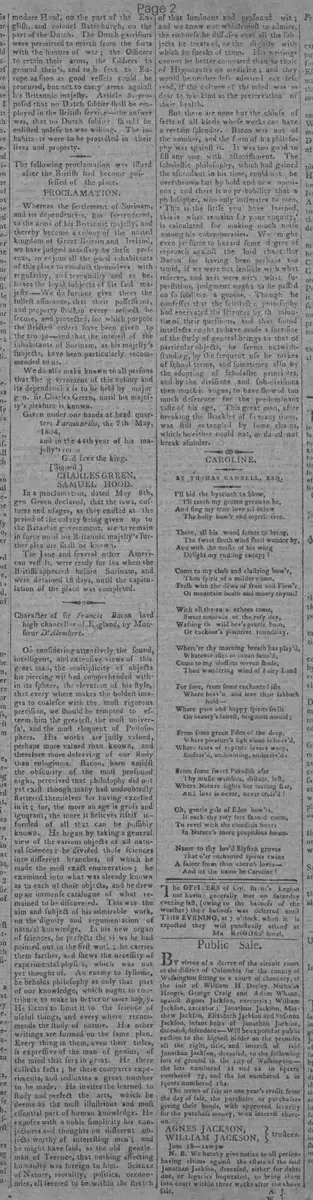
On considering attentively the sound, intelligent, and extensive views of this great man, the multiplicity of objects his piercing wit had comprehended within its sphere, the elevation of his style, that every where makes the boldest images to coalesce with the most rigorous precision, we should be tempted to esteem him the greatest, the most universal, and the most eloquent of Philosophers. His works are justly valued, perhaps more valued than known, and therefore more deserving of our study than eulogiums. Bacon, born amidst the obscurity of the most profound night, perceived that philosophy did not yet exist, though many had undoubtedly flattered themselves for having excelled in it; for, the more an age is gross and ignorant, the more it believes itself informed of all that can be possibly known. He began by taking a general view of the various objects of all natural sciences; he divided these sciences into different branches, of which he made the most exact enumeration; he examined into what was already known as to each of those objects, and he drew up an immense catalogue of what remained to be discovered. This was the aim and subject of his admirable work, on the dignity and advancement of natural knowledge. In his new organ of sciences, he perfects the views he had pointed out in the first work; he carries them farther, and shews the necessity of experimental physics, which was not yet thought of. An enemy to systems, he beholds philosophy as only that part of our knowledge, which ought to contribute to make us better or more happy. He seems to limit it to the science of useful things, and every where recommends the study of nature. His other writings are formed on the same plan. Every thing in them, even their titles, is expressive of the man of genius, of the mind that sees in great. He there collects facts: he there compares experiments, and indicates a great number to be made. He invites the learned to study and perfect the arts, which he deems as the most illustrious and most essential part of human knowledge. He exposes with a noble simplicity his conjectures and thoughts on different objects worthy of interesting men; and he might have said, as the old gentleman of Terence, that nothing affecting humanity was foreign to him. Science of Nature, morality, politics, oeconomy, all seemed to be within the stretch of that luminous and profound wit: and we know not which most to admire, the richness he diffuses over all the subjects he treats of, or the dignity with which he speaks of them. His writings cannot be better compared than to those of Hippocrates on medicine: and they would be neither less admired nor less read, if the culture of the mind was as dear to mankind as the preservation of their health.
But there are none but the chiefs of sects of all kinds whose works can have a certain splendor. Bacon was not of the number, and the form of his philosophy was against it. It was too good to fill any one with astonishment. The scholastic philosophy, which had gained the ascendant in his time, could not be overthrown but by bold and new opinions; and there is no probability that a philosopher, who only intimates to men, 'This is the little you have learned, this is what remains for your enquiry,' is calculated for making much noise among his contemporaries. We might even presume to hazard some degree of reproach against the lord chancellor Bacon for having been perhaps too timid, if we were not sensible with what reserve, and as it were with what superstition, judgment ought to be passed on so sublime a genius. Though he confesses that the scholastic philosophy had enervated the sciences by the minuteness of their questions, and that sound intellects ought to have made a sacrifice of the study of general beings to that of particular objects, he seems notwithstanding, by the frequent use he makes of school terms, and sometimes also by the adopting of scholastic principles, and by the divisions and sub-divisions then much in vogue, to have shewed too much deference for the predominant taste of his age. This great man, after breaking the shackles of so many tyrants, was still entangled by some chains, which he either could not, or dared not break asunder.
On considering attentively the sound, intelligent, and extensive views of this great man, the multiplicity of objects his piercing wit had comprehended within its sphere, the elevation of his style, that every where makes the boldest images to coalesce with the most rigorous precision, we should be tempted to esteem him the greatest, the most universal, and the most eloquent of Philosophers. His works are justly valued, perhaps more valued than known, and therefore more deserving of our study than eulogiums. Bacon, born amidst the obscurity of the most profound night, perceived that philosophy did not yet exist, though many had undoubtedly flattered themselves for having excelled in it; for, the more an age is gross and ignorant, the more it believes itself informed of all that can be possibly known. He began by taking a general view of the various objects of all natural sciences; he divided these sciences into different branches, of which he made the most exact enumeration; he examined into what was already known as to each of those objects, and he drew up an immense catalogue of what remained to be discovered. This was the aim and subject of his admirable work, on the dignity and advancement of natural knowledge. In his new organ of sciences, he perfects the views he had pointed out in the first work; he carries them farther, and shews the necessity of experimental physics, which was not yet thought of. An enemy to systems, he beholds philosophy as only that part of our knowledge, which ought to contribute to make us better or more happy. He seems to limit it to the science of useful things, and every where recommends the study of nature. His other writings are formed on the same plan. Every thing in them, even their titles, is expressive of the man of genius, of the mind that sees in great. He there collects facts: he there compares experiments, and indicates a great number to be made. He invites the learned to study and perfect the arts, which he deems as the most illustrious and most essential part of human knowledge. He exposes with a noble simplicity his conjectures and thoughts on different objects worthy of interesting men; and he might have said, as the old gentleman of Terence, that nothing affecting humanity was foreign to him. Science of Nature, morality, politics, oeconomy, all seemed to be within the stretch of that luminous and profound wit: and we know not which most to admire, the richness he diffuses over all the subjects he treats of, or the dignity with which he speaks of them. His writings cannot be better compared than to those of Hippocrates on medicine: and they would be neither less admired nor less read, if the culture of the mind was as dear to mankind as the preservation of their health.
But there are none but the chiefs of sects of all kinds whose works can have a certain splendor. Bacon was not of the number, and the form of his philosophy was against it. It was too good to fill any one with astonishment. The scholastic philosophy, which had gained the ascendant in his time, could not be overthrown but by bold and new opinions; and there is no probability that a philosopher, who only intimates to men, 'This is the little you have learned, this is what remains for your enquiry,' is calculated for making much noise among his contemporaries. We might even presume to hazard some degree of reproach against the lord chancellor Bacon for having been perhaps too timid, if we were not sensible with what reserve, and as it were with what superstition, judgment ought to be passed on so sublime a genius. Though he confesses that the scholastic philosophy had enervated the sciences by the minuteness of their questions, and that sound intellects ought to have made a sacrifice of the study of general beings to that of particular objects, he seems notwithstanding, by the frequent use he makes of school terms, and sometimes also by the adopting of scholastic principles, and by the divisions and sub-divisions then much in vogue, to have shewed too much deference for the predominant taste of his age. This great man, after breaking the shackles of so many tyrants, was still entangled by some chains, which he either could not, or dared not break asunder.
What sub-type of article is it?
Essay
What keywords are associated?
Francis Bacon
Philosophy
Scientific Method
Scholasticism
Advancement Of Learning
Experimental Physics
Natural Sciences
What entities or persons were involved?
By Monsieur D'alembert
Literary Details
Title
Character Of Sir Francis Bacon Lord High Chancellor Of England
Author
By Monsieur D'alembert
Key Lines
Bacon, Born Amidst The Obscurity Of The Most Profound Night, Perceived That Philosophy Did Not Yet Exist, Though Many Had Undoubtedly Flattered Themselves For Having Excelled In It;
He Beholds Philosophy As Only That Part Of Our Knowledge, Which Ought To Contribute To Make Us Better Or More Happy.
Nothing Affecting Humanity Was Foreign To Him.
This Great Man, After Breaking The Shackles Of So Many Tyrants, Was Still Entangled By Some Chains, Which He Either Could Not, Or Dared Not Break Asunder.