Thank you for visiting SNEWPapers!
Sign up free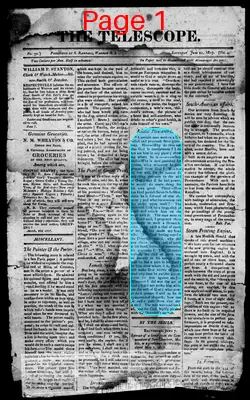
Literary
June 21, 1817
The Telescope
Warren, Bristol County, Rhode Island
What is this article about?
A man poses three philosophical questions to a Dervish about God's omnipresence, human free will and punishment, and Satan's torment by fire. The Dervish strikes him with a clod of earth and later explains it as a direct, witty response to each query, leaving the man confounded and the judge pleased.
Clipping
OCR Quality
98%
Excellent
Full Text
Asiatic Pleasantry.
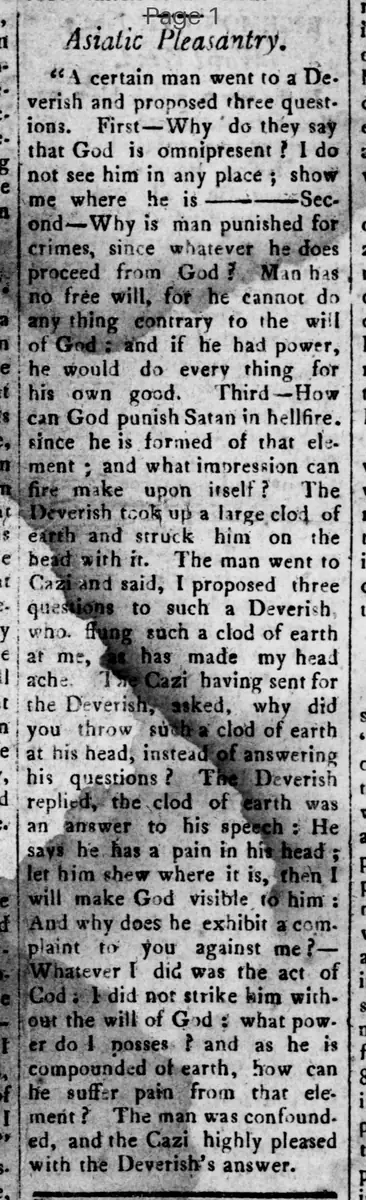
"A certain man went to a Dervish and proposed three questions. First--Why do they say that God is omnipresent? I do not see him in any place; show me where he is.--Second--Why is man punished for crimes, since whatever he does proceed from God? Man has no free will, for he cannot do any thing contrary to the will of God: and if he had power, he would do every thing for his own good. Third--How can God punish Satan in hellfire, since he is formed of that element: and what impression can fire make upon itself?
The Dervish took up a large clod of earth and struck him on the head with it. The man went to Cazi and said, I proposed three questions to such a Dervish, who flung such a clod of earth at me, as has made my head ache. The Cazi having sent for the Dervish, asked, why did you throw such a clod of earth at his head, instead of answering his questions? The Dervish replied, the clod of earth was an answer to his speech: He says he has a pain in his head: let him shew where it is, then I will make God visible to him: And why does he exhibit a complaint to you against me?--Whatever I did was the act of God: I did not strike him without the will of God: what power do I possess? and as he is compounded of earth, how can he suffer pain from that element? The man was confounded, and the Cazi highly pleased with the Dervish's answer.
"A certain man went to a Dervish and proposed three questions. First--Why do they say that God is omnipresent? I do not see him in any place; show me where he is.--Second--Why is man punished for crimes, since whatever he does proceed from God? Man has no free will, for he cannot do any thing contrary to the will of God: and if he had power, he would do every thing for his own good. Third--How can God punish Satan in hellfire, since he is formed of that element: and what impression can fire make upon itself?
The Dervish took up a large clod of earth and struck him on the head with it. The man went to Cazi and said, I proposed three questions to such a Dervish, who flung such a clod of earth at me, as has made my head ache. The Cazi having sent for the Dervish, asked, why did you throw such a clod of earth at his head, instead of answering his questions? The Dervish replied, the clod of earth was an answer to his speech: He says he has a pain in his head: let him shew where it is, then I will make God visible to him: And why does he exhibit a complaint to you against me?--Whatever I did was the act of God: I did not strike him without the will of God: what power do I possess? and as he is compounded of earth, how can he suffer pain from that element? The man was confounded, and the Cazi highly pleased with the Dervish's answer.
What sub-type of article is it?
Fable
Dialogue
What themes does it cover?
Religious
Moral Virtue
What keywords are associated?
Dervish
Philosophical Questions
Divine Omnipresence
Free Will
Punishment
Wit
Earth Clod
Cazi
Literary Details
Title
Asiatic Pleasantry
Subject
Witty Responses To Questions On God's Omnipresence, Free Will, And Punishment
Key Lines
The Dervish Replied, The Clod Of Earth Was An Answer To His Speech: He Says He Has A Pain In His Head: Let Him Shew Where It Is, Then I Will Make God Visible To Him: And Why Does He Exhibit A Complaint To You Against Me? Whatever I Did Was The Act Of God: I Did Not Strike Him Without The Will Of God: What Power Do I Possess? And As He Is Compounded Of Earth, How Can He Suffer Pain From That Element?