Thank you for visiting SNEWPapers!
Sign up free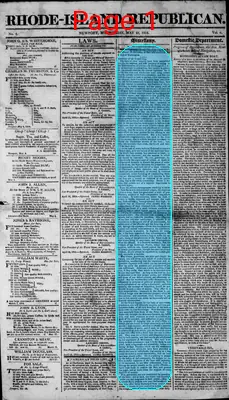
Story
May 18, 1814
The Rhode Island Republican
Newport, Newport County, Rhode Island
What is this article about?
Judge Lyman's address to the Grand Jury of the Supreme Judicial Court in Washington County, instructing them on their vital role in upholding laws, ensuring justice without bias, and protecting society through impartial enforcement of the criminal code.
Clipping

OCR Quality
95%
Excellent
Full Text
JUDGE LYMAN'S CHARGE,
Delivered before the Grand Jury of the Supreme Judicial Court of this State, at their late session in the County of Washington.
Gentlemen of the Grand Jury.
The laws of your country have here assembled you, for the express and sole purpose of aiding in the administration of justice.--In discharge of a duty so important to yourselves, and society in general, you should exercise the utmost vigilance: for it is vain that wise and wholesome laws exist, unless they are strictly carried into execution, and that too without respect to rank or person.-For this important purpose, have Courts of Justice been established, and Juries summoned to attend upon them, that by their mutual co-operation, the liberties of the citizen may be firmly secured and the grand ends of justice fully and completely answered.~All nations, in all ages, have created Tribunals, before which the complaints of their subjects might be heard, and adjudicated upon; and experience has proved, that they are intimately interwoven with the very existence of civil society. Every individual has a vital interest in the execution of the laws; inasmuch as they ensure security to his life, his liberty and his property.-Those only who dread their salutary penalties can wish that any breaches of them should pass with impunity, or that any relaxation in their execution should furnish a hope of escape from punishment.-Impunity to crimes, affords the greatest encouragement to their commission; and no offender becomes so hardened and confirmed in his wickedness as the one who has been taught to believe from experience, that he can evade justice.--Such, gentlemen, are the mildness and excellence of our criminal code, that the severity of its enactments could never afford the least pretext for not affixing to any crime its statutory punishment. But it is a subject of heart-felt congratulation, that such is the state of our society, that it seldom becomes necessary to display the wholesome terrors of the laws: but, when this necessity does exist, the Court and Jury will do their duty.
It is the task of every Judicial Tribunal, to instruct Grand Jury, as to the nature of the important functions which their country has devolved on them; to explain their character, and the manner in which they should be executed. To you, gentlemen, belongs strictly the cognizance of crimes, or those offences which threaten to disturb the peace of society. In these, the State becomes the prosecutor; as she aggregately, and each one of us more remotely, are interested in their detection and punishment.
Crimes are acts committed, or omitted, in violation of some law, either forbidding or commanding them.
They are distinguished from civil injuries, in that they are a breach or violation of the public rights, due to the whole community. Hence it follows, that crimes are of a superior importance to any civil injury.
From the serious consequences resulting to society, from those acts denominated crimes, the supreme power in every State has graduated a scale of punishments, adapted to their comparative magnitude and extent. In some countries, where the state of society is highly depraved and corrupt, this scale has, from necessity, been graduated very high; insomuch that an American often shrinks from the contemplation of their Criminal Code.-Happily our country can boast of a more virtuous condition of society: one in which human nature, however rapidly it may be advancing, has not yet arrived to so corrupt a state. Our criminal code contains a few severe, and no vindictive penalties. The offspring of our free and wise institutions, it adheres in its exactments to the grand end of all punishment, the reformation of the offender and the deterring of others, through his example.-From this circumstance, a great and radical inconvenience in the administration of justice is avoided. In England, for example, it has been remarked, that commisseration for a criminal, will often induce a Jury to suffer his escape; many of the provisions of the Penal Code in that country being so sanguinary, and disproportioned to the offence. It is however necessary, that the wisdom of the Sovereign Power, rather than any positive, uniform rule, should control the measure of human punishments; though the exercise of such wisdom, should always be regulated by certain general, equitable principles.
Your duties, gentlemen, are plain and simple. As Jurors, you will divest your minds of undue bias or partialities, recollecting that the important and responsible character with which you are invested, you must lay aside the passions and prejudices of private individuals. Juries are a mere mockery of justice, if they suffer their minds to be operated upon by any improper bias. As long as the trial by jury is preserved in its own proper purity, our liberties and those of our fellow-citizens are effectually secured: But the moment they suffer themselves to be influenced by personal or political prejudices, that noble palladium of our safety is destroyed; and even anarchy, the scourge of Republics, would be preferable to such a state of society. The office is of high respectability: inasmuch as the Juror is constituted Judge over the lives and property of his fellow-citizens; and important, since without it, justice in this country can never be impartially and efficiently administered.
As the Grand Inquest for the body of this county, gentlemen, you will diligently enquire, and true presentment make, of all such breaches of the laws as shall come to your knowledge. Your functions vary very materially from those of the Petty Jury. The State will, through the Attorney-General, lay before you, only such evidence as tends to establish the guilt of the accused; and authorizes in your minds the propriety of bringing him to trial.-This evidence you are bound to weigh attentively and deliberately: and consider, whether it affords a reasonable probability of guilt; and if such an impression is produced on your minds, you are bound to return a true bill.-But with a Petty Jury the case is different. They hear the evidence and allegations produced by both parties, and their minds are enlightened by the arguments of the Counsel. The case is entirely in their possession; and it is for them to consider, most scrupulously and attentively, before rendering in their Verdict.-Such are the muniments and precautions, which the laws have provided to shield the lives of individuals, that among us it may justly be styled a moral impossibility, that an innocent man should suffer. Yet it is placing in jeopardy the safety of the community, for Judges or Jurors to suffer violations of the laws with impunity: or be restrained, by any false compassion, from inflicting the proper penalty on the guilty offender.—Laws were made to restrain the Bad, and protect the good, and as such claim the support of every member of society.
You, gentlemen, are now constituted the guardians of the laws; and as such, the Court will cheerfully render you any assistance in their power.-May the Supreme Being preside over your deliberations; and may you, after being discharged from your present situation, return to your respective homes, happy in the consciousness of having discharged your duty.
Delivered before the Grand Jury of the Supreme Judicial Court of this State, at their late session in the County of Washington.
Gentlemen of the Grand Jury.
The laws of your country have here assembled you, for the express and sole purpose of aiding in the administration of justice.--In discharge of a duty so important to yourselves, and society in general, you should exercise the utmost vigilance: for it is vain that wise and wholesome laws exist, unless they are strictly carried into execution, and that too without respect to rank or person.-For this important purpose, have Courts of Justice been established, and Juries summoned to attend upon them, that by their mutual co-operation, the liberties of the citizen may be firmly secured and the grand ends of justice fully and completely answered.~All nations, in all ages, have created Tribunals, before which the complaints of their subjects might be heard, and adjudicated upon; and experience has proved, that they are intimately interwoven with the very existence of civil society. Every individual has a vital interest in the execution of the laws; inasmuch as they ensure security to his life, his liberty and his property.-Those only who dread their salutary penalties can wish that any breaches of them should pass with impunity, or that any relaxation in their execution should furnish a hope of escape from punishment.-Impunity to crimes, affords the greatest encouragement to their commission; and no offender becomes so hardened and confirmed in his wickedness as the one who has been taught to believe from experience, that he can evade justice.--Such, gentlemen, are the mildness and excellence of our criminal code, that the severity of its enactments could never afford the least pretext for not affixing to any crime its statutory punishment. But it is a subject of heart-felt congratulation, that such is the state of our society, that it seldom becomes necessary to display the wholesome terrors of the laws: but, when this necessity does exist, the Court and Jury will do their duty.
It is the task of every Judicial Tribunal, to instruct Grand Jury, as to the nature of the important functions which their country has devolved on them; to explain their character, and the manner in which they should be executed. To you, gentlemen, belongs strictly the cognizance of crimes, or those offences which threaten to disturb the peace of society. In these, the State becomes the prosecutor; as she aggregately, and each one of us more remotely, are interested in their detection and punishment.
Crimes are acts committed, or omitted, in violation of some law, either forbidding or commanding them.
They are distinguished from civil injuries, in that they are a breach or violation of the public rights, due to the whole community. Hence it follows, that crimes are of a superior importance to any civil injury.
From the serious consequences resulting to society, from those acts denominated crimes, the supreme power in every State has graduated a scale of punishments, adapted to their comparative magnitude and extent. In some countries, where the state of society is highly depraved and corrupt, this scale has, from necessity, been graduated very high; insomuch that an American often shrinks from the contemplation of their Criminal Code.-Happily our country can boast of a more virtuous condition of society: one in which human nature, however rapidly it may be advancing, has not yet arrived to so corrupt a state. Our criminal code contains a few severe, and no vindictive penalties. The offspring of our free and wise institutions, it adheres in its exactments to the grand end of all punishment, the reformation of the offender and the deterring of others, through his example.-From this circumstance, a great and radical inconvenience in the administration of justice is avoided. In England, for example, it has been remarked, that commisseration for a criminal, will often induce a Jury to suffer his escape; many of the provisions of the Penal Code in that country being so sanguinary, and disproportioned to the offence. It is however necessary, that the wisdom of the Sovereign Power, rather than any positive, uniform rule, should control the measure of human punishments; though the exercise of such wisdom, should always be regulated by certain general, equitable principles.
Your duties, gentlemen, are plain and simple. As Jurors, you will divest your minds of undue bias or partialities, recollecting that the important and responsible character with which you are invested, you must lay aside the passions and prejudices of private individuals. Juries are a mere mockery of justice, if they suffer their minds to be operated upon by any improper bias. As long as the trial by jury is preserved in its own proper purity, our liberties and those of our fellow-citizens are effectually secured: But the moment they suffer themselves to be influenced by personal or political prejudices, that noble palladium of our safety is destroyed; and even anarchy, the scourge of Republics, would be preferable to such a state of society. The office is of high respectability: inasmuch as the Juror is constituted Judge over the lives and property of his fellow-citizens; and important, since without it, justice in this country can never be impartially and efficiently administered.
As the Grand Inquest for the body of this county, gentlemen, you will diligently enquire, and true presentment make, of all such breaches of the laws as shall come to your knowledge. Your functions vary very materially from those of the Petty Jury. The State will, through the Attorney-General, lay before you, only such evidence as tends to establish the guilt of the accused; and authorizes in your minds the propriety of bringing him to trial.-This evidence you are bound to weigh attentively and deliberately: and consider, whether it affords a reasonable probability of guilt; and if such an impression is produced on your minds, you are bound to return a true bill.-But with a Petty Jury the case is different. They hear the evidence and allegations produced by both parties, and their minds are enlightened by the arguments of the Counsel. The case is entirely in their possession; and it is for them to consider, most scrupulously and attentively, before rendering in their Verdict.-Such are the muniments and precautions, which the laws have provided to shield the lives of individuals, that among us it may justly be styled a moral impossibility, that an innocent man should suffer. Yet it is placing in jeopardy the safety of the community, for Judges or Jurors to suffer violations of the laws with impunity: or be restrained, by any false compassion, from inflicting the proper penalty on the guilty offender.—Laws were made to restrain the Bad, and protect the good, and as such claim the support of every member of society.
You, gentlemen, are now constituted the guardians of the laws; and as such, the Court will cheerfully render you any assistance in their power.-May the Supreme Being preside over your deliberations; and may you, after being discharged from your present situation, return to your respective homes, happy in the consciousness of having discharged your duty.
What sub-type of article is it?
Historical Event
What themes does it cover?
Justice
Moral Virtue
What keywords are associated?
Grand Jury
Judicial Charge
Administration Of Justice
Impartiality
Criminal Code
Enforcement Of Laws
What entities or persons were involved?
Judge Lyman
Grand Jury
Where did it happen?
County Of Washington
Story Details
Key Persons
Judge Lyman
Grand Jury
Location
County Of Washington
Event Date
Late Session
Story Details
Judge Lyman delivers a charge to the Grand Jury, explaining their duties in aiding justice, the importance of enforcing laws impartially, the nature of crimes, the mildness of the criminal code, and the need to avoid bias in their deliberations.