Thank you for visiting SNEWPapers!
Sign up free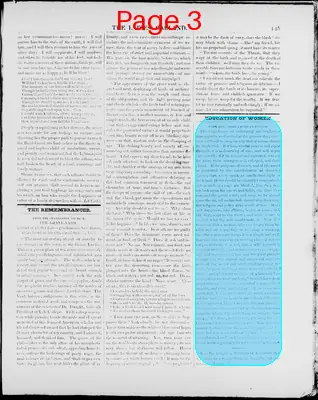
Literary
October 14, 1826
The Ladies' Garland
Harpers Ferry, Jefferson County, West Virginia
What is this article about?
Essay from the North American Review advocating the education of women, arguing their intellect deserves cultivation like men's for societal and marital benefits, refuting claims that it leads to discontent or poor domestic performance.
Clipping
OCR Quality
85%
Good
Full Text
EDUCATION OF WOMEN.
FROM THE NORTH AMERICAN REVIEW.
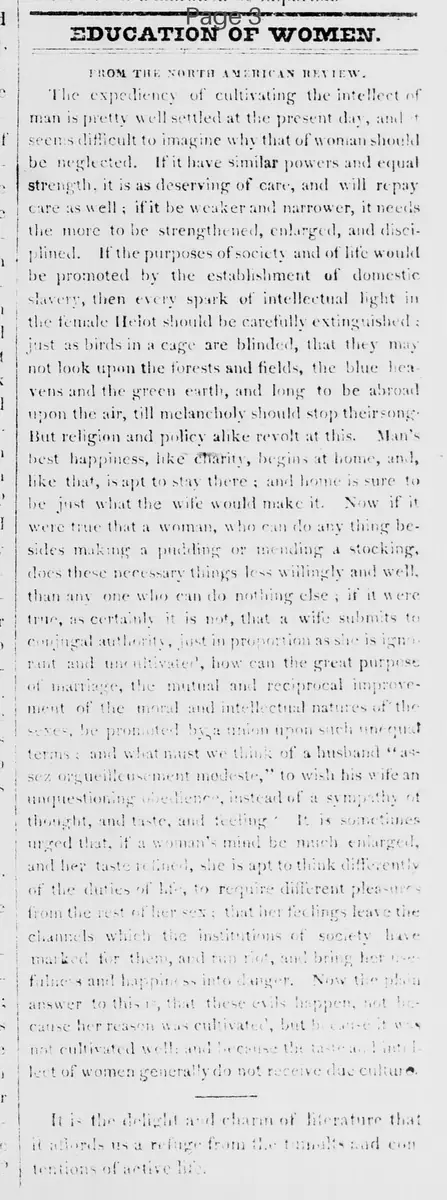
The expediency of cultivating the intellect of man is pretty well settled at the present day, and it seems difficult to imagine why that of woman should be neglected. If it have similar powers and equal strength, it is as deserving of care, and will repay care as well; if it be weaker and narrower, it needs the more to be strengthened, enlarged, and disciplined. If the purposes of society and of life would be promoted by the establishment of domestic slavery, then every spark of intellectual light in the female mind should be carefully extinguished; just as birds in a cage are blinded, that they may not look upon the forests and fields, the blue heavens and the green earth, and long to be abroad upon the air, till melancholy should stop their song. But religion and policy alike revolt at this. Man's best happiness, like charity, begins at home, and, like that, is apt to stay there; and home is sure to be just what the wife would make it. Now if it were true that a woman, who can do any thing besides making a pudding or mending a stocking, does these necessary things less willingly and well, than any one who can do nothing else; if it were true, as certainly it is not, that a wife submits to conjugal authority, just in proportion as she is ignorant and uneducated; how can the great purpose of marriage, the mutual and reciprocal improvement of the moral and intellectual natures of the two, be promoted by a union upon such unequal terms? and what must we think of a husband "assez orgueilleusement modeste," to wish his wife an unquestioning obedience, instead of a sympathy of thought, and taste, and feeling: It is sometimes urged that, if a woman's mind be much enlarged, and her taste refined, she is apt to think differently of the duties of life, to require different pleasures from the rest of her sex: that her feelings leave the channels which the institutions of society have marked for them, and run ro, and bring her happiness and happiness into danger. Now the plain answer to this is, that these evils happen, not because her reason was cultivated, but because it was not cultivated well: and cause the intellectual nature of women generally do not receive due culture. It is the delight and charm of literature that it affords us a refuge from disappointments and contentions of active life.
FROM THE NORTH AMERICAN REVIEW.
The expediency of cultivating the intellect of man is pretty well settled at the present day, and it seems difficult to imagine why that of woman should be neglected. If it have similar powers and equal strength, it is as deserving of care, and will repay care as well; if it be weaker and narrower, it needs the more to be strengthened, enlarged, and disciplined. If the purposes of society and of life would be promoted by the establishment of domestic slavery, then every spark of intellectual light in the female mind should be carefully extinguished; just as birds in a cage are blinded, that they may not look upon the forests and fields, the blue heavens and the green earth, and long to be abroad upon the air, till melancholy should stop their song. But religion and policy alike revolt at this. Man's best happiness, like charity, begins at home, and, like that, is apt to stay there; and home is sure to be just what the wife would make it. Now if it were true that a woman, who can do any thing besides making a pudding or mending a stocking, does these necessary things less willingly and well, than any one who can do nothing else; if it were true, as certainly it is not, that a wife submits to conjugal authority, just in proportion as she is ignorant and uneducated; how can the great purpose of marriage, the mutual and reciprocal improvement of the moral and intellectual natures of the two, be promoted by a union upon such unequal terms? and what must we think of a husband "assez orgueilleusement modeste," to wish his wife an unquestioning obedience, instead of a sympathy of thought, and taste, and feeling: It is sometimes urged that, if a woman's mind be much enlarged, and her taste refined, she is apt to think differently of the duties of life, to require different pleasures from the rest of her sex: that her feelings leave the channels which the institutions of society have marked for them, and run ro, and bring her happiness and happiness into danger. Now the plain answer to this is, that these evils happen, not because her reason was cultivated, but because it was not cultivated well: and cause the intellectual nature of women generally do not receive due culture. It is the delight and charm of literature that it affords us a refuge from disappointments and contentions of active life.
What sub-type of article is it?
Essay
What themes does it cover?
Social Manners
Moral Virtue
What keywords are associated?
Women Education
Intellectual Cultivation
Marriage
Society
Domestic Happiness
Female Intellect
What entities or persons were involved?
From The North American Review.
Literary Details
Title
Education Of Women.
Author
From The North American Review.
Key Lines
If The Purposes Of Society And Of Life Would Be Promoted By The Establishment Of Domestic Slavery, Then Every Spark Of Intellectual Light In The Female Mind Should Be Carefully Extinguished;
Man's Best Happiness, Like Charity, Begins At Home, And, Like That, Is Apt To Stay There; And Home Is Sure To Be Just What The Wife Would Make It.
How Can The Great Purpose Of Marriage, The Mutual And Reciprocal Improvement Of The Moral And Intellectual Natures Of The Two, Be Promoted By A Union Upon Such Unequal Terms?
These Evils Happen, Not Because Her Reason Was Cultivated, But Because It Was Not Cultivated Well