Thank you for visiting SNEWPapers!
Sign up free
Literary
May 1, 1840
Southern Christian Advocate
Charleston, Charleston County, South Carolina
What is this article about?
Rev. J. Angus's essay explores the Holy Spirit's intercession in Christian prayer, as described in Romans 8, distinguishing true spiritual promptings from conscience-driven or superficial verbal prayers, urging self-examination for authentic devotion.
Clipping
OCR Quality
98%
Excellent
Full Text
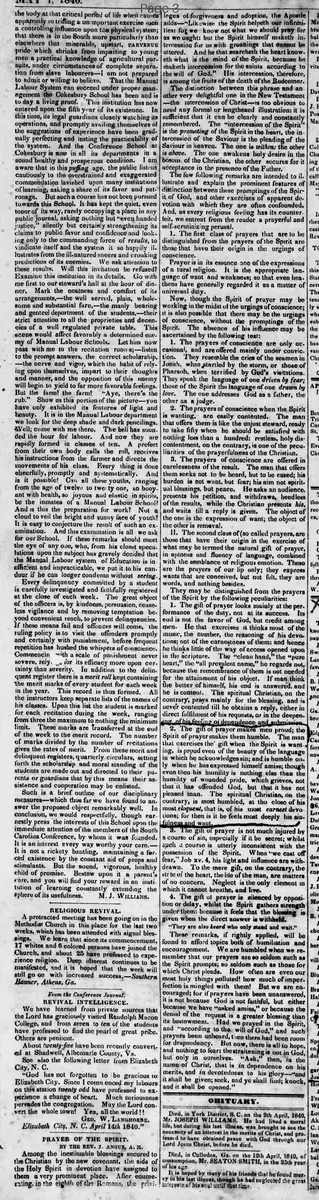
PRAYER OF THE SPIRIT
BY THE REV. J. ANGUS, A. M.
Among the inestimable blessings secured to the Christian by the new covenant, the aids of the Holy Spirit in devotion have assigned to them a very prominent place. After enumerating, in the eighth of the Romans, the privileges of forgiveness and adoption, the Apostle adds—"Likewise the Spirit helpeth our infirmities: for we know not what we should pray for as we ought: but the Spirit himself maketh intercession for us with groanings that cannot be uttered. And he that searcheth the heart knoweth what is the mind of the Spirit, because he maketh intercession for the saints according to the will of God." His intercession, therefore, is among the fruits of the death of the Redeemer. The distinction between this phrase and another very delightful one in the New Testament—the intercession of Christ—is too obvious to need any formal or lengthened illustration: it is sufficient that it can be clearly and constantly remembered. The intercession of the Spirit is the prompting of the Spirit in the heart, the intercession of the Saviour is the pleading of the Saviour in heaven. The one is within: the other is above. The one awakens holy desire in the bosom of the Christian, the other secures for it acceptance in the presence of the Father. The few following remarks are intended to illustrate and explain the prominent features of distinction between these promptings of the Spirit of God, and other exercises of apparent devotion with which they are often confounded. And, as every religious feeling has its counterfeit, we entreat from the reader a prayerful and self-scrutinizing perusal.
1. The first class of prayers that are to be distinguished from the prayers of the Spirit are those that have their origin in the urgings of conscience. Prayer is in its essence one of the expressions of natural religion. It is the appropriate language of want and weakness; so that even heathens have generally regarded it as a matter of universal duty. Now, though the Spirit of prayer may be working in the midst of the urgings of conscience; it is also possible that there may be the urgings of conscience, without the promptings of the Spirit. The absence of his influence may be ascertained by the following test:
1. The prayers of conscience are only occasional, and are offered mainly under conviction. They resemble the cries of the seamen in Jonah, when startled by the storm, or those of Pharaoh, when terrified by God's visitations. They speak the language of one driven by fear; those of the Spirit the language of one drawn by love. The one addresses God as a judge, the other as a father.
2. The prayers of conscience when the Spirit is wanting, are easily contented. The man that offers them is like the unjust steward, ready to take fifty when he should be satisfied with nothing less than a hundred: restless, holy discontentment, on the contrary, is one of the peculiarities of the prayerfulness of the Christian.
3. The prayers of conscience are offered in carelessness of the result. The man that offers them seeks not to be heard, but to be eased; his burden is not want, but care; his aim not spiritual blessings, but peace. He asks an audience, presents his petition, and withdraws, heedless of the results, while the Christian presents his, and waits till a reply is given. The object of the one is the expression of want; the object of the other is removal.
II. The second class of (so called) prayers, are those that have their origin in the exercise of what may be termed the natural gift of prayer, in aptness and fluency of language, combined with the semblance of religious emotion. These are the prayers of our lip only; they express wants that are conceived, but not felt, they are words, and nothing besides. They may be distinguished from the prayers of the Spirit by the following peculiarities:
1. The gift of prayer looks mainly at the performance of the duty, not at its success. Its end is not the favor of God, but credit among men. He that exercises it thinks most of the music, the number, the reasoning of his devotions; not of the earnestness of them: and hence he thinks little of the way of access opened upon in the scripture. The "clean hands," the "pure heart," the "all prevalent name," he regards not, because the remembrance of them is not needed for the attainment of his object. If man think the better of himself, his end is answered, and he is content. The spiritual Christian, on the contrary, prays mainly for the blessing, and is never contented till he obtains a reply, either in direct fulfilment of his requests, or in the deepening of his feeling of dependence and submission.
2. The gift of prayer makes men proud; the Spirit of prayer makes them humble. The man that exercises the gift when the Spirit is wanting, is proud even of the beauty of the language in which he acknowledges sin; and is humbly only when he has expressed himself amiss; though even then his humility is nothing else than the humility of wounded pride, which grieves, not that it has offended God, but that it has not pleased man. The spiritual Christian, on the contrary, is most humbled, at the close of his most eloquent, that is, of his most earnest devotions; for then is it he feels most deeply his sinfulness and want.
3. The gift of prayer is not much injured by a course of sin, especially if it be secret; whilst such a course is utterly inconsistent with the possession of the Spirit. When "we cast off fear," Job xv. 4, his light and influence are withdrawn. To the mere gift, on the contrary, the state of the heart, the life of the man, are matters of no concern, Neglect is the only element in which it cannot breathe, and live.
4. The gift of prayer is silenced by opposition or delay, whilst the Spirit gathers strength under them: because it feels that the blessing is given when the direct answer is withheld. "They are also heard who only stand and wait."
These remarks, if rightly applied, will be found to afford topics both of humiliation and encouragement. We are humbled when we remember that our prayers are so seldom such as the Spirit prompts; so seldom such as those for which Christ pleads. How often are even our most holy things polluted! how much of imperfection is mingled with them! But we are encouraged; for if prayers have been unanswered, it is not because God is not faithful, but either because we have "asked amiss," or because the denial of the request is a greater blessing than its bestowment. Had we prayed 'in the Spirit, and "according to the will of God," and such prayers been unheard, then there had been room for despondency. But now, there is all to hope. and nothing to fear: the straitening is not in God, but only in ourselves. "Ask," then, in the name of Christ, that is in dependence on his merits, and in devotedness to his glory—"and it shall be given; seek, and ye shall find; knock, and it shall be opened."
BY THE REV. J. ANGUS, A. M.
Among the inestimable blessings secured to the Christian by the new covenant, the aids of the Holy Spirit in devotion have assigned to them a very prominent place. After enumerating, in the eighth of the Romans, the privileges of forgiveness and adoption, the Apostle adds—"Likewise the Spirit helpeth our infirmities: for we know not what we should pray for as we ought: but the Spirit himself maketh intercession for us with groanings that cannot be uttered. And he that searcheth the heart knoweth what is the mind of the Spirit, because he maketh intercession for the saints according to the will of God." His intercession, therefore, is among the fruits of the death of the Redeemer. The distinction between this phrase and another very delightful one in the New Testament—the intercession of Christ—is too obvious to need any formal or lengthened illustration: it is sufficient that it can be clearly and constantly remembered. The intercession of the Spirit is the prompting of the Spirit in the heart, the intercession of the Saviour is the pleading of the Saviour in heaven. The one is within: the other is above. The one awakens holy desire in the bosom of the Christian, the other secures for it acceptance in the presence of the Father. The few following remarks are intended to illustrate and explain the prominent features of distinction between these promptings of the Spirit of God, and other exercises of apparent devotion with which they are often confounded. And, as every religious feeling has its counterfeit, we entreat from the reader a prayerful and self-scrutinizing perusal.
1. The first class of prayers that are to be distinguished from the prayers of the Spirit are those that have their origin in the urgings of conscience. Prayer is in its essence one of the expressions of natural religion. It is the appropriate language of want and weakness; so that even heathens have generally regarded it as a matter of universal duty. Now, though the Spirit of prayer may be working in the midst of the urgings of conscience; it is also possible that there may be the urgings of conscience, without the promptings of the Spirit. The absence of his influence may be ascertained by the following test:
1. The prayers of conscience are only occasional, and are offered mainly under conviction. They resemble the cries of the seamen in Jonah, when startled by the storm, or those of Pharaoh, when terrified by God's visitations. They speak the language of one driven by fear; those of the Spirit the language of one drawn by love. The one addresses God as a judge, the other as a father.
2. The prayers of conscience when the Spirit is wanting, are easily contented. The man that offers them is like the unjust steward, ready to take fifty when he should be satisfied with nothing less than a hundred: restless, holy discontentment, on the contrary, is one of the peculiarities of the prayerfulness of the Christian.
3. The prayers of conscience are offered in carelessness of the result. The man that offers them seeks not to be heard, but to be eased; his burden is not want, but care; his aim not spiritual blessings, but peace. He asks an audience, presents his petition, and withdraws, heedless of the results, while the Christian presents his, and waits till a reply is given. The object of the one is the expression of want; the object of the other is removal.
II. The second class of (so called) prayers, are those that have their origin in the exercise of what may be termed the natural gift of prayer, in aptness and fluency of language, combined with the semblance of religious emotion. These are the prayers of our lip only; they express wants that are conceived, but not felt, they are words, and nothing besides. They may be distinguished from the prayers of the Spirit by the following peculiarities:
1. The gift of prayer looks mainly at the performance of the duty, not at its success. Its end is not the favor of God, but credit among men. He that exercises it thinks most of the music, the number, the reasoning of his devotions; not of the earnestness of them: and hence he thinks little of the way of access opened upon in the scripture. The "clean hands," the "pure heart," the "all prevalent name," he regards not, because the remembrance of them is not needed for the attainment of his object. If man think the better of himself, his end is answered, and he is content. The spiritual Christian, on the contrary, prays mainly for the blessing, and is never contented till he obtains a reply, either in direct fulfilment of his requests, or in the deepening of his feeling of dependence and submission.
2. The gift of prayer makes men proud; the Spirit of prayer makes them humble. The man that exercises the gift when the Spirit is wanting, is proud even of the beauty of the language in which he acknowledges sin; and is humbly only when he has expressed himself amiss; though even then his humility is nothing else than the humility of wounded pride, which grieves, not that it has offended God, but that it has not pleased man. The spiritual Christian, on the contrary, is most humbled, at the close of his most eloquent, that is, of his most earnest devotions; for then is it he feels most deeply his sinfulness and want.
3. The gift of prayer is not much injured by a course of sin, especially if it be secret; whilst such a course is utterly inconsistent with the possession of the Spirit. When "we cast off fear," Job xv. 4, his light and influence are withdrawn. To the mere gift, on the contrary, the state of the heart, the life of the man, are matters of no concern, Neglect is the only element in which it cannot breathe, and live.
4. The gift of prayer is silenced by opposition or delay, whilst the Spirit gathers strength under them: because it feels that the blessing is given when the direct answer is withheld. "They are also heard who only stand and wait."
These remarks, if rightly applied, will be found to afford topics both of humiliation and encouragement. We are humbled when we remember that our prayers are so seldom such as the Spirit prompts; so seldom such as those for which Christ pleads. How often are even our most holy things polluted! how much of imperfection is mingled with them! But we are encouraged; for if prayers have been unanswered, it is not because God is not faithful, but either because we have "asked amiss," or because the denial of the request is a greater blessing than its bestowment. Had we prayed 'in the Spirit, and "according to the will of God," and such prayers been unheard, then there had been room for despondency. But now, there is all to hope. and nothing to fear: the straitening is not in God, but only in ourselves. "Ask," then, in the name of Christ, that is in dependence on his merits, and in devotedness to his glory—"and it shall be given; seek, and ye shall find; knock, and it shall be opened."
What sub-type of article is it?
Essay
What themes does it cover?
Religious
Moral Virtue
What keywords are associated?
Holy Spirit
Prayer
Intercession
Conscience
Devotion
Humility
Christian Faith
What entities or persons were involved?
By The Rev. J. Angus, A. M.
Literary Details
Title
Prayer Of The Spirit
Author
By The Rev. J. Angus, A. M.
Subject
The Aids Of The Holy Spirit In Devotion
Key Lines
"Likewise The Spirit Helpeth Our Infirmities: For We Know Not What We Should Pray For As We Ought: But The Spirit Himself Maketh Intercession For Us With Groanings That Cannot Be Uttered."
The Intercession Of The Spirit Is The Prompting Of The Spirit In The Heart, The Intercession Of The Saviour Is The Pleading Of The Saviour In Heaven.
The Prayers Of Conscience Are Only Occasional, And Are Offered Mainly Under Conviction.
The Gift Of Prayer Makes Men Proud; The Spirit Of Prayer Makes Them Humble.