Thank you for visiting SNEWPapers!
Sign up free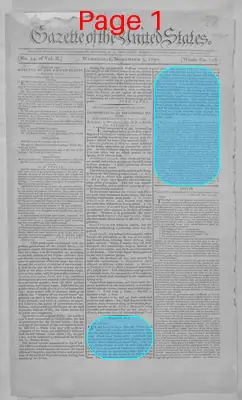
Gazette Of The United States
New York, New York County, New York
What is this article about?
A report details the Hessian Fly's continued damage to early-sown wheat crops, leading some farmers to replow fields for rye. Advice includes late planting to mitigate the insect. Dr. Mitchell has sent specimens to European naturalists and shared insights on its impact, denying importation risks.
Clipping
OCR Quality
Full Text
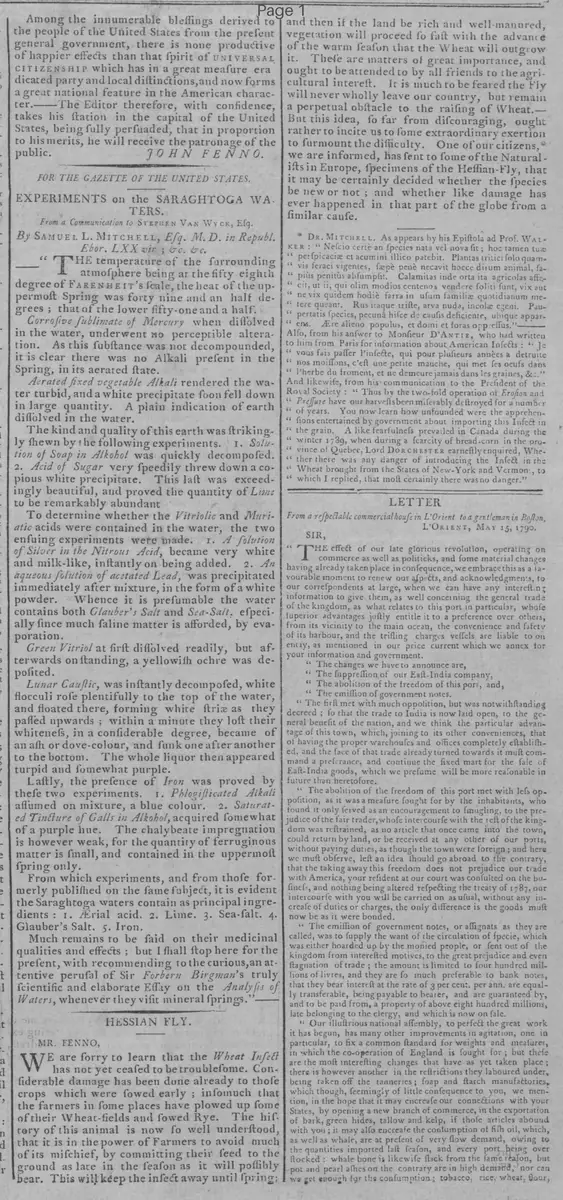
MR. FENNO,
We are sorry to learn that the Wheat Insect has not yet ceased to be troublesome. Considerable damage has been done already to those crops which were sowed early; insomuch that the farmers in some places have plowed up some of their Wheat-fields and sowed Rye. The history of this animal is now so well understood, that it is in the power of Farmers to avoid much of its mischief, by committing their seed to the ground as late in the season as it will possibly bear. This will keep the insect away until spring; and then if the land be rich and well-manured, vegetation will proceed so fast with the advance of the warm season that the Wheat will outgrow it. These are matters of great importance, and ought to be attended to by all friends to the agricultural interest. It is much to be feared the Fly will never wholly leave our country, but remain a perpetual obstacle to the raising of Wheat.— But this idea, so far from discouraging, ought rather to incite us to some extraordinary exertion to surmount the difficulty. One of our citizens, * we are informed, has sent to some of the Naturalists in Europe, specimens of the Hessian-Fly, that it may be certainly decided whether the species be new or not; and whether like damage has ever happened in that part of the globe from a similar cause.
* Dr. MITCHELL. As appears by his Epistola ad Prof. WALKER: "Necio certè an pecies nata vel nova fit; hoc tamen tuæe perpicaciæ et acumini illico patebit. Plantas tritici olim quavis feraci vigentes, apès penès necavit hocce dirum animal, a-piùs penitus absumit. Calamitas inde orta ita agricolas affe-cit, ut ii, qui olim modios centenos vendere soliti sunt, vix aut ne vix quidem hodiè farra in usum familiæ quotidianum me-tere queant. Rus itaque trite, arva nuda, incolæ egenti. Pau-pertatis speciè, pecunia hic de causis deficiens, ubique appar-ens. Agrè alieno populus, et domi et foras opprèssus."
Also, from his answer to Monsieur D'Anrie, who had written to him from Paris for information about American Insects: "Je vous fais par l'insecte, qui pour plusieurs annèes a detruite nos moissons, c'est une petite mouche, qui met ses oeufs dans l'herbe du froment, et ne demeure jamais dans les graines, &c."
And likewise, from his communication to the President of the Royal Society: "Thus by the two-fold operation of Erosion and Pressure have our harvests been miserably destroyed for a number of years. You now learn how unfounded were the apprehensions entertained by government about importing this Insect in the grain. A like fearfulness prevailed in Canada during the winter 1739, when during a scarcity of bread-corn in the province of Quebec, Lord DORCHESTER earnestly enquired, Whether there was any danger of introducing the Insect in the Wheat brought from the States of New-York and Vermont, to which I replied, that most certainly there was no danger."
What sub-type of article is it?
What keywords are associated?
What entities or persons were involved?
Domestic News Details
Key Persons
Outcome
considerable damage to early-sown wheat crops; some farmers plowed up fields and sowed rye; fear the fly will remain a perpetual obstacle to wheat raising.
Event Details
The Hessian Fly continues to trouble wheat crops, damaging early sowings. Farmers advised to plant late to avoid the insect until spring, allowing wheat to outgrow it on rich land. Dr. Mitchell sent specimens to European naturalists to determine if the species is new and if similar damage occurred there. Quotes from Mitchell's letters describe the insect's devastation, its lifecycle, and refute fears of importation from grain.