Thank you for visiting SNEWPapers!
Sign up free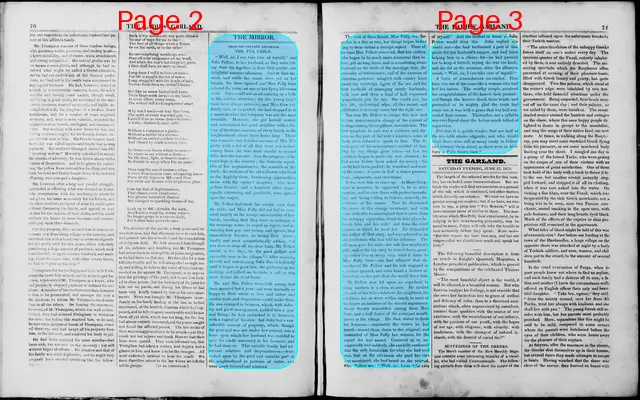
Literary
June 12, 1824
The Ladies' Garland
Harpers Ferry, Jefferson County, West Virginia
What is this article about?
In a small village, a young couple's happy marriage is threatened by gossip originating from Miss Polly Gaw's mishearing of Julia Pellew's innocent remark at tea. Rumors of separation spread, causing social ostracism and financial woes, until the truth is revealed: Julia was simply declining a quail at supper. The tale satirizes tea table gossip and its destructive power.
Merged-components note: Continuation of the story 'The Tea Table' from page 2 to page 3.
Clippings
1 of 2
OCR Quality
98%
Excellent
Full Text
THE MIRROR.
FROM THE TRENTON EMPORIUM.
THE TEA TABLE.
"Well, sir, I can take care of myself," said Julia Pellew, to her husband, as they were taking their tea together in their little parlor, one delightful summer afternoon. Just at that moment, and while the words were yet on her tongue, the door opened and Miss Polly Gaw entered the room, on one of her flying afternoon visits. Julia could not avoid coloring up a little at this sudden intrusion; for this young lady's visits were always intrusive, and Miss Gaw evidently saw, or suspected, she had dropped in at a moment when her company was not the most desirable. However, she got herself seated, and entertained her good neighbor with a history of the home concerns of every family in the neighborhood about three hours long. There was a minute and detailed account of Mrs. D.'s party, with a list of all that were not invited, among them she was most careful to remind Julia that she was one; then the progress of the courtships in the country; the domestic squabbles of her acquaintances; the scandals of the week; the motions of the old widower who lived on the Appleby farm, betokening approaching union with the squire's daughter; who were jealous thereat; and a hundred other topics equally interesting and profitable, were spread upon the carpet.
Mr. Pellew had made his escape soon from the table, and Miss Polly did not fail to comment largely on the savage unsociability of husbands, insisting that they were as unhappy in the marriage noose as caged up tigers, and instancing how gay, and young, and spruce, they immediately become, on losing their wives: kindly and most sympathetically adding, "if you were to drop off, my dear Julia, Mr. Pellew would, in ten days, be the most gallant and agreeable man in the village."—After enjoying herself, and entertaining Julia thus delightfully until it began to grow late, she gathered up her knitting and sallied on, to make a call or two more before she went home.
Mr. and Mrs. Pellew were both young, had been married but a year, and were mutually as happy in their union as love and virtue and similar taste and dispositions could make them. He was engaged in business, which, with industry and good management, yielded him a genteel living; he had embarked in it, however, with a capital of his own: but Julia had a considerable amount of property, which, though the principal was not under her control, was a basis upon which her husband was enabled to gain the credit necessary in his business, and he had done so. This amiable family had numerous relatives and acquaintances—were looked upon by the good and sensible part of the neighborhood as patterns of virtue, and were much beloved and admired.
The visit of their friend, Miss Polly, was forgotten in a day or two, but things began before long to wear rather a strange aspect. Time after time Mrs. Pellew observed, that her visitors, who began to be much more numerous than before, put on long faces, and in a condoling strain lectured on the trials of the marriage state, the necessity of forbearance, and of the exercise of christian patience, mingled with sundry hints about the sovereign rights of the sex, and the best methods of managing unruly husbands, with now and then a kind of half expressed sympathetic pity for her. She could not, for her life, understand what all this meant, and attributed it to every cause but the right one. Nor was Mr. Pellew to escape this new and to him unaccountable change of the current of feelings among his neighbors, towards him. The first symptom he saw was a coldness and shyness on the part of his wife's relatives, some of them even refused to speak to him. The female part of his acquaintance scolded at him. Day by day things grew worse--at last his creditors began to push--he was alarmed; he had never before been asked for money: his credit had been perfect; he wondered and waited the issue; it came in half a dozen prosecutions, judgments, and executions. It was now time to rouse up. As these things were in progress, he appeared to be in utter surprise, and to view them with perfect incredulity, not being willing to believe, scarcely, the evidence of his senses. Now he demanded the cause of this strange treatment, and with some difficulty he ascertained that it arose from the unhappy separation about to take place between him and his wife! and from the cruel manner in which he used her. He demanded the author of that story, and was referred to an old gentleman who had told his informer. The old man gave his wife--his wife her neighbor's wife, and so the tale may be traced down, growing rather less at every step, until it came to Miss Polly Gaw--she had affirmed that she overheard Mr. Pellew and his wife engaged in a violent quarrel, and even heard a distinct affirmation on her part that she would leave him. Mr. Pellew now hit upon an expedient to bring matters to a close at once. He invited all such of his wife's relatives, his neighbors, his creditors, &c. as were within reach, to meet at his house on business of the utmost importance. About twenty assembled, among them Miss Gaw, and a half dozen of the principal mouthpieces in the village. He then stated to them his business--recounted the stories he had heard -traced them down to the original, and demanded of Miss Polly her reasons for the report she had raised. Cornered up so unexpectedly and suddenly, she candidly confessed that the only foundation for what she had said was, that on the afternoon she paid her visit first mentioned, she had heard as she entered, Mrs. Pellew say, "Well, sir, I can take care of myself."
And she wished to know if Julia Pellew would deny this. Julia replied she would not -she had barbecued a pair of fine quails for her husband's supper, and had been helping him to a choice bit -he had pressed her to keep it herself, saying she was too kind ; and she did on the occasion, utter the offensive words, "Well, sir, I can take care of myself."
A burst of astonishment succeeded. Miss Gaw ran out of the room like a woman who had lost her senses. The worthy couple received the congratulations of the honest fools present: and though the knaves shook their heads, and pretended to be mighty glad the truth had come out, it was with a grace that but half concealed their sorrow. Thereafter, not a syllable was ever lisped about the before much talked of separation.
But thus it is, gentle reader, that one half of the tea table stories originate, and who would think there were still as many ready to believe and trumpet them about, as there were in Alesbury in Polly Gaw's time ?
FROM THE TRENTON EMPORIUM.
THE TEA TABLE.
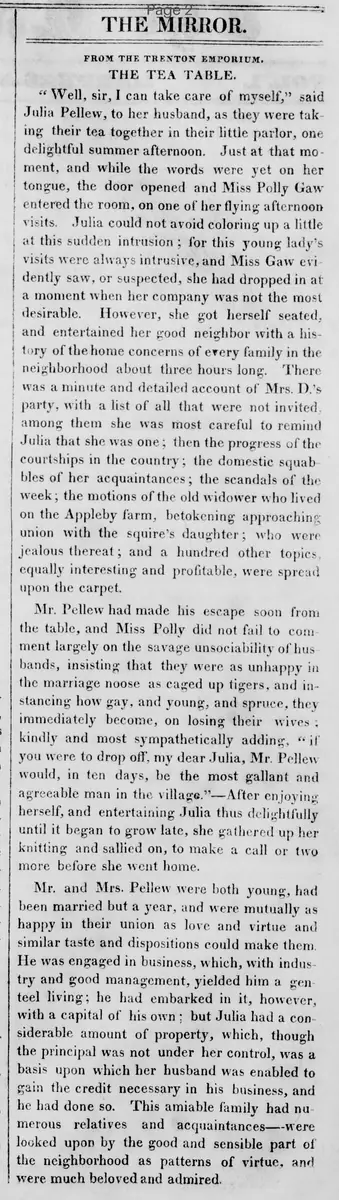
"Well, sir, I can take care of myself," said Julia Pellew, to her husband, as they were taking their tea together in their little parlor, one delightful summer afternoon. Just at that moment, and while the words were yet on her tongue, the door opened and Miss Polly Gaw entered the room, on one of her flying afternoon visits. Julia could not avoid coloring up a little at this sudden intrusion; for this young lady's visits were always intrusive, and Miss Gaw evidently saw, or suspected, she had dropped in at a moment when her company was not the most desirable. However, she got herself seated, and entertained her good neighbor with a history of the home concerns of every family in the neighborhood about three hours long. There was a minute and detailed account of Mrs. D.'s party, with a list of all that were not invited, among them she was most careful to remind Julia that she was one; then the progress of the courtships in the country; the domestic squabbles of her acquaintances; the scandals of the week; the motions of the old widower who lived on the Appleby farm, betokening approaching union with the squire's daughter; who were jealous thereat; and a hundred other topics equally interesting and profitable, were spread upon the carpet.
Mr. Pellew had made his escape soon from the table, and Miss Polly did not fail to comment largely on the savage unsociability of husbands, insisting that they were as unhappy in the marriage noose as caged up tigers, and instancing how gay, and young, and spruce, they immediately become, on losing their wives: kindly and most sympathetically adding, "if you were to drop off, my dear Julia, Mr. Pellew would, in ten days, be the most gallant and agreeable man in the village."—After enjoying herself, and entertaining Julia thus delightfully until it began to grow late, she gathered up her knitting and sallied on, to make a call or two more before she went home.
Mr. and Mrs. Pellew were both young, had been married but a year, and were mutually as happy in their union as love and virtue and similar taste and dispositions could make them. He was engaged in business, which, with industry and good management, yielded him a genteel living; he had embarked in it, however, with a capital of his own: but Julia had a considerable amount of property, which, though the principal was not under her control, was a basis upon which her husband was enabled to gain the credit necessary in his business, and he had done so. This amiable family had numerous relatives and acquaintances—were looked upon by the good and sensible part of the neighborhood as patterns of virtue, and were much beloved and admired.
The visit of their friend, Miss Polly, was forgotten in a day or two, but things began before long to wear rather a strange aspect. Time after time Mrs. Pellew observed, that her visitors, who began to be much more numerous than before, put on long faces, and in a condoling strain lectured on the trials of the marriage state, the necessity of forbearance, and of the exercise of christian patience, mingled with sundry hints about the sovereign rights of the sex, and the best methods of managing unruly husbands, with now and then a kind of half expressed sympathetic pity for her. She could not, for her life, understand what all this meant, and attributed it to every cause but the right one. Nor was Mr. Pellew to escape this new and to him unaccountable change of the current of feelings among his neighbors, towards him. The first symptom he saw was a coldness and shyness on the part of his wife's relatives, some of them even refused to speak to him. The female part of his acquaintance scolded at him. Day by day things grew worse--at last his creditors began to push--he was alarmed; he had never before been asked for money: his credit had been perfect; he wondered and waited the issue; it came in half a dozen prosecutions, judgments, and executions. It was now time to rouse up. As these things were in progress, he appeared to be in utter surprise, and to view them with perfect incredulity, not being willing to believe, scarcely, the evidence of his senses. Now he demanded the cause of this strange treatment, and with some difficulty he ascertained that it arose from the unhappy separation about to take place between him and his wife! and from the cruel manner in which he used her. He demanded the author of that story, and was referred to an old gentleman who had told his informer. The old man gave his wife--his wife her neighbor's wife, and so the tale may be traced down, growing rather less at every step, until it came to Miss Polly Gaw--she had affirmed that she overheard Mr. Pellew and his wife engaged in a violent quarrel, and even heard a distinct affirmation on her part that she would leave him. Mr. Pellew now hit upon an expedient to bring matters to a close at once. He invited all such of his wife's relatives, his neighbors, his creditors, &c. as were within reach, to meet at his house on business of the utmost importance. About twenty assembled, among them Miss Gaw, and a half dozen of the principal mouthpieces in the village. He then stated to them his business--recounted the stories he had heard -traced them down to the original, and demanded of Miss Polly her reasons for the report she had raised. Cornered up so unexpectedly and suddenly, she candidly confessed that the only foundation for what she had said was, that on the afternoon she paid her visit first mentioned, she had heard as she entered, Mrs. Pellew say, "Well, sir, I can take care of myself."
And she wished to know if Julia Pellew would deny this. Julia replied she would not -she had barbecued a pair of fine quails for her husband's supper, and had been helping him to a choice bit -he had pressed her to keep it herself, saying she was too kind ; and she did on the occasion, utter the offensive words, "Well, sir, I can take care of myself."
A burst of astonishment succeeded. Miss Gaw ran out of the room like a woman who had lost her senses. The worthy couple received the congratulations of the honest fools present: and though the knaves shook their heads, and pretended to be mighty glad the truth had come out, it was with a grace that but half concealed their sorrow. Thereafter, not a syllable was ever lisped about the before much talked of separation.
But thus it is, gentle reader, that one half of the tea table stories originate, and who would think there were still as many ready to believe and trumpet them about, as there were in Alesbury in Polly Gaw's time ?
What sub-type of article is it?
Prose Fiction
Satire
What themes does it cover?
Social Manners
Moral Virtue
What keywords are associated?
Gossip
Tea Table
Misunderstanding
Marriage
Social Scandal
Satire
Village Life
Literary Details
Title
The Tea Table
Key Lines
"Well, Sir, I Can Take Care Of Myself," Said Julia Pellew, To Her Husband, As They Were Taking Their Tea Together In Their Little Parlor, One Delightful Summer Afternoon.
She Candidly Confessed That The Only Foundation For What She Had Said Was, That On The Afternoon She Paid Her Visit First Mentioned, She Had Heard As She Entered, Mrs. Pellew Say, "Well, Sir, I Can Take Care Of Myself."
She Had Barbecued A Pair Of Fine Quails For Her Husband's Supper, And Had Been Helping Him To A Choice Bit He Had Pressed Her To Keep It Herself, Saying She Was Too Kind ; And She Did On The Occasion, Utter The Offensive Words, "Well, Sir, I Can Take Care Of Myself."
But Thus It Is, Gentle Reader, That One Half Of The Tea Table Stories Originate, And Who Would Think There Were Still As Many Ready To Believe And Trumpet Them About, As There Were In Alesbury In Polly Gaw's Time ?