Thank you for visiting SNEWPapers!
Sign up free
Literary
February 3, 1790
The New Hampshire Gazette And General Advertiser
Portsmouth, Rockingham County, New Hampshire
What is this article about?
A prose sketch contrasting the 'fine gentleman' with the 'well-bred man,' portraying the latter as rational, sincere, affable, and morally upright, who values merit, friendship, and reason over flattery or passion.
Clipping
OCR Quality
98%
Excellent
Full Text
The MEDLEY
CHARACTER OF A WELL-BRED MAN
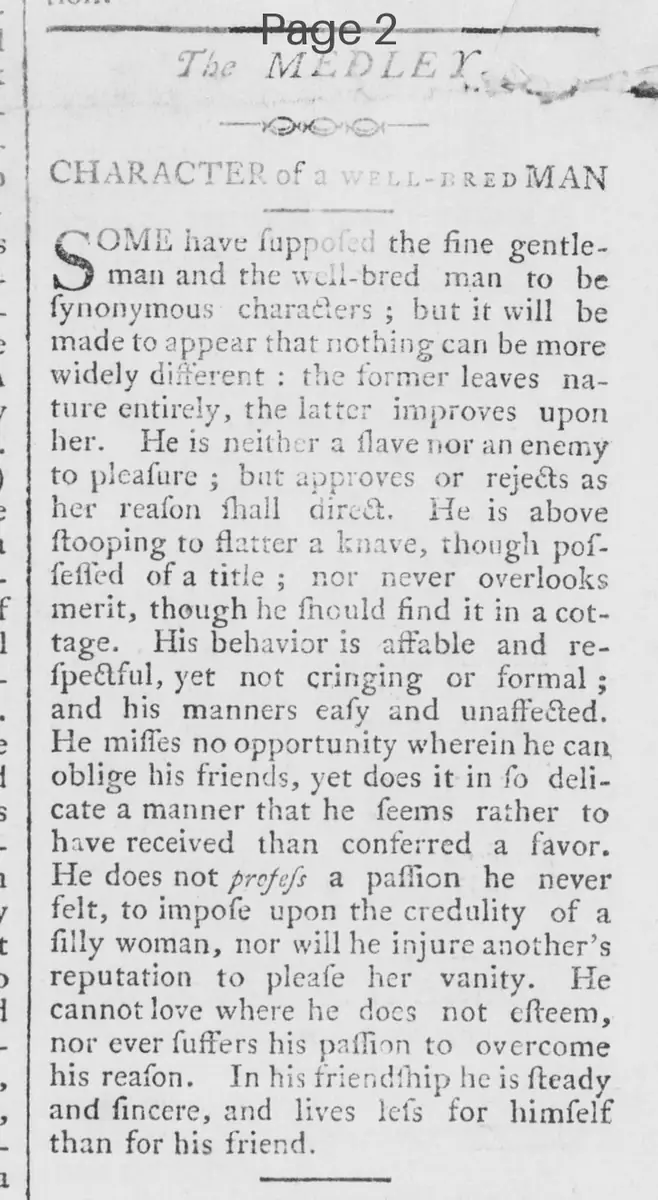
Some have supposed the fine gentleman and the well-bred man to be synonymous characters; but it will be made to appear that nothing can be more widely different: the former leaves nature entirely, the latter improves upon her. He is neither a slave nor an enemy to pleasure; but approves or rejects as her reason shall direct. He is above stooping to flatter a knave, though possessed of a title: nor never overlooks merit, though he should find it in a cottage. His behavior is affable and respectful, yet not cringing or formal; and his manners easy and unaffected.
He misses no opportunity wherein he can oblige his friends, yet does it in so delicate a manner that he seems rather to have received than conferred a favor.
He does not profess a passion he never felt, to impose upon the credulity of a silly woman, nor will he injure another's reputation to please her vanity. He cannot love where he does not esteem, nor ever suffers his passion to overcome his reason. In his friendship he is steady and sincere, and lives less for himself than for his friend.
CHARACTER OF A WELL-BRED MAN
Some have supposed the fine gentleman and the well-bred man to be synonymous characters; but it will be made to appear that nothing can be more widely different: the former leaves nature entirely, the latter improves upon her. He is neither a slave nor an enemy to pleasure; but approves or rejects as her reason shall direct. He is above stooping to flatter a knave, though possessed of a title: nor never overlooks merit, though he should find it in a cottage. His behavior is affable and respectful, yet not cringing or formal; and his manners easy and unaffected.
He misses no opportunity wherein he can oblige his friends, yet does it in so delicate a manner that he seems rather to have received than conferred a favor.
He does not profess a passion he never felt, to impose upon the credulity of a silly woman, nor will he injure another's reputation to please her vanity. He cannot love where he does not esteem, nor ever suffers his passion to overcome his reason. In his friendship he is steady and sincere, and lives less for himself than for his friend.
What sub-type of article is it?
Essay
What themes does it cover?
Moral Virtue
Social Manners
Friendship
What keywords are associated?
Well Bred Man
Fine Gentleman
Moral Virtue
Sincerity
Friendship
Reason
Affability
Literary Details
Title
Character Of A Well Bred Man
Key Lines
Some Have Supposed The Fine Gentleman And The Well Bred Man To Be Synonymous Characters; But It Will Be Made To Appear That Nothing Can Be More Widely Different: The Former Leaves Nature Entirely, The Latter Improves Upon Her.
He Is Above Stooping To Flatter A Knave, Though Possessed Of A Title: Nor Never Overlooks Merit, Though He Should Find It In A Cottage.
He Misses No Opportunity Wherein He Can Oblige His Friends, Yet Does It In So Delicate A Manner That He Seems Rather To Have Received Than Conferred A Favor.
He Cannot Love Where He Does Not Esteem, Nor Ever Suffers His Passion To Overcome His Reason.
In His Friendship He Is Steady And Sincere, And Lives Less For Himself Than For His Friend.