Thank you for visiting SNEWPapers!
Sign up free
Story
July 19, 1918
Montpelier Examiner
Montpelier, Bear Lake County, Idaho
What is this article about?
Gayne T. K. Norton argues in American Forestry Magazine that snakes are valuable to farmers for controlling rodents and insects, urging conservation amid increased war gardening efforts.
Clipping
OCR Quality
98%
Excellent
Full Text
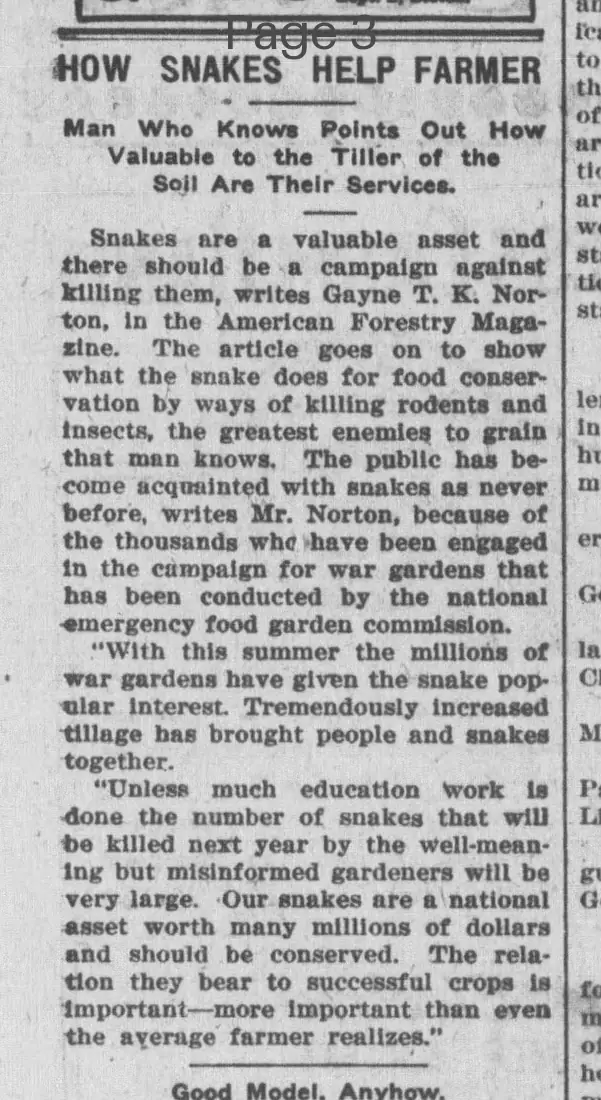
HOW SNAKES HELP FARMER
Man Who Knows Points Out How Valuable to the Tiller of the Soil Are Their Services.
Snakes are a valuable asset and there should be a campaign against killing them, writes Gayne T. K. Norton, in the American Forestry Magazine. The article goes on to show what the snake does for food conservation by ways of killing rodents and insects, the greatest enemies to grain that man knows. The public has become acquainted with snakes as never before, writes Mr. Norton, because of the thousands who have been engaged in the campaign for war gardens that has been conducted by the national emergency food garden commission.
"With this summer the millions of war gardens have given the snake popular interest. Tremendously increased tillage has brought people and snakes together.
"Unless much education work is done the number of snakes that will be killed next year by the well-meaning but misinformed gardeners will be very large. Our snakes are a national asset worth many millions of dollars and should be conserved. The relation they bear to successful crops is important—more important than even the average farmer realizes."
Man Who Knows Points Out How Valuable to the Tiller of the Soil Are Their Services.
Snakes are a valuable asset and there should be a campaign against killing them, writes Gayne T. K. Norton, in the American Forestry Magazine. The article goes on to show what the snake does for food conservation by ways of killing rodents and insects, the greatest enemies to grain that man knows. The public has become acquainted with snakes as never before, writes Mr. Norton, because of the thousands who have been engaged in the campaign for war gardens that has been conducted by the national emergency food garden commission.
"With this summer the millions of war gardens have given the snake popular interest. Tremendously increased tillage has brought people and snakes together.
"Unless much education work is done the number of snakes that will be killed next year by the well-meaning but misinformed gardeners will be very large. Our snakes are a national asset worth many millions of dollars and should be conserved. The relation they bear to successful crops is important—more important than even the average farmer realizes."
What sub-type of article is it?
Curiosity
Animal Story
What themes does it cover?
Moral Virtue
Nature
What keywords are associated?
Snakes
Farmers
Rodents
Insects
Conservation
War Gardens
What entities or persons were involved?
Gayne T. K. Norton
Story Details
Key Persons
Gayne T. K. Norton
Story Details
Snakes aid farmers by killing rodents and insects that damage crops; Norton calls for conservation to prevent misguided killings by war gardeners, highlighting their value as a national asset.