Thank you for visiting SNEWPapers!
Sign up free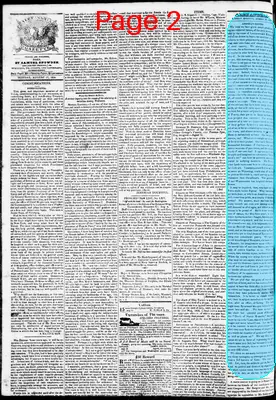
Editorial
August 17, 1829
Phenix Gazette
Alexandria, Virginia
What is this article about?
An 1829 editorial from Alexandria extols the potential of American poetry, citing inspiring natural landscapes, indigenous and revolutionary history, and praises poets like Halleck, Bryant, and Percival, urging gradual development for future renown.
Clipping

OCR Quality
95%
Excellent
Full Text
ALEXANDRIA
MONDAY MORNING, AUGUST 17, 1829
AMERICAN POETRY.
We trust we have given ample proofs, during our editorial labors, of the deep interest we take in the cause of Literature and Education, and of our desire to foster the exertions of citizens in their praiseworthy endeavors to extend their own fame, and elevate the standing of their country.
We always record, with pleasure, the achievements of American genius, no matter in what field that genius may be displayed. In the same spirit, we offer a remark or two, this morning, on American Poetry.
There is no reason that we can discover why the Muses should not be wooed as assiduously and as successfully too, in this country as in any other.
Indeed, there is here much to fill the soul of the Poet with the sublimest fancies. Our land teems with inspiring subjects. The roar of our cataracts—the majestic flow of our mighty rivers—the wide expanse of our inland seas—the deep solemnity of our interminable forests—the boundless prairies of our Western region—the lofty elevation of our mountains—all, all speak to the heart in Nature's own impressive language.
Then too, where, among all the nations that have been swept from earth, or that still exist upon its surface, can we look for greater subjects for the inspiration of Poetry, than are to be found in those that have peopled this continent? The miserable remnant of a race yet lingers round the tombs of their gallant fathers—a race with us, but not of us, or for us—claiming our sympathy, exacting our tears, and almost seeming to excite the Muse to melancholy sadness. Our heroic ancestors, too! What strains might not be poured forth in their praise! Our battle fields—immantled fortresses of freedom—the gray-haired veterans of past times, and the chivalrous youth of our own day! It appears as if every thought and imagination calculated to "fire the mind's eye" can here be gathered, and consecrated in undying numbers. The Poets of other lands have come here to collect materials for their art. Campbell could find no valley so sweet as Wyoming; could sing of no love so pure as Gertrude's; could portray no loftier character than Outalissa's. The patriotism of our Washington has inspired the muse of BYRON.
It may be inquired, then, why have not our Poets made bolder flights? Why has nothing yet been done, at which an American can look with conscious pride, as a trophy of his national genius? We answer, much has been done—many records are even now among us, which will descend to after ages, and which we have reason to be proud of. But it is not in the nature of things, that fifty-four years, in all which battles have been fought, freedom gained, government organized, and the necessaries of life secured—we say, it is impossible for a nation to effect all this, and people almost a continent, and at the same time to raise up Poets—poets who are to rival those of Europe in everything that constitutes poetry. We have the fervid breathings of Halleck, the sweet strains of Bryant, the imaginative muse of Percival, the moral lays of our own Bryan, and the melody of others familiar to us. With these names, then, we may repeat, we have done much.
When the young tree brings forth such rich buds, what may we not expect when it reaches maturity, and its blossoms ripen to perfection! The sun of our poetical fame is just rising—it has yet hardly advanced from the horizon—but the brilliancy of its appearance is a sure token of its noon-day splendor.
We are glad that the pride of country, ambition of fame, and the fascination of novelty appear to have but little effect in drawing those on whom our hopes must rest, from the course which they have judiciously marked out to themselves. It is better to remain where they are, than to subject ourselves to the mortification, after an effort, of failing. The young eagle must fly around his eyry before he loftily soars into mid air. We have no doubt that the short but splendid poem of HALLECK, the "Death of Marco Bozzaris," has added more to his solid fame, than if he had written a longer and more labored one. Let our Poets now be content to scatter pearl-drops—but hereafter they may flash the beams of inspired poesy—wield the thunder of passion—"command as they dare to please us." We say this, not because we feel any which some may feel, but because it is safer to chasten the temper, than to excite it to bursts which may lead us into difficulties.
We think we see many indications that there will be those springing up amongst us, who are destined to reap a full harvest of fame. We trust the sickle will be put to the grain, but let the hand be guided and directed by experience—let her part in this, as she has in almost everything else. We shall rejoice when America has acted her part in this, as she has in almost everything else.
MONDAY MORNING, AUGUST 17, 1829
AMERICAN POETRY.
We trust we have given ample proofs, during our editorial labors, of the deep interest we take in the cause of Literature and Education, and of our desire to foster the exertions of citizens in their praiseworthy endeavors to extend their own fame, and elevate the standing of their country.
We always record, with pleasure, the achievements of American genius, no matter in what field that genius may be displayed. In the same spirit, we offer a remark or two, this morning, on American Poetry.
There is no reason that we can discover why the Muses should not be wooed as assiduously and as successfully too, in this country as in any other.
Indeed, there is here much to fill the soul of the Poet with the sublimest fancies. Our land teems with inspiring subjects. The roar of our cataracts—the majestic flow of our mighty rivers—the wide expanse of our inland seas—the deep solemnity of our interminable forests—the boundless prairies of our Western region—the lofty elevation of our mountains—all, all speak to the heart in Nature's own impressive language.
Then too, where, among all the nations that have been swept from earth, or that still exist upon its surface, can we look for greater subjects for the inspiration of Poetry, than are to be found in those that have peopled this continent? The miserable remnant of a race yet lingers round the tombs of their gallant fathers—a race with us, but not of us, or for us—claiming our sympathy, exacting our tears, and almost seeming to excite the Muse to melancholy sadness. Our heroic ancestors, too! What strains might not be poured forth in their praise! Our battle fields—immantled fortresses of freedom—the gray-haired veterans of past times, and the chivalrous youth of our own day! It appears as if every thought and imagination calculated to "fire the mind's eye" can here be gathered, and consecrated in undying numbers. The Poets of other lands have come here to collect materials for their art. Campbell could find no valley so sweet as Wyoming; could sing of no love so pure as Gertrude's; could portray no loftier character than Outalissa's. The patriotism of our Washington has inspired the muse of BYRON.
It may be inquired, then, why have not our Poets made bolder flights? Why has nothing yet been done, at which an American can look with conscious pride, as a trophy of his national genius? We answer, much has been done—many records are even now among us, which will descend to after ages, and which we have reason to be proud of. But it is not in the nature of things, that fifty-four years, in all which battles have been fought, freedom gained, government organized, and the necessaries of life secured—we say, it is impossible for a nation to effect all this, and people almost a continent, and at the same time to raise up Poets—poets who are to rival those of Europe in everything that constitutes poetry. We have the fervid breathings of Halleck, the sweet strains of Bryant, the imaginative muse of Percival, the moral lays of our own Bryan, and the melody of others familiar to us. With these names, then, we may repeat, we have done much.
When the young tree brings forth such rich buds, what may we not expect when it reaches maturity, and its blossoms ripen to perfection! The sun of our poetical fame is just rising—it has yet hardly advanced from the horizon—but the brilliancy of its appearance is a sure token of its noon-day splendor.
We are glad that the pride of country, ambition of fame, and the fascination of novelty appear to have but little effect in drawing those on whom our hopes must rest, from the course which they have judiciously marked out to themselves. It is better to remain where they are, than to subject ourselves to the mortification, after an effort, of failing. The young eagle must fly around his eyry before he loftily soars into mid air. We have no doubt that the short but splendid poem of HALLECK, the "Death of Marco Bozzaris," has added more to his solid fame, than if he had written a longer and more labored one. Let our Poets now be content to scatter pearl-drops—but hereafter they may flash the beams of inspired poesy—wield the thunder of passion—"command as they dare to please us." We say this, not because we feel any which some may feel, but because it is safer to chasten the temper, than to excite it to bursts which may lead us into difficulties.
We think we see many indications that there will be those springing up amongst us, who are destined to reap a full harvest of fame. We trust the sickle will be put to the grain, but let the hand be guided and directed by experience—let her part in this, as she has in almost everything else. We shall rejoice when America has acted her part in this, as she has in almost everything else.
What sub-type of article is it?
American Literature
Poetry
What keywords are associated?
American Poetry
National Genius
Literature
Education
Poets
Halleck
Bryant
Inspiration
What entities or persons were involved?
Halleck
Bryant
Percival
Bryan
Campbell
Byron
Washington
Editorial Details
Primary Topic
Promotion Of American Poetry And National Genius
Stance / Tone
Optimistic And Encouraging
Key Figures
Halleck
Bryant
Percival
Bryan
Campbell
Byron
Washington
Key Arguments
America Offers Inspiring Natural And Historical Subjects For Poetry
Current American Poets Like Halleck And Bryant Have Achieved Much
National Development Prioritizes Survival Over Arts Initially
Gradual Progress In Poetry Will Lead To Future Greatness
Poets Should Build Fame Steadily Rather Than Risk Bold Failures