Thank you for visiting SNEWPapers!
Sign up free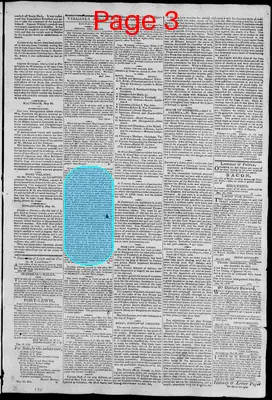
Editorial
May 30, 1806
Virginia Argus
Richmond, Virginia
What is this article about?
An editorial urges caution in settling US differences with Britain under Jefferson's administration, demanding full indemnity for impressed seamen, confiscated property, and murders, while criticizing past concessions like Jay's Treaty and advocating for equitable maritime laws aligned with European powers.
Clipping
OCR Quality
98%
Excellent
Full Text
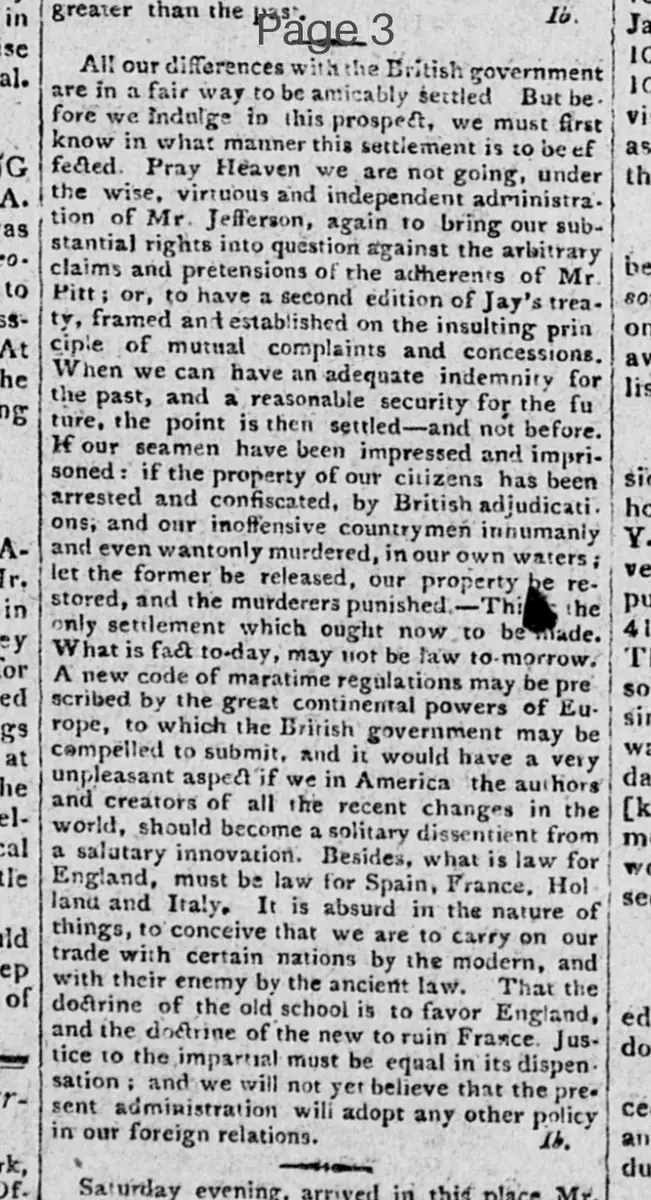
All our differences with the British government are in a fair way to be amicably settled. But before we indulge in this prospect, we must first know in what manner this settlement is to be effected. Pray Heaven we are not going, under the wise, virtuous and independent administration of Mr. Jefferson, again to bring our substantial rights into question against the arbitrary claims and pretensions of the adherents of Mr. Pitt; or, to have a second edition of Jay's treaty, framed and established on the insulting principle of mutual complaints and concessions.
When we can have an adequate indemnity for the past, and a reasonable security for the future, the point is then settled -- and not before. If our seamen have been impressed and imprisoned: if the property of our citizens has been arrested and confiscated, by British adjudications; and our inoffensive countrymen inhumanly and even wantonly murdered, in our own waters; let the former be released, our property be restored, and the murderers punished. -- This the only settlement which ought now to be made.
What is fact to-day, may not be law to-morrow. A new code of maritime regulations may be prescribed by the great continental powers of Europe, to which the British government may be compelled to submit, and it would have a very unpleasant aspect if we in America the authors and creators of all the recent changes in the world, should become a solitary dissentient from a salutary innovation. Besides, what is law for England, must be law for Spain, France, Holland and Italy. It is absurd in the nature of things, to conceive that we are to carry on our trade with certain nations by the modern, and with their enemy by the ancient law. That the doctrine of the old school is to favor England, and the doctrine of the new to ruin France. Justice to the impartial must be equal in its dispensation; and we will not yet believe that the present administration will adopt any other policy in our foreign relations.
Ib.
When we can have an adequate indemnity for the past, and a reasonable security for the future, the point is then settled -- and not before. If our seamen have been impressed and imprisoned: if the property of our citizens has been arrested and confiscated, by British adjudications; and our inoffensive countrymen inhumanly and even wantonly murdered, in our own waters; let the former be released, our property be restored, and the murderers punished. -- This the only settlement which ought now to be made.
What is fact to-day, may not be law to-morrow. A new code of maritime regulations may be prescribed by the great continental powers of Europe, to which the British government may be compelled to submit, and it would have a very unpleasant aspect if we in America the authors and creators of all the recent changes in the world, should become a solitary dissentient from a salutary innovation. Besides, what is law for England, must be law for Spain, France, Holland and Italy. It is absurd in the nature of things, to conceive that we are to carry on our trade with certain nations by the modern, and with their enemy by the ancient law. That the doctrine of the old school is to favor England, and the doctrine of the new to ruin France. Justice to the impartial must be equal in its dispensation; and we will not yet believe that the present administration will adopt any other policy in our foreign relations.
Ib.
What sub-type of article is it?
Foreign Affairs
Partisan Politics
Trade Or Commerce
What keywords are associated?
British Relations
Jay's Treaty
Impressment
Indemnity
Maritime Law
Jefferson Administration
What entities or persons were involved?
British Government
Mr. Jefferson
Mr. Pitt
Jay's Treaty
Editorial Details
Primary Topic
Settlement Of Us British Differences And Demands For Indemnity
Stance / Tone
Cautious Demand For Full Justice And Equitable Foreign Policy
Key Figures
British Government
Mr. Jefferson
Mr. Pitt
Jay's Treaty
Key Arguments
Settlement Must Provide Adequate Indemnity For Past Wrongs And Security For The Future
Avoid Repeating Concessions Like Jay's Treaty Under Jefferson's Administration
Release Impressed Seamen, Restore Confiscated Property, Punish Murderers
Us Should Align With New European Maritime Regulations Rather Than Outdated British Laws
Equal Justice In Foreign Relations, Not Favoring England Over France