Thank you for visiting SNEWPapers!
Sign up free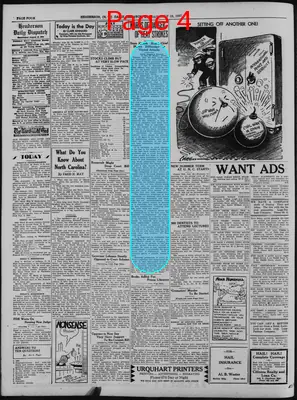
Story
July 19, 1937
Henderson Daily Dispatch
Henderson, Vance County, North Carolina
What is this article about?
Dr. Carl V. Reynolds, State health officer in Raleigh, explains differences between sun stroke and heat exhaustion, their symptoms, prevention, and first aid, urging public awareness during heat waves. (187 chars)
Clipping

OCR Quality
95%
Excellent
Full Text
State Health Board Chief Shows Difference in 'Varied Attacks'
Daily Dispatch Bureau,
In The Sir Walter Hotel.
Raleigh, July 19.-Sun stroke and heat exhaustion are decidedly different, but each can be prevented by taking the necessary precautions, according to Dr. Carl V. Reynolds, State health officer, who expressed the belief that the public should be properly advised of the dangers that come with extreme heat waves.
"It is important to bear in mind that all cases. whether of sun stroke or heat prostration. should be classed as emergencies and that a doctor should be called immediately." Dr. Reynolds said. "In the meantime, an exercise of first aid knowledge is necessary. The person giving first aid should bear in mind the very important fact that the response to the call must be rendered promptly but not hurriedly."
Dr. Reynolds said that heat exhaustion and sun stroke may result from the same causes and have the same preventions, but are marked by different symptoms.
"Heat prostrations are sometimes brought about by means of direct exposure to the sun's rays, especially when the humidity is great," the health officer continued. "They are commonly due, however. to long exposure to excessive heat while working indoors. This is especially true when the worker is over-fatigued or the wearer of too heavy clothing, or of a hat, or cap which allows the head no ventilation. In extremely hot weather. there should be provision for an air space in the head covering.
All stimulating drinks. such as alcohol, are conducive to sun stroke and heat exhaustion rather than a preventive.
"It is advisable to avoid exposure to the sun in the middle of the day, to see that work rooms are properly ventilated and to avoid over-fatigue. If one should feel dizzy or faint. the common sense procedure to avoid sun stroke or heat exhaustion would be to stop work temporarily, find a cool spot and lie down. The hands and face in such a case. should be bathed in cold water, which the patient also should be required to drink freely.
"The symptoms of heat stroke are usually pain in the head, dizziness and a feeling of oppression which may extend to complete insensibility. This condition develops very rapidly. In sun stroke, the definite symptoms include a very red face, dilated pupils hot. dry skin, no perspiration. with labored breathing and sighing, pulse full and rapid, often spasms of the muscles and very high, temperature.
"The distinctive symptoms of heat exhaustion are dizziness, often nausea and vomiting. depression and weakness but not unconsciousness from which the patient cannot be aroused as in sunstroke, face pale, but covered with perspiration. breathing shallow, pulse weak and rapid."
Referring to treatment which may be administered by the first aider, Dr. Reynolds re-emphasized the importance of sending for a doctor at once.
In the meantime. however, the patient should be removed to a cooler and more comfortable location. all the clothing should be loosened and as much of it as possible removed. "Apply cold water to the head and body ind rub ice cold water over the face, neck, chest and armpits," Dr. Reynolds said.
"It is important to emphasize that massaging the patient tends to prevent further shock. by bringing the hot blood to the surface. In the case of sun stroke. stimulants should be avoided. In cases of heat exhaustion the treatment is practically the same, except that a stimulation, such as aromatic spirits of ammonia, should be used.
"Extreme precaution to avoid any of the conditions that bring about sun stroke or heat exhaustion should be taken by those suffering from any organic disorders. especially heart trouble. In many such cases, extreme heat has proved the last straw' and has been the direct cause of death."
Daily Dispatch Bureau,
In The Sir Walter Hotel.
Raleigh, July 19.-Sun stroke and heat exhaustion are decidedly different, but each can be prevented by taking the necessary precautions, according to Dr. Carl V. Reynolds, State health officer, who expressed the belief that the public should be properly advised of the dangers that come with extreme heat waves.
"It is important to bear in mind that all cases. whether of sun stroke or heat prostration. should be classed as emergencies and that a doctor should be called immediately." Dr. Reynolds said. "In the meantime, an exercise of first aid knowledge is necessary. The person giving first aid should bear in mind the very important fact that the response to the call must be rendered promptly but not hurriedly."
Dr. Reynolds said that heat exhaustion and sun stroke may result from the same causes and have the same preventions, but are marked by different symptoms.
"Heat prostrations are sometimes brought about by means of direct exposure to the sun's rays, especially when the humidity is great," the health officer continued. "They are commonly due, however. to long exposure to excessive heat while working indoors. This is especially true when the worker is over-fatigued or the wearer of too heavy clothing, or of a hat, or cap which allows the head no ventilation. In extremely hot weather. there should be provision for an air space in the head covering.
All stimulating drinks. such as alcohol, are conducive to sun stroke and heat exhaustion rather than a preventive.
"It is advisable to avoid exposure to the sun in the middle of the day, to see that work rooms are properly ventilated and to avoid over-fatigue. If one should feel dizzy or faint. the common sense procedure to avoid sun stroke or heat exhaustion would be to stop work temporarily, find a cool spot and lie down. The hands and face in such a case. should be bathed in cold water, which the patient also should be required to drink freely.
"The symptoms of heat stroke are usually pain in the head, dizziness and a feeling of oppression which may extend to complete insensibility. This condition develops very rapidly. In sun stroke, the definite symptoms include a very red face, dilated pupils hot. dry skin, no perspiration. with labored breathing and sighing, pulse full and rapid, often spasms of the muscles and very high, temperature.
"The distinctive symptoms of heat exhaustion are dizziness, often nausea and vomiting. depression and weakness but not unconsciousness from which the patient cannot be aroused as in sunstroke, face pale, but covered with perspiration. breathing shallow, pulse weak and rapid."
Referring to treatment which may be administered by the first aider, Dr. Reynolds re-emphasized the importance of sending for a doctor at once.
In the meantime. however, the patient should be removed to a cooler and more comfortable location. all the clothing should be loosened and as much of it as possible removed. "Apply cold water to the head and body ind rub ice cold water over the face, neck, chest and armpits," Dr. Reynolds said.
"It is important to emphasize that massaging the patient tends to prevent further shock. by bringing the hot blood to the surface. In the case of sun stroke. stimulants should be avoided. In cases of heat exhaustion the treatment is practically the same, except that a stimulation, such as aromatic spirits of ammonia, should be used.
"Extreme precaution to avoid any of the conditions that bring about sun stroke or heat exhaustion should be taken by those suffering from any organic disorders. especially heart trouble. In many such cases, extreme heat has proved the last straw' and has been the direct cause of death."
What sub-type of article is it?
Medical Curiosity
What themes does it cover?
Misfortune
Recovery
Moral Virtue
What keywords are associated?
Sun Stroke
Heat Exhaustion
Prevention
First Aid
Symptoms
What entities or persons were involved?
Dr. Carl V. Reynolds
Where did it happen?
Raleigh
Story Details
Key Persons
Dr. Carl V. Reynolds
Location
Raleigh
Event Date
July 19
Story Details
Dr. Reynolds differentiates sun stroke and heat exhaustion, their causes, symptoms, prevention methods, and first aid treatments, emphasizing immediate medical attention.