Thank you for visiting SNEWPapers!
Sign up free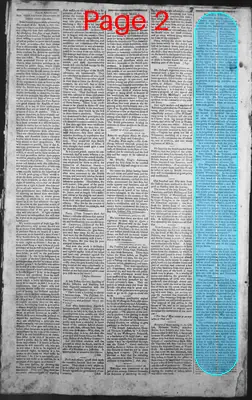
Story
September 1, 1807
The New Hampshire Gazette
Portsmouth, Rockingham County, New Hampshire
What is this article about?
Detailed report of Aaron Burr's treason trial proceedings in Richmond from August 17-20, covering jury selection, opening arguments, witness examinations, and legal debates on evidence admissibility.
Clipping

OCR Quality
95%
Excellent
Full Text
BURR'S TRIAL
RICHMOND, MONDAY, AUG. 17.
Charles Lee, Esq. appeared as Counsel for the prisoner. After a short time, the following were sworn as the petit jury to try Mr. Burr, viz—
Edward Garrington,
Reuben Blakey,
David Lambert,
Benjamin Graves,
Richard E. Parker,
Miles Botts,
Hugh Mercer,
Henry Coleman,
Christopher Anthony,
John M. Shepard,
James Shepard,
Richard Curd.
Aaron Burr, was then called, who standing up, the trial commenced by reading the indictment, which is long. and charges him with treason.
Mr. Hay then opened the case on the part of the prosecution, in a speech of two hours. He then called his witnesses; the first of which was Gen. Eaton, who being sworn, Mr. Bacon objected to this order of examining witnesses; as it was the duty of the prosecutors first to prove an overt act; and not to waste five or six weeks to no purpose in proving previous conversations.
An argument ensued, which lasted until 7 o'clock, at night.—Messrs. Botts, Wickham, Lee, and Martin, advocated the necessity of proving the overt act first. Mr. Wirt opposed the motion. The Court had not time to deliver an opinion, when an adjournment took place.
TUESDAY, AUGUST 18.
The Court delivered an opinion on the motion to controul the counsel of the U. S. so as to exclude all other testimony, until evidence was given of the overt acts of treason charged in the indictment. The opinion is long; and gives the Counsel of the U. S. liberty to proceed according to its judgment; and that the Court felt itself bound to exclude such testimony only, as at the time of its being offered, does not appear to be relevant.
In a consultation with the jury, it was agreed, that the Court should meet at 9 o'clock, A. M. and adjourn at 4 o'clock, P. M. each day.
Gen. Eaton, Com. Truxton, and Peter Taylor, (Blannerhassett's gardener) were examined as witnesses.
WEDNESDAY, AUGUST, 19.
Gen. Morgan, Col. Morgan, Thomas Morgan, Jacob Allright, William Love, (hostler to Blannerhassett) and Dudley Woodbridge. In the course of the examination Col. Burr remarked, that much of the testimony was perfectly irrelevant; and such as ought to be deemed inadmissible: and Mr. Wickham wished the court to interfere whenever it was discovered a witness would give improper evidence.
"Chief Justice. It is not in the power of the court to know beforehand, that the witness is going wrong. The court, for instance, think that testimony relating to the intention of the accused is proper; but it is not possible to tell whether it will have a bearing upon that point till the whole is gone through by the witness. If the court were to interfere upon every word or syllable which may be deemed inapplicable, it would produce more delay and confusion than to suffer the witness to proceed with his evidence without interruption."
Mr. Hay observed, that if the witnesses were suffered to go on, the intention of the accused, which constitutes an essential part of the crime, will be shewn.
THURSDAY, AUG. 20.
Immediately after the Court opened, Col. Burr again moved the court to hear an argument, shewing the impropriety of adducing testimony which had no direct relation on the charges in the indictment. Mr. Hay objected to the motion. The Court granted the motion, and the argument was gone into with spirit, and continued during the day.
The attitude assumed by Col. Burr, before the Court at Richmond, is singular enough. He objected to one principle because (not because he feared any thing from it but because it might be hereafter improved for purposes of oppression. In another instance he took it upon himself to throw an oblique censure on the Court for some of its analogies which he said might hereafter be construed -into opinions. It is curious to see a prisoner at the bar take so much care upon himself about others, who are to be hereafter affected by the decisions in his case!
The insolence and vulgarity of Luther Martin, one of his counsel, must be disgusting in the extreme to every man possessed of common ideas of decorum. He indulges himself in the most unqualified abuse of government, at every opportunity. His assertion, in open court, that the counsel for the U. S. wished to deprive Col. Burr of a fair trial, and to hang him up, to gratify the wishes of the government, was such as was never tolerated by any Court before. Yet the nerves of his honor the Chief Justice, seemed not in the least discomposed on the occasion, and it was not until Messrs. Hay & M'Rea, by their justly indignant remonstrances had left no room for the court decently to overlook the abuse, that his Honor observed, He had hoped no such allusions would have been made.
[Boston Courier.
RICHMOND, MONDAY, AUG. 17.
Charles Lee, Esq. appeared as Counsel for the prisoner. After a short time, the following were sworn as the petit jury to try Mr. Burr, viz—
Edward Garrington,
Reuben Blakey,
David Lambert,
Benjamin Graves,
Richard E. Parker,
Miles Botts,
Hugh Mercer,
Henry Coleman,
Christopher Anthony,
John M. Shepard,
James Shepard,
Richard Curd.
Aaron Burr, was then called, who standing up, the trial commenced by reading the indictment, which is long. and charges him with treason.
Mr. Hay then opened the case on the part of the prosecution, in a speech of two hours. He then called his witnesses; the first of which was Gen. Eaton, who being sworn, Mr. Bacon objected to this order of examining witnesses; as it was the duty of the prosecutors first to prove an overt act; and not to waste five or six weeks to no purpose in proving previous conversations.
An argument ensued, which lasted until 7 o'clock, at night.—Messrs. Botts, Wickham, Lee, and Martin, advocated the necessity of proving the overt act first. Mr. Wirt opposed the motion. The Court had not time to deliver an opinion, when an adjournment took place.
TUESDAY, AUGUST 18.
The Court delivered an opinion on the motion to controul the counsel of the U. S. so as to exclude all other testimony, until evidence was given of the overt acts of treason charged in the indictment. The opinion is long; and gives the Counsel of the U. S. liberty to proceed according to its judgment; and that the Court felt itself bound to exclude such testimony only, as at the time of its being offered, does not appear to be relevant.
In a consultation with the jury, it was agreed, that the Court should meet at 9 o'clock, A. M. and adjourn at 4 o'clock, P. M. each day.
Gen. Eaton, Com. Truxton, and Peter Taylor, (Blannerhassett's gardener) were examined as witnesses.
WEDNESDAY, AUGUST, 19.
Gen. Morgan, Col. Morgan, Thomas Morgan, Jacob Allright, William Love, (hostler to Blannerhassett) and Dudley Woodbridge. In the course of the examination Col. Burr remarked, that much of the testimony was perfectly irrelevant; and such as ought to be deemed inadmissible: and Mr. Wickham wished the court to interfere whenever it was discovered a witness would give improper evidence.
"Chief Justice. It is not in the power of the court to know beforehand, that the witness is going wrong. The court, for instance, think that testimony relating to the intention of the accused is proper; but it is not possible to tell whether it will have a bearing upon that point till the whole is gone through by the witness. If the court were to interfere upon every word or syllable which may be deemed inapplicable, it would produce more delay and confusion than to suffer the witness to proceed with his evidence without interruption."
Mr. Hay observed, that if the witnesses were suffered to go on, the intention of the accused, which constitutes an essential part of the crime, will be shewn.
THURSDAY, AUG. 20.
Immediately after the Court opened, Col. Burr again moved the court to hear an argument, shewing the impropriety of adducing testimony which had no direct relation on the charges in the indictment. Mr. Hay objected to the motion. The Court granted the motion, and the argument was gone into with spirit, and continued during the day.
The attitude assumed by Col. Burr, before the Court at Richmond, is singular enough. He objected to one principle because (not because he feared any thing from it but because it might be hereafter improved for purposes of oppression. In another instance he took it upon himself to throw an oblique censure on the Court for some of its analogies which he said might hereafter be construed -into opinions. It is curious to see a prisoner at the bar take so much care upon himself about others, who are to be hereafter affected by the decisions in his case!
The insolence and vulgarity of Luther Martin, one of his counsel, must be disgusting in the extreme to every man possessed of common ideas of decorum. He indulges himself in the most unqualified abuse of government, at every opportunity. His assertion, in open court, that the counsel for the U. S. wished to deprive Col. Burr of a fair trial, and to hang him up, to gratify the wishes of the government, was such as was never tolerated by any Court before. Yet the nerves of his honor the Chief Justice, seemed not in the least discomposed on the occasion, and it was not until Messrs. Hay & M'Rea, by their justly indignant remonstrances had left no room for the court decently to overlook the abuse, that his Honor observed, He had hoped no such allusions would have been made.
[Boston Courier.
What sub-type of article is it?
Historical Event
Crime Story
What themes does it cover?
Crime Punishment
Justice
What keywords are associated?
Burr Trial
Treason Indictment
Witness Examination
Legal Arguments
Jury Selection
Richmond Court
What entities or persons were involved?
Aaron Burr
Charles Lee
Gen. Eaton
Mr. Hay
Luther Martin
Chief Justice
Where did it happen?
Richmond
Story Details
Key Persons
Aaron Burr
Charles Lee
Gen. Eaton
Mr. Hay
Luther Martin
Chief Justice
Location
Richmond
Event Date
August 17 20
Story Details
Proceedings of Aaron Burr's treason trial including jury selection, prosecution opening, witness examinations starting with Gen. Eaton, legal arguments on evidence order and relevance, and observations on Burr's and counsel's conduct.