Thank you for visiting SNEWPapers!
Sign up free
Literary
July 20, 1860
Delaware Gazette
Delaware, Delaware County, Ohio
What is this article about?
An essay using metaphors of fruit bloom, dew-kissed flowers, and frosty window tracery to argue that the purity of character in youth, once defiled by crime, cannot be fully restored, only forgiven.
Clipping
OCR Quality
95%
Excellent
Full Text
PURITY OF CHARACTER.
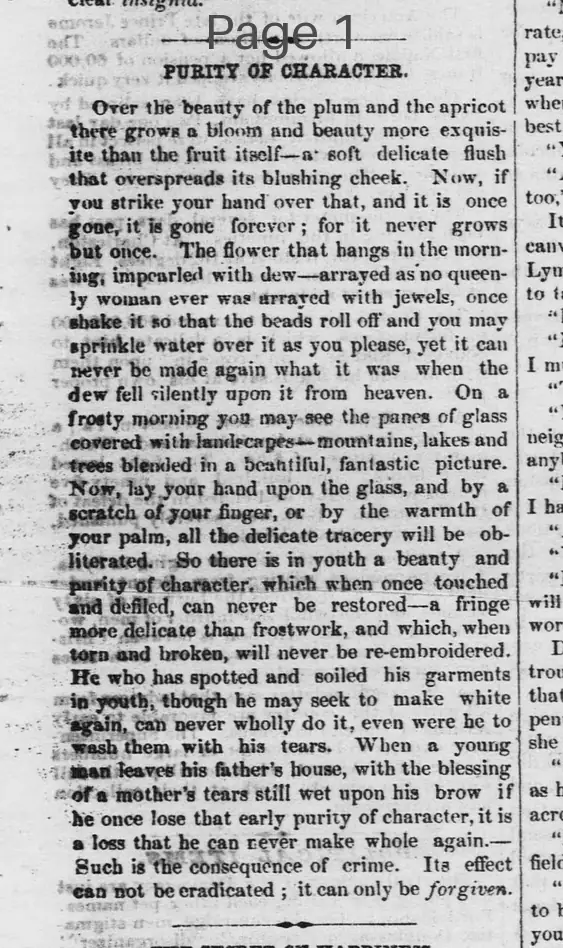
Over the beauty of the plum and the apricot there grows a bloom and beauty more exquisite than the fruit itself—a soft delicate flush that overspreads its blushing cheek. Now, if you strike your hand over that, and it is once gone, it is gone forever; for it never grows but once. The flower that hangs in the morning, impearled with dew—arrayed as no queenly woman ever was arrayed with jewels, once shake it so that the beads roll off and you may sprinkle water over it as you please, yet it can never be made again what it was when the dew fell silently upon it from heaven. On a frosty morning you may see the panes of glass covered with landscapes—mountains, lakes and trees blended in a beautiful, fantastic picture. Now, lay your hand upon the glass, and by a scratch of your finger, or by the warmth of your palm, all the delicate tracery will be obliterated.—So there is in youth a beauty and purity of character, which when once touched and defiled, can never be restored—a fringe more delicate than frostwork, and which, when torn and broken, will never be re-embroidered. He who has spotted and soiled his garments in youth, though he may seek to make white again, can never wholly do it, even were he to wash them with his tears. When a young man leaves his father's house, with the blessing of mother's tears still wet upon his brow if he once lose that early purity of character, it is a loss that he can never make whole again.—Such is the consequence of crime. Its effect can not be eradicated; it can only be forgiven.
Over the beauty of the plum and the apricot there grows a bloom and beauty more exquisite than the fruit itself—a soft delicate flush that overspreads its blushing cheek. Now, if you strike your hand over that, and it is once gone, it is gone forever; for it never grows but once. The flower that hangs in the morning, impearled with dew—arrayed as no queenly woman ever was arrayed with jewels, once shake it so that the beads roll off and you may sprinkle water over it as you please, yet it can never be made again what it was when the dew fell silently upon it from heaven. On a frosty morning you may see the panes of glass covered with landscapes—mountains, lakes and trees blended in a beautiful, fantastic picture. Now, lay your hand upon the glass, and by a scratch of your finger, or by the warmth of your palm, all the delicate tracery will be obliterated.—So there is in youth a beauty and purity of character, which when once touched and defiled, can never be restored—a fringe more delicate than frostwork, and which, when torn and broken, will never be re-embroidered. He who has spotted and soiled his garments in youth, though he may seek to make white again, can never wholly do it, even were he to wash them with his tears. When a young man leaves his father's house, with the blessing of mother's tears still wet upon his brow if he once lose that early purity of character, it is a loss that he can never make whole again.—Such is the consequence of crime. Its effect can not be eradicated; it can only be forgiven.
What sub-type of article is it?
Essay
What themes does it cover?
Moral Virtue
What keywords are associated?
Purity Of Character
Youth
Moral Loss
Irreversible Defilement
Crime Consequences
Literary Details
Title
Purity Of Character.
Key Lines
Over The Beauty Of The Plum And The Apricot There Grows A Bloom And Beauty More Exquisite Than The Fruit Itself—A Soft Delicate Flush That Overspreads Its Blushing Cheek.
So There Is In Youth A Beauty And Purity Of Character, Which When Once Touched And Defiled, Can Never Be Restored—A Fringe More Delicate Than Frostwork, And Which, When Torn And Broken, Will Never Be Re Embroidered.
Such Is The Consequence Of Crime. Its Effect Can Not Be Eradicated; It Can Only Be Forgiven.