Thank you for visiting SNEWPapers!
Sign up free
Literary
December 22, 1875
Knoxville Whig And Chronicle
Knoxville, Knox County, Tennessee
What is this article about?
Biographical essay on Sir Walter Scott's early literary influences from German ballads like 'Lenora' and 'Wild Huntsman,' his translations establishing his reputation, triumph over Scottish critics despite opposition, and contrast with Robert Burns' poor financial rewards, attributed to Robert Pearse Gillies.
Clipping
OCR Quality
98%
Excellent
Full Text
Sir Walter Scott.
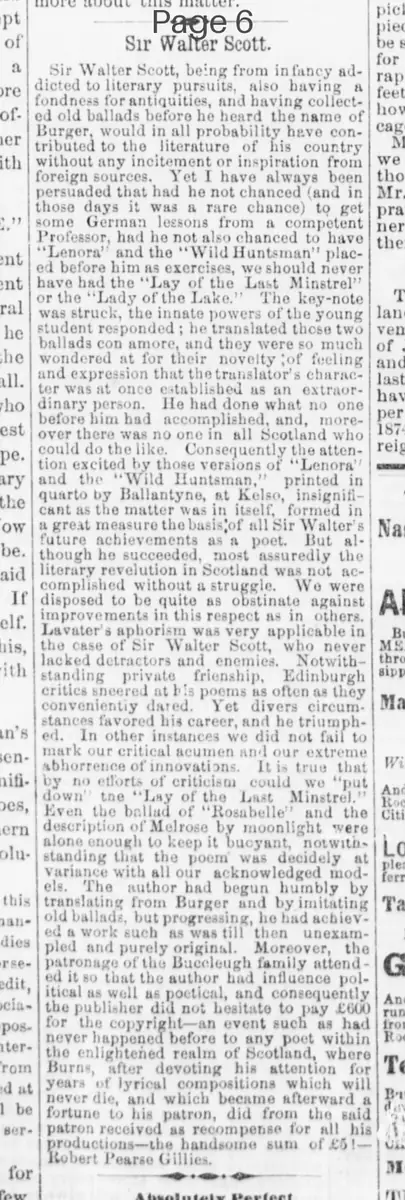
Sir Walter Scott, being from infancy addicted to literary pursuits, also having a fondness for antiquities, and having collected old ballads before he heard the name of Burger, would in all probability have contributed to the literature of his country without any incitement or inspiration from foreign sources. Yet I have always been persuaded that had he not chanced (and in those days it was a rare chance) to get some German lessons from a competent Professor, had he not also chanced to have "Lenora" and the "Wild Huntsman" placed before him as exercises, we should never have had the "Lay of the Last Minstrel" or the "Lady of the Lake." The key-note was struck, the innate powers of the young student responded: he translated these two ballads con amore, and they were so much wondered at for their novelty of feeling and expression that the translator's character was at once established as an extraordinary person. He had done what no one before him had accomplished, and, moreover there was no one in all Scotland who could do the like. Consequently the attention excited by those versions of "Lenora" and the "Wild Huntsman," printed in quarto by Ballantyne, at Kelso, insignificant as the matter was in itself, formed in a great measure the basis of all Sir Walter's future achievements as a poet. But although he succeeded, most assuredly the literary revolution in Scotland was not accomplished without a struggle. We were disposed to be quite as obstinate against improvements in this respect as in others. Lavater's aphorism was very applicable in the case of Sir Walter Scott, who never lacked detractors and enemies. Notwithstanding private friendship, Edinburgh critics sneered at his poems as often as they conveniently dared. Yet divers circumstances favored his career, and he triumphed. In other instances we did not fail to mark our critical acumen and our extreme abhorrence of innovations. It is true that by no efforts of criticism could we "put down the "Lay of the Last Minstrel." Even the ballad of "Rosabelle" and the description of Melrose by moonlight were alone enough to keep it buoyant, notwithstanding that the poem was decidedly at variance with all our acknowledged models. The author had begun humbly by translating from Burger and by imitating old ballads, but progressing, he had achieved a work such as was till then unexampled and purely original. Moreover, the patronage of the Buccleugh family attended it so that the author had influence political as well as poetical, and consequently the publisher did not hesitate to pay £600 for the copyright—an event such as had never happened before to any poet within the enlightened realm of Scotland, where Burns, after devoting his attention for years to lyrical compositions which will never die, and which became afterward a fortune to his patron, did from the said patron received as recompense for all his productions—the handsome sum of £5!—
Robert Pearse Gillies.
Sir Walter Scott, being from infancy addicted to literary pursuits, also having a fondness for antiquities, and having collected old ballads before he heard the name of Burger, would in all probability have contributed to the literature of his country without any incitement or inspiration from foreign sources. Yet I have always been persuaded that had he not chanced (and in those days it was a rare chance) to get some German lessons from a competent Professor, had he not also chanced to have "Lenora" and the "Wild Huntsman" placed before him as exercises, we should never have had the "Lay of the Last Minstrel" or the "Lady of the Lake." The key-note was struck, the innate powers of the young student responded: he translated these two ballads con amore, and they were so much wondered at for their novelty of feeling and expression that the translator's character was at once established as an extraordinary person. He had done what no one before him had accomplished, and, moreover there was no one in all Scotland who could do the like. Consequently the attention excited by those versions of "Lenora" and the "Wild Huntsman," printed in quarto by Ballantyne, at Kelso, insignificant as the matter was in itself, formed in a great measure the basis of all Sir Walter's future achievements as a poet. But although he succeeded, most assuredly the literary revolution in Scotland was not accomplished without a struggle. We were disposed to be quite as obstinate against improvements in this respect as in others. Lavater's aphorism was very applicable in the case of Sir Walter Scott, who never lacked detractors and enemies. Notwithstanding private friendship, Edinburgh critics sneered at his poems as often as they conveniently dared. Yet divers circumstances favored his career, and he triumphed. In other instances we did not fail to mark our critical acumen and our extreme abhorrence of innovations. It is true that by no efforts of criticism could we "put down the "Lay of the Last Minstrel." Even the ballad of "Rosabelle" and the description of Melrose by moonlight were alone enough to keep it buoyant, notwithstanding that the poem was decidedly at variance with all our acknowledged models. The author had begun humbly by translating from Burger and by imitating old ballads, but progressing, he had achieved a work such as was till then unexampled and purely original. Moreover, the patronage of the Buccleugh family attended it so that the author had influence political as well as poetical, and consequently the publisher did not hesitate to pay £600 for the copyright—an event such as had never happened before to any poet within the enlightened realm of Scotland, where Burns, after devoting his attention for years to lyrical compositions which will never die, and which became afterward a fortune to his patron, did from the said patron received as recompense for all his productions—the handsome sum of £5!—
Robert Pearse Gillies.
What sub-type of article is it?
Essay
What themes does it cover?
Political
Patriotism
What keywords are associated?
Sir Walter Scott
German Ballads
Lay Of The Last Minstrel
Scottish Literature
Robert Burns
Literary Patronage
Edinburgh Critics
What entities or persons were involved?
Robert Pearse Gillies
Literary Details
Author
Robert Pearse Gillies
Subject
Sir Walter Scott's Literary Beginnings And Influences
Key Lines
Had He Not Chanced (And In Those Days It Was A Rare Chance) To Get Some German Lessons From A Competent Professor, Had He Not Also Chanced To Have "Lenora" And The "Wild Huntsman" Placed Before Him As Exercises, We Should Never Have Had The "Lay Of The Last Minstrel" Or The "Lady Of The Lake."
Consequently The Attention Excited By Those Versions Of "Lenora" And The "Wild Huntsman," Printed In Quarto By Ballantyne, At Kelso, Insignificant As The Matter Was In Itself, Formed In A Great Measure The Basis Of All Sir Walter's Future Achievements As A Poet.
Even The Ballad Of "Rosabelle" And The Description Of Melrose By Moonlight Were Alone Enough To Keep It Buoyant, Notwithstanding That The Poem Was Decidedly At Variance With All Our Acknowledged Models.
The Publisher Did Not Hesitate To Pay £600 For The Copyright—An Event Such As Had Never Happened Before To Any Poet Within The Enlightened Realm Of Scotland, Where Burns, After Devoting His Attention For Years To Lyrical Compositions Which Will Never Die, And Which Became Afterward A Fortune To His Patron, Did From The Said Patron Received As Recompense For All His Productions—The Handsome Sum Of £5!