Thank you for visiting SNEWPapers!
Sign up free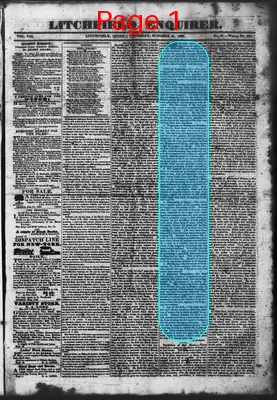
Literary
October 31, 1833
Litchfield Enquirer
Litchfield, Litchfield County, Connecticut
What is this article about?
Dr. Rush shares observations on factors promoting longevity: descent from long-lived ancestors, temperance in eating and drinking, moderate mental activity, emotional equanimity, marriage, sedentary occupations without drinking, and minimal impact from tooth loss or early graying.
Clipping

OCR Quality
95%
Excellent
Full Text
Cause of Longevity:—In a very interesting paper published by Dr. Rush in his medical observations and inquiries, we have a detail of the doctor's experience in regard to those causes which favor the prolongation of life.
1. Descent from long-lived Ancestors. Dr. Rush never met with a single instance of a person who had lived to be 80 years old, whose ancestors had not been remarkable for their longevity. In some instances the longevity was on the side of the father; others on both; but most generally it was common to both parents. Knowledge of this fact may serve not only to assist in calculating what are termed the chances of life but it may be useful to the physician. He may learn from it to cherish the hopes of his patients in chronic and some acute diseases in proportion to the capacity of life they have derived from their ancestors.
2. Temperance in Eating and Drinking. To this Dr. Rush found a few exceptions. He met with one man who was 81 years old, who had been intemperate in eating; and four or five persons who had been intemperate in the use of ardent spirits. They had all been day-laborers, and had not commenced drinking until they began to feel the languor of old age. The Doctor was inclined to the opinion that tea and coffee, notwithstanding they evidently impair the strength of the system, do not materially affect the duration of human life.
The duration of life is not always shortened by an infirm constitution, provided the stimuli which operate upon the several organs be proportionate to their excitability.
3. The moderate use of the understanding. It has been an established truth, that literary men, other circumstances being equal, are no longer lived than other people. But it is not necessary remarks Dr. Rush, that the understanding should be employed upon philosophical subjects to produce this influence upon the duration of life. Business, politics and religion, which are the objects of attention common to men of all classes, impart an activity to the mind which tends very much to produce health and long life.
4. Equanimity and regular action of the passions. Unequal and irregular action of the passions tends to wear away the springs of life. Persons who live upon annuities in Europe, have been observed to be longer lived under equal circumstances than any other people. This is probably owing to their being exempted, by the certainty of their subsistence, from those fears of want, which so frequently distract the minds and thereby weaken the bodies of all persons who are subjected to them. Life-rents have been supposed to have the same influence in prolonging life. Perhaps the desire of life, in order to enjoy as long as possible that property which cannot be enjoyed a second time by a child or a relation, may be another cause of the longevity of persons who live upon certain incomes. It is a fact, that the desire of life is a very powerful stimulus in prolonging it, especially when that desire is supported by hope. This is obvious to physicians every day. Despair of recovery is the beginning of death in all diseases.
5. Matrimony. In the course of his inquiries, Dr. Rush only met with one person beyond the age of 80 years, who had never been married.
6. Sedentary Occupations. Dr. Rush did not find sedentary occupations to prevent long life, where these were not accompanied with drinking. This observation is not confined to literary men, nor to women only, in whom longevity without much exercise of body has been frequently observed. The doctor met with an instance of a weaver, a second of a silver-smith, and a third of a shoemaker among the number of old persons, whose histories suggested the foregoing inquiries.
7. The loss of the teeth did not appear to affect the duration of human life so much as might be expected. Edward Drinker who lived to be 103, lost his teeth thirty years before he died, from drawing the hot smoke of tobacco into his mouth through a short pipe. Neither did he observe baldness or grey hairs occurring in early or middle life to prevent old age: In an account furnished by Le Sayre, mention is made of a man of 80, whose hairs began to assume a silver color when he was only eleven years old.
1. Descent from long-lived Ancestors. Dr. Rush never met with a single instance of a person who had lived to be 80 years old, whose ancestors had not been remarkable for their longevity. In some instances the longevity was on the side of the father; others on both; but most generally it was common to both parents. Knowledge of this fact may serve not only to assist in calculating what are termed the chances of life but it may be useful to the physician. He may learn from it to cherish the hopes of his patients in chronic and some acute diseases in proportion to the capacity of life they have derived from their ancestors.
2. Temperance in Eating and Drinking. To this Dr. Rush found a few exceptions. He met with one man who was 81 years old, who had been intemperate in eating; and four or five persons who had been intemperate in the use of ardent spirits. They had all been day-laborers, and had not commenced drinking until they began to feel the languor of old age. The Doctor was inclined to the opinion that tea and coffee, notwithstanding they evidently impair the strength of the system, do not materially affect the duration of human life.
The duration of life is not always shortened by an infirm constitution, provided the stimuli which operate upon the several organs be proportionate to their excitability.
3. The moderate use of the understanding. It has been an established truth, that literary men, other circumstances being equal, are no longer lived than other people. But it is not necessary remarks Dr. Rush, that the understanding should be employed upon philosophical subjects to produce this influence upon the duration of life. Business, politics and religion, which are the objects of attention common to men of all classes, impart an activity to the mind which tends very much to produce health and long life.
4. Equanimity and regular action of the passions. Unequal and irregular action of the passions tends to wear away the springs of life. Persons who live upon annuities in Europe, have been observed to be longer lived under equal circumstances than any other people. This is probably owing to their being exempted, by the certainty of their subsistence, from those fears of want, which so frequently distract the minds and thereby weaken the bodies of all persons who are subjected to them. Life-rents have been supposed to have the same influence in prolonging life. Perhaps the desire of life, in order to enjoy as long as possible that property which cannot be enjoyed a second time by a child or a relation, may be another cause of the longevity of persons who live upon certain incomes. It is a fact, that the desire of life is a very powerful stimulus in prolonging it, especially when that desire is supported by hope. This is obvious to physicians every day. Despair of recovery is the beginning of death in all diseases.
5. Matrimony. In the course of his inquiries, Dr. Rush only met with one person beyond the age of 80 years, who had never been married.
6. Sedentary Occupations. Dr. Rush did not find sedentary occupations to prevent long life, where these were not accompanied with drinking. This observation is not confined to literary men, nor to women only, in whom longevity without much exercise of body has been frequently observed. The doctor met with an instance of a weaver, a second of a silver-smith, and a third of a shoemaker among the number of old persons, whose histories suggested the foregoing inquiries.
7. The loss of the teeth did not appear to affect the duration of human life so much as might be expected. Edward Drinker who lived to be 103, lost his teeth thirty years before he died, from drawing the hot smoke of tobacco into his mouth through a short pipe. Neither did he observe baldness or grey hairs occurring in early or middle life to prevent old age: In an account furnished by Le Sayre, mention is made of a man of 80, whose hairs began to assume a silver color when he was only eleven years old.
What sub-type of article is it?
Essay
What themes does it cover?
Temperance
Moral Virtue
What keywords are associated?
Longevity
Temperance
Ancestry
Equanimity
Matrimony
Sedentary Occupations
Dr Rush
Medical Observations
What entities or persons were involved?
Dr. Rush
Literary Details
Title
Cause Of Longevity
Author
Dr. Rush
Subject
Causes Which Favor The Prolongation Of Life