Thank you for visiting SNEWPapers!
Sign up free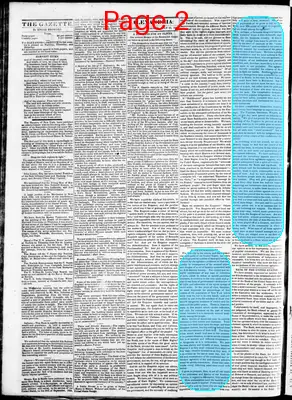
Editorial
July 23, 1834
Alexandria Gazette
Alexandria, Alexandria County, District Of Columbia
What is this article about?
An editorial condemns riots in New York triggered by anti-slavery society agitators, viewing their fanaticism as dangerous to social order and likely to incite servile commotions. It praises Northern suppression of these 'fanatics' like the Tappans and Garrisons, affirming Southern institutions' safety and advising caution over inflammatory responses.
Clipping
OCR Quality
98%
Excellent
Full Text
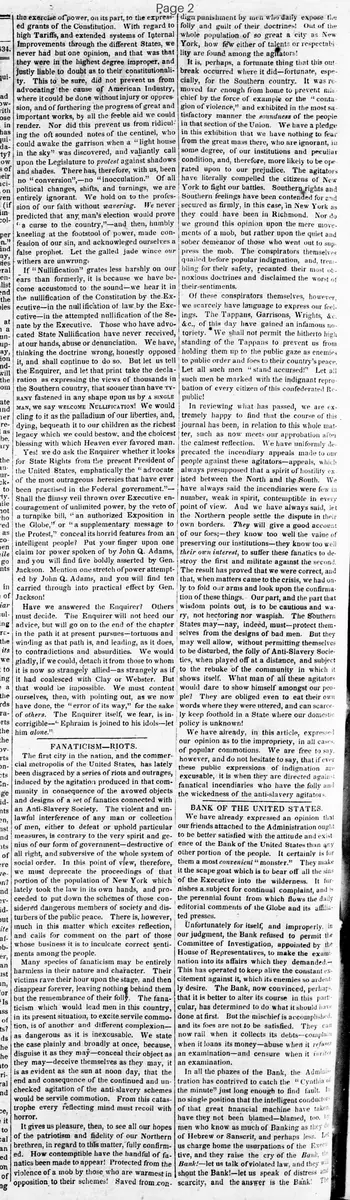
FANATICISM—RIOTS.
The first city in the nation, and the commercial metropolis of the United States, has lately been disgraced by a series of riots and outrages, induced by the agitation produced in that community in consequence of the avowed objects and designs of a set of fanatics connected with an Anti-Slavery Society. The violent and unlawful interference of any man or collection of men, either to defeat or uphold particular measures, is contrary to the very spirit and genius of our form of government—destructive of all right, and subversive of the whole system of social order. In this point of view, therefore, we must deprecate the proceedings of that portion of the population of New York which lately took the law in its own hands, and proceeded to put down the schemes of those considered dangerous members of society and disturbers of the public peace. There is, however, much in this matter which excites reflection, and calls for comment on the part of those whose business it is to inculcate correct sentiments among the people.
Many species of fanaticism may be entirely harmless in their nature and character. Their victims rave their hour upon the stage, and then disappear forever, leaving nothing behind them but the remembrance of their folly. The fanaticism which would lead men in this country, in its present situation, to excite servile commotion, is of another and different complexion—as dangerous as it is inexcusable. We state the case plainly and broadly at once, because, disguise it as they may—conceal their object as they may—deceive themselves as they may, it is as evident as the sun at noon day, that the end and consequence of the continued and unchecked agitation of the anti-slavery schemes would be servile commotion. From this catastrophe every reflecting mind must recoil with horror.
It gives us pleasure, then, to see all our hopes of the patriotism and fidelity of our Northern brethren, in regard to this matter, fully confirmed. How contemptible have the handful of fanatics been made to appear! Protected from the violence of a mob by those who are warmest in opposition to their schemes! Saved from condign punishment by men who daily expose the folly and guilt of their doctrines! Out of the whole population of so great a city as New York, how few either of talents or respectability are found among the agitators!
It is, perhaps, a fortunate thing that this outbreak occurred where it did—fortunate, especially, for the Southern country. It was removed far enough from home to prevent mischief by the force of example or the "contagion of violence," and exhibited in the most satisfactory manner the soundness of the people in that section of the Union. We have a pledge in this exhibition that we have nothing to fear from the great mass there, who are ignorant, in some degree, of our institutions and peculiar condition, and, therefore, more likely to be operated upon to our prejudice. The agitators have literally compelled the citizens of New York to fight our battles. Southern rights and Southern feelings have been contended for and secured as firmly, in this case, in New York as they could have been in Richmond. Nor do we ground this opinion upon the mere movements of a mob, but rather upon the quiet and sober demeanor of those who went out to suppress the mob. The conspirators themselves quailed before popular indignation, and, trembling for their safety, recanted their most obnoxious doctrines and disclaimed the worst of their sentiments.
Of these conspirators themselves, however, we scarcely have language to express our feelings. The Tappans, Garrisons, Wrights, &c. &c., of this day have gained an infamous notoriety. We shall not permit the hitherto high standing of the Tappans to prevent us from holding them up to the public gaze as enemies to public order and foes to their country's peace. Let all such men "stand accursed!" Let all such men be marked with the indignant reprobation of every citizen of this confederated Republic!
In reviewing what has passed, we are extremely happy to find that the course of this journal has been, in relation to this whole matter, such as now meets our approbation after the calmest reflection. We have uniformly deprecated the incendiary appeals made to our people against these agitators—appeals, which always presupposed that a spirit of hostility existed between the North and the South. We have always said the incendiaries were few in number, weak in spirit, contemptible in every point of view. And we have always said, let the Northern people settle the dispute in their own borders. They will give a good account of our foes;—they know too well the value of preserving our institutions—they know too well their own interest, to suffer these fanatics to destroy the first and militate against the second. The result has proved that we were correct, and that, when matters came to the crisis, we had only to fold our arms and look upon the confirmation of these things. Our part, and the part that wisdom points out, is to be cautious and wary, not hectoring nor waspish. The Southern States may—nay, indeed, must—protect themselves from the designs of bad men. But they may well allow, without permitting themselves to be disturbed, the folly of Anti-Slavery Societies, when played off at a distance, and subject to the rebuke of the community in which it shows itself. What man of all these agitators would dare to show himself amongst our people? They are obliged even to eat their own words where they were uttered, and can scarcely keep foothold in a State where our domestic policy is unknown!
We have already, in this article, expressed our opinion as to the impropriety, in all cases, of popular commotions. We are free to say, however, and do not hesitate to say, that if ever these public expressions of indignation are excusable, it is when they are directed against fanatical incendiaries who have the folly and the wickedness of the anti-slavery agitators.
The first city in the nation, and the commercial metropolis of the United States, has lately been disgraced by a series of riots and outrages, induced by the agitation produced in that community in consequence of the avowed objects and designs of a set of fanatics connected with an Anti-Slavery Society. The violent and unlawful interference of any man or collection of men, either to defeat or uphold particular measures, is contrary to the very spirit and genius of our form of government—destructive of all right, and subversive of the whole system of social order. In this point of view, therefore, we must deprecate the proceedings of that portion of the population of New York which lately took the law in its own hands, and proceeded to put down the schemes of those considered dangerous members of society and disturbers of the public peace. There is, however, much in this matter which excites reflection, and calls for comment on the part of those whose business it is to inculcate correct sentiments among the people.
Many species of fanaticism may be entirely harmless in their nature and character. Their victims rave their hour upon the stage, and then disappear forever, leaving nothing behind them but the remembrance of their folly. The fanaticism which would lead men in this country, in its present situation, to excite servile commotion, is of another and different complexion—as dangerous as it is inexcusable. We state the case plainly and broadly at once, because, disguise it as they may—conceal their object as they may—deceive themselves as they may, it is as evident as the sun at noon day, that the end and consequence of the continued and unchecked agitation of the anti-slavery schemes would be servile commotion. From this catastrophe every reflecting mind must recoil with horror.
It gives us pleasure, then, to see all our hopes of the patriotism and fidelity of our Northern brethren, in regard to this matter, fully confirmed. How contemptible have the handful of fanatics been made to appear! Protected from the violence of a mob by those who are warmest in opposition to their schemes! Saved from condign punishment by men who daily expose the folly and guilt of their doctrines! Out of the whole population of so great a city as New York, how few either of talents or respectability are found among the agitators!
It is, perhaps, a fortunate thing that this outbreak occurred where it did—fortunate, especially, for the Southern country. It was removed far enough from home to prevent mischief by the force of example or the "contagion of violence," and exhibited in the most satisfactory manner the soundness of the people in that section of the Union. We have a pledge in this exhibition that we have nothing to fear from the great mass there, who are ignorant, in some degree, of our institutions and peculiar condition, and, therefore, more likely to be operated upon to our prejudice. The agitators have literally compelled the citizens of New York to fight our battles. Southern rights and Southern feelings have been contended for and secured as firmly, in this case, in New York as they could have been in Richmond. Nor do we ground this opinion upon the mere movements of a mob, but rather upon the quiet and sober demeanor of those who went out to suppress the mob. The conspirators themselves quailed before popular indignation, and, trembling for their safety, recanted their most obnoxious doctrines and disclaimed the worst of their sentiments.
Of these conspirators themselves, however, we scarcely have language to express our feelings. The Tappans, Garrisons, Wrights, &c. &c., of this day have gained an infamous notoriety. We shall not permit the hitherto high standing of the Tappans to prevent us from holding them up to the public gaze as enemies to public order and foes to their country's peace. Let all such men "stand accursed!" Let all such men be marked with the indignant reprobation of every citizen of this confederated Republic!
In reviewing what has passed, we are extremely happy to find that the course of this journal has been, in relation to this whole matter, such as now meets our approbation after the calmest reflection. We have uniformly deprecated the incendiary appeals made to our people against these agitators—appeals, which always presupposed that a spirit of hostility existed between the North and the South. We have always said the incendiaries were few in number, weak in spirit, contemptible in every point of view. And we have always said, let the Northern people settle the dispute in their own borders. They will give a good account of our foes;—they know too well the value of preserving our institutions—they know too well their own interest, to suffer these fanatics to destroy the first and militate against the second. The result has proved that we were correct, and that, when matters came to the crisis, we had only to fold our arms and look upon the confirmation of these things. Our part, and the part that wisdom points out, is to be cautious and wary, not hectoring nor waspish. The Southern States may—nay, indeed, must—protect themselves from the designs of bad men. But they may well allow, without permitting themselves to be disturbed, the folly of Anti-Slavery Societies, when played off at a distance, and subject to the rebuke of the community in which it shows itself. What man of all these agitators would dare to show himself amongst our people? They are obliged even to eat their own words where they were uttered, and can scarcely keep foothold in a State where our domestic policy is unknown!
We have already, in this article, expressed our opinion as to the impropriety, in all cases, of popular commotions. We are free to say, however, and do not hesitate to say, that if ever these public expressions of indignation are excusable, it is when they are directed against fanatical incendiaries who have the folly and the wickedness of the anti-slavery agitators.
What sub-type of article is it?
Slavery Abolition
Moral Or Religious
Social Reform
What keywords are associated?
Anti Slavery
Fanaticism
Riots
New York
Servile Commotion
Southern Rights
Agitators
Northern Brethren
What entities or persons were involved?
Tappans
Garrisons
Wrights
Anti Slavery Society
New York Population
Southern States
Editorial Details
Primary Topic
Opposition To Anti Slavery Fanaticism And New York Riots
Stance / Tone
Strongly Anti Abolitionist, Supportive Of Suppressing Agitators While Deprecating Mob Violence
Key Figures
Tappans
Garrisons
Wrights
Anti Slavery Society
New York Population
Southern States
Key Arguments
Anti Slavery Agitation Risks Servile Commotions And Social Disorder
Riots In New York Disgrace The City But Demonstrate Northern Opposition To Fanatics
Few Respectable People Support The Agitators, Who Are Protected And Rebuked By Opponents
The Outbreak Benefits The South By Showing Northern Fidelity To Southern Institutions
Agitators Like Tappans And Garrisons Deserve Public Condemnation As Enemies Of Peace
Northern People Will Handle The Fanatics, Preserving Union And Interests
Mob Violence Is Generally Improper But Excusable Against Such Incendiaries