Thank you for visiting SNEWPapers!
Sign up free
Literary
September 2, 1789
Gazette Of The United States
New York, New York County, New York
What is this article about?
An essay advising on the moral imperative to pay debts and avoid excessive spending to evade accusations of selfishness or avarice. It distinguishes between superficial approval from ostentation and true self-approbation from just conduct, warning that false benevolence with borrowed money tarnishes one's legacy.
Clipping
OCR Quality
98%
Excellent
Full Text
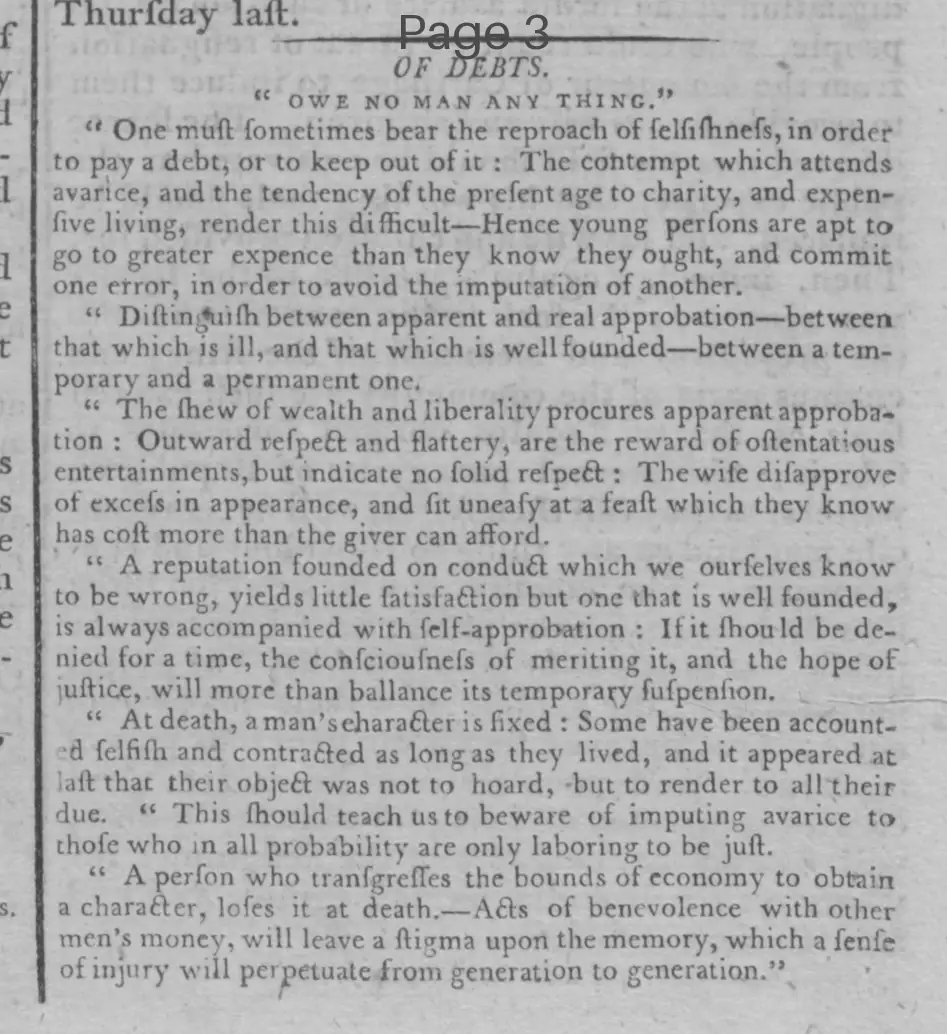
OF DEBTS.
"OWE NO MAN ANY THING."
"One must sometimes bear the reproach of selfishness, in order to pay a debt, or to keep out of it: The contempt which attends avarice, and the tendency of the present age to charity, and expensive living, render this difficult—Hence young persons are apt to go to greater expense than they know they ought, and commit one error, in order to avoid the imputation of another.
"Distinguish between apparent and real approbation—between that which is ill, and that which is well founded—between a temporary and a permanent one.
"The show of wealth and liberality procures apparent approbation: Outward respect and flattery, are the reward of ostentatious entertainments, but indicate no solid respect: The wise disapprove of excess in appearance, and sit uneasy at a feast which they know has cost more than the giver can afford.
"A reputation founded on conduct which we ourselves know to be wrong, yields little satisfaction but one that is well founded, is always accompanied with self-approbation: If it should be denied for a time, the consciousness of meriting it, and the hope of justice, will more than balance its temporary suspension.
"At death, a man's character is fixed: Some have been accounted selfish and contracted as long as they lived, and it appeared at last that their object was not to hoard, but to render to all their due. " This should teach us to beware of imputing avarice to those who in all probability are only laboring to be just.
"A person who transgresses the bounds of economy to obtain a character, loses it at death.—Acts of benevolence with other men's money, will leave a stigma upon the memory, which a sense of injury will perpetuate from generation to generation."
"OWE NO MAN ANY THING."
"One must sometimes bear the reproach of selfishness, in order to pay a debt, or to keep out of it: The contempt which attends avarice, and the tendency of the present age to charity, and expensive living, render this difficult—Hence young persons are apt to go to greater expense than they know they ought, and commit one error, in order to avoid the imputation of another.
"Distinguish between apparent and real approbation—between that which is ill, and that which is well founded—between a temporary and a permanent one.
"The show of wealth and liberality procures apparent approbation: Outward respect and flattery, are the reward of ostentatious entertainments, but indicate no solid respect: The wise disapprove of excess in appearance, and sit uneasy at a feast which they know has cost more than the giver can afford.
"A reputation founded on conduct which we ourselves know to be wrong, yields little satisfaction but one that is well founded, is always accompanied with self-approbation: If it should be denied for a time, the consciousness of meriting it, and the hope of justice, will more than balance its temporary suspension.
"At death, a man's character is fixed: Some have been accounted selfish and contracted as long as they lived, and it appeared at last that their object was not to hoard, but to render to all their due. " This should teach us to beware of imputing avarice to those who in all probability are only laboring to be just.
"A person who transgresses the bounds of economy to obtain a character, loses it at death.—Acts of benevolence with other men's money, will leave a stigma upon the memory, which a sense of injury will perpetuate from generation to generation."
What sub-type of article is it?
Essay
What themes does it cover?
Moral Virtue
Temperance
Social Manners
What keywords are associated?
Debts
Avarice
Economy
Reputation
Selfishness
Benevolence
Ostentation
Literary Details
Title
Of Debts.
Subject
On Avoiding Debt And Ostentation For True Moral Reputation
Key Lines
"Owe No Man Any Thing."
"One Must Sometimes Bear The Reproach Of Selfishness, In Order To Pay A Debt, Or To Keep Out Of It"
"Distinguish Between Apparent And Real Approbation—Between That Which Is Ill, And That Which Is Well Founded—Between A Temporary And A Permanent One."
"At Death, A Man's Character Is Fixed: Some Have Been Accounted Selfish And Contracted As Long As They Lived, And It Appeared At Last That Their Object Was Not To Hoard, But To Render To All Their Due."
"Acts Of Benevolence With Other Men's Money, Will Leave A Stigma Upon The Memory, Which A Sense Of Injury Will Perpetuate From Generation To Generation."