Thank you for visiting SNEWPapers!
Sign up free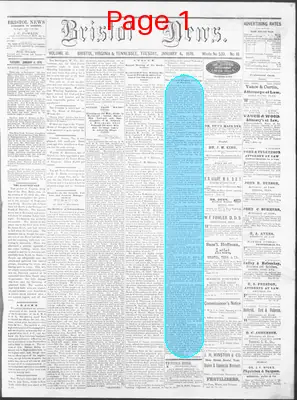
Literary
January 4, 1876
Bristol News
Bristol, Washington County, Virginia
What is this article about?
Biographical excerpt from a sketch of John James Platt praising George D. Prentice's wit, quoting satirical jabs at politicians and editors, general epigrams on society, and his principled refusal of a duel emphasizing moral stance against it.
Clipping

OCR Quality
95%
Excellent
Full Text
From the late biographical sketch of John James Platt.
The Wit and Wisdom of George D. Prentice.
With regard to Mr. Prentice's happy thoughts, his biographer says:
Enough of them have kept well however, to justify the reputation for brilliant wit and humor which Mr. Prentice so long enjoyed—enough of them worthy to rank with the best good sayings which are quoted from Hook and Lamb and Sidney Smith and Douglas Jerrold, or others of the famous wits of England. Let me venture to repeat a few, (but it is so easy to miss the best in such a collection, even when one thinks he finds them.) as I happen to turn to them in the volume:
"The editor of the Statesman says more villainy is on foot. We suppose the editor has lost his horse."
"James Ray and John Parr have started a locofoco paper in Maine, called the Democrat. Parr, in all that pertains to decency, is below zero; and Ray is below Parr."
"Have I changed?" exclaims Gov. P——. We don't know. That depends on whether you ever were an honest man."
The (Washington) Globe says that such patriotism as Mr. Clay's will not answer. True enough, for it can't be questioned."
The editor of the —— speaks of his "lying curled up in bed these cold mornings." This verifies what we said of him sometime ago—'he lies like a dog.'"
"The Philadelphia Ledger says that Clay, Calhoun and Webster are behind the age. Then the age must be 'tail foremost.'"
"A young widow has established a pistol gallery in New Orleans. Her qualifications as a teacher of the art of duelling are of course undoubted: she has killed her man."
"Mr. William Hood was robbed near Corinth, Alabama, on the 13th inst. The Corinth paper says the name of the highwayman is unknown but there is no doubt that he was Robin Hood."
…A new Democratic paper in North Carolina is called The Rising Day. It ought rather be called the Night, for it is the shadow of the Globe."
"Mr. John Love was recently lost during a passage from Texas to Mexico. We had supposed that no Love would ever be lost between those countries."
"The Globe says 'Mr. Clay is a sharp politician.' No doubt about that, but the editor of the Globe is a sharper."
"Messrs. Bell and Topp, of the North Carolina Gazette, say that "Prentices are made to serve masters." Well, Bells were made to be hung and Topps to be whipped."
Of a more general character, a few witticisms and epigrams may be given.
"Rye and wild wheat grow in some regions spontaneously. We believe that wild oats are always sown."
Men are deserters in adversity when the sun sets, and all is dark, even shadows refuse to follow us."
"A well known writer says that a fine coat covers a multitude of sins. It is still truer that such coats cover a multitude of sinners."
"When a man's heart ossifies, or turns to bone, he dies at once; but if it petrifies, or turns to stone, he invariably lives too long for any useful purpose."
"What would you do, madam, if you were a gentleman? Sir, what would you do if you were one?"
"Whatever Midas touched was turned into gold: in these days touch a man with gold and he'll turn into anything."
Possibly the following extract from a letter in answer to a challenge is the most valuable legacy which Mr. Prentice left to posterity, and it will be well for young and old idiots with duelling proclivities to read it attentively.
"I am not a believer in the duelling code. I would not call a man to the field unless he had done me such a deadly wrong that I desired to kill him, and I would not obey his call to the field unless I had done him so mortal an injury as to entitle him, in my opinion, to demand an opportunity of taking my life. I have not the least desire to kill you, or to harm a hair of your head, and I am not conscious of having done anything to entitle you to kill me. I do not want your blood upon my hands, and I do not want my own upon anybody's. I might yield much to the demands of a strong public sentiment, but there is no public sentiment, nor even any dis-interested individual sentiment, that requires me to meet you, or would justify me in doing so. I look upon the miserable code, that is said to require two men to go out and shoot at each other for what one of them may consider a violation of etiquette or punctilio in the use of language, with a scorn equal to that which is getting to be felt for it by the whole civilized world of mankind. I am not afraid to express such views in the enlightened capital of Arkansas, or anywhere else. I am not so cowardly as to stand in dread of any imputation on my courage. I have always had courage enough to defend my honor and myself, and I presume I always shall have.
Your most, etc.,
GEO. D. PRENTICE."
The Wit and Wisdom of George D. Prentice.
With regard to Mr. Prentice's happy thoughts, his biographer says:
Enough of them have kept well however, to justify the reputation for brilliant wit and humor which Mr. Prentice so long enjoyed—enough of them worthy to rank with the best good sayings which are quoted from Hook and Lamb and Sidney Smith and Douglas Jerrold, or others of the famous wits of England. Let me venture to repeat a few, (but it is so easy to miss the best in such a collection, even when one thinks he finds them.) as I happen to turn to them in the volume:
"The editor of the Statesman says more villainy is on foot. We suppose the editor has lost his horse."
"James Ray and John Parr have started a locofoco paper in Maine, called the Democrat. Parr, in all that pertains to decency, is below zero; and Ray is below Parr."
"Have I changed?" exclaims Gov. P——. We don't know. That depends on whether you ever were an honest man."
The (Washington) Globe says that such patriotism as Mr. Clay's will not answer. True enough, for it can't be questioned."
The editor of the —— speaks of his "lying curled up in bed these cold mornings." This verifies what we said of him sometime ago—'he lies like a dog.'"
"The Philadelphia Ledger says that Clay, Calhoun and Webster are behind the age. Then the age must be 'tail foremost.'"
"A young widow has established a pistol gallery in New Orleans. Her qualifications as a teacher of the art of duelling are of course undoubted: she has killed her man."
"Mr. William Hood was robbed near Corinth, Alabama, on the 13th inst. The Corinth paper says the name of the highwayman is unknown but there is no doubt that he was Robin Hood."
…A new Democratic paper in North Carolina is called The Rising Day. It ought rather be called the Night, for it is the shadow of the Globe."
"Mr. John Love was recently lost during a passage from Texas to Mexico. We had supposed that no Love would ever be lost between those countries."
"The Globe says 'Mr. Clay is a sharp politician.' No doubt about that, but the editor of the Globe is a sharper."
"Messrs. Bell and Topp, of the North Carolina Gazette, say that "Prentices are made to serve masters." Well, Bells were made to be hung and Topps to be whipped."
Of a more general character, a few witticisms and epigrams may be given.
"Rye and wild wheat grow in some regions spontaneously. We believe that wild oats are always sown."
Men are deserters in adversity when the sun sets, and all is dark, even shadows refuse to follow us."
"A well known writer says that a fine coat covers a multitude of sins. It is still truer that such coats cover a multitude of sinners."
"When a man's heart ossifies, or turns to bone, he dies at once; but if it petrifies, or turns to stone, he invariably lives too long for any useful purpose."
"What would you do, madam, if you were a gentleman? Sir, what would you do if you were one?"
"Whatever Midas touched was turned into gold: in these days touch a man with gold and he'll turn into anything."
Possibly the following extract from a letter in answer to a challenge is the most valuable legacy which Mr. Prentice left to posterity, and it will be well for young and old idiots with duelling proclivities to read it attentively.
"I am not a believer in the duelling code. I would not call a man to the field unless he had done me such a deadly wrong that I desired to kill him, and I would not obey his call to the field unless I had done him so mortal an injury as to entitle him, in my opinion, to demand an opportunity of taking my life. I have not the least desire to kill you, or to harm a hair of your head, and I am not conscious of having done anything to entitle you to kill me. I do not want your blood upon my hands, and I do not want my own upon anybody's. I might yield much to the demands of a strong public sentiment, but there is no public sentiment, nor even any dis-interested individual sentiment, that requires me to meet you, or would justify me in doing so. I look upon the miserable code, that is said to require two men to go out and shoot at each other for what one of them may consider a violation of etiquette or punctilio in the use of language, with a scorn equal to that which is getting to be felt for it by the whole civilized world of mankind. I am not afraid to express such views in the enlightened capital of Arkansas, or anywhere else. I am not so cowardly as to stand in dread of any imputation on my courage. I have always had courage enough to defend my honor and myself, and I presume I always shall have.
Your most, etc.,
GEO. D. PRENTICE."
What sub-type of article is it?
Essay
Satire
What themes does it cover?
Political
Moral Virtue
Social Manners
What keywords are associated?
Wit
Humor
Satire
Politics
Dueling
Epigrams
George Prentice
What entities or persons were involved?
From The Late Biographical Sketch Of John James Platt.
Literary Details
Title
The Wit And Wisdom Of George D. Prentice.
Author
From The Late Biographical Sketch Of John James Platt.
Subject
On The Wit And Wisdom Of George D. Prentice, Including His Views On Dueling.
Key Lines
"The Editor Of The Statesman Says More Villainy Is On Foot. We Suppose The Editor Has Lost His Horse."
"I Am Not A Believer In The Duelling Code. I Would Not Call A Man To The Field Unless He Had Done Me Such A Deadly Wrong That I Desired To Kill Him..."
"Whatever Midas Touched Was Turned Into Gold: In These Days Touch A Man With Gold And He'll Turn Into Anything."
"A Well Known Writer Says That A Fine Coat Covers A Multitude Of Sins. It Is Still Truer That Such Coats Cover A Multitude Of Sinners."
"The Globe Says 'Mr. Clay Is A Sharp Politician.' No Doubt About That, But The Editor Of The Globe Is A Sharper."